
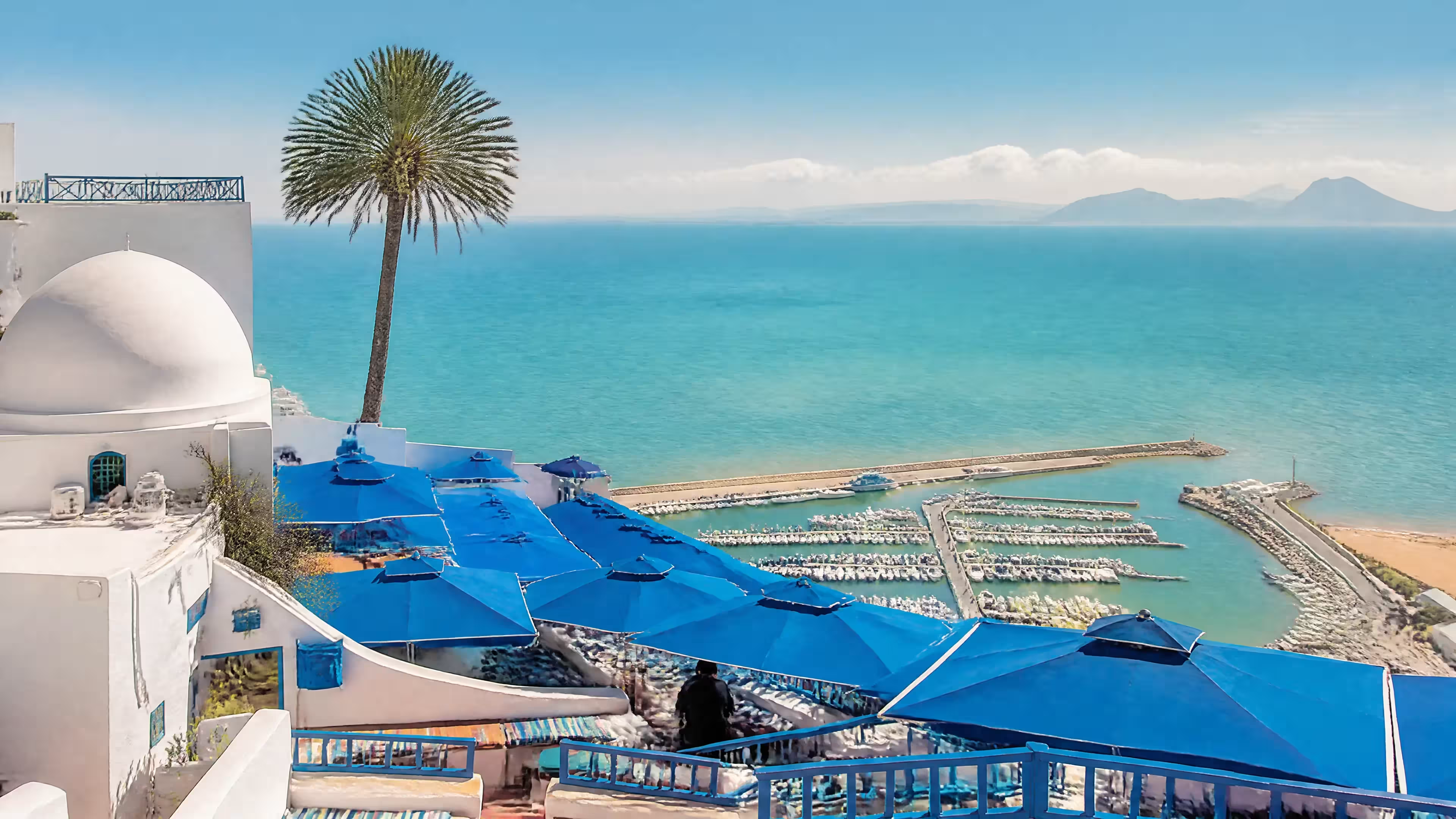
Tours to Tunisia from Petropavlovsk: prices
Instalments up to 24 months on any tour A manager replies within 15 minutes
Tours to Tunisia

Low-price calendar for tours to Tunisia
The lowest price by month for the chosen destination.
Tour collections for Tunisia


How to buy a tour to Tunisia
- 01
Find a tour
Departure city, destination, dates, nights and who is travelling — five fields in one row.
- 02
Choose and book
Compare the price for two, the board and the beach line, then hold your choice with a request.
- 03
Pay
By card, in instalments through a bank, by bank transfer or in cash at the office.
- 04
Get the documents
The contract, the voucher, the insurance policy and the itinerary receipts arrive by e-mail.
Tours to Tunisia: facts for the traveller
Ready to travel?
Leave a request and a manager will suggest options for your budget, dates and party.
Tours to Tunisia: what to know
Swimming is most comfortable on Djerba and in Hammamet, Sousse will suit lovers of lively life, Monastir and Mahdia — for those who want silence.
Visa, documents and money: what to consider before the trip?
Tours to Tunisia from Petropavlovsk begin with a simple rule: most formalities are handled upon arrival, not at the office. Below is what is worth sorting out in advance.
Validity of the passport and entry rules for citizens of Kazakhstan
The main document for a trip to Tunisia is a valid passport, and you need to keep an eye on its validity period even before buying the tour. The entry stamp for Tunisia is placed right at the arrival airport, nothing needs to be arranged in advance. But there is a nuance because of which tourists from Petropavlovsk sometimes lose their trip: the validity period of the document must cover the return date with a margin. The airline has the right not to let you on the flight if it considers the document not fresh enough. Therefore, before booking the tour, open your passport and look at the expiry date. If it is less than six months away — first change the document, then book your holiday in Tunisia. Children also need their own passport; being listed in a parent's passport has not worked for a long time. Save copies of the pages on your phone and in your email: they will come in handy if the original is lost at the resort.
Cash or card: how to pay at the resorts
The basis of your wallet on holiday in Tunisia is cash dinars, and the card remains a supplement. It is more convenient to exchange Tunisian currency in banks and exchange offices at the airport; the rate in hotels in Hammamet and Sousse is usually noticeably worse. Visa and Mastercard cards are accepted in large hotels and restaurants, but at markets, in taxis and small cafes you need cash. It is forbidden to take dinars out of the country, and the reverse exchange will not be done either — exchange exactly as much as you plan to spend towards the end of the trip. Tipping here is part of the culture: one or two dinars to a porter, a maid, a taxi driver. Keep small change at hand; at the market they may not be able to change a large note.
| Payment method | Where it works | Where it does not work |
|---|---|---|
| Cash dinars | Markets, taxis, cafes, shops | Exchange back abroad |
| Visa card | Large hotels, restaurants | Small shops, transport |
| Mastercard card | Hotels, resort shops | Markets of Mahdia and Djerba |
How to get to Tunisia from Kazakhstan?
Routes with a transfer in Istanbul, Dubai and Doha
The journey to a holiday in Tunisia takes from one flight with a transfer, and the hub is chosen for convenience. Istanbul is the shortest and most frequent option for tourists from Petropavlovsk: the transfer is compact, there are many flights to Tunisian resorts. Dubai offers comfortable transfers and good connecting fares, but the total travel time is longer. Doha is convenient for those flying with a long transfer: there is a place to rest and have a snack at the airport. It is better to allow a transfer with a margin of three to four hours: the first flight from Kazakhstan may be delayed, and changing planes in a hurry with suitcases is hard. Baggage is usually checked through to the final point, but on short transfers it is worth clarifying this at the counter.
| Hub | Advantage of the route | What to consider |
|---|---|---|
| Istanbul | Short path, many flights | Many tourists in season |
| Dubai | Comfortable transfers | Longer total travel time |
| Doha | Good airport for waiting | Fewer departure options |
Time difference and acclimatization after the flight
You will have to turn the clocks back, and it is worth preparing for this in advance. Kazakhstan lives by UTC+5, and Tunisia by UTC+1, that is, the difference is noticeable. The first day at the resort is usually spent sleeping and taking a light walk, not on excursions. On the plane, drink water, avoid alcohol and heavy food. In the evening local time, try not to go to bed too early, otherwise the body will adjust only by the end of the holiday. Children need a day more for acclimatization than adults. Plan the first trip to the sea for the morning of the second day — this way your holiday in Tunisia will begin without exhaustion.
Visa and entry rules change: check with the primary source — the Ministry of Foreign Affairs of the Tunisian Republic, https://www.diplomatie.gov.tn/. The information on this page was checked on 17.09.2026.
When to go: weather, sea and tourist rhythm
The swimming season on the Tunisian coast is long, but the north and south of the country behave differently. The choice of month changes both the water temperature and the number of people on the beach.
Swimming season on Djerba and the northern coast
Djerba warms up earlier than other resorts, and swimming there is comfortable already from the end of spring. The northern coast, which includes Hammamet and Sousse, enters the season later, but in summer the water there is softer. At the height of summer the sea is warm everywhere, but in the north there are more winds and waves. In autumn Djerba keeps the warmth longer, so tours to this island in October are a calm option for those who do not like heat. In winter, few people swim: the water is cool, but excursions around the country go on without exhausting heat.
| Resort | Warm water | Feature of the season |
|---|---|---|
| Djerba | From late spring to autumn | The longest season |
| Hammamet | Summer and early autumn | Windy at the height of summer |
| Sousse | Summer and September | Lively in high season |
| Mahdia | Summer and September | Calmer and cheaper |
Ramadan and high season: how the life of cities changes
Ramadan noticeably changes the rhythm of Tunisian cities, and this is worth considering when choosing dates. During the day, some cafes and shops are closed, but in the evening the streets come to life and stay open late. In the tourist areas of Hammamet, Sousse and Monastir, the restrictions are felt less: hotels and beach bars operate as usual. Alcohol is sold in hotels and specialized stores; outside tourist areas, rules are strict. High season falls in summer and school holidays: prices are higher, beaches are fuller, and excursions are booked in advance. The shoulder season offers mild weather and available hotels, but in the evening you may need a jacket.
What to see and try on holiday
Each resort in the country lives at its own pace, and the choice of city determines what your holiday will be like. Below is how the popular destinations differ and what to try at the table.
Hammamet, Sousse, Monastir and Mahdia: how the resorts differ
Hammamet is the most well-kept and expensive resort in Tunisia, with wide beaches and a large choice of hotels. Sousse is bigger and livelier: there are more clubs, shops and entertainment for young people. Monastir is calmer and quieter; it is chosen by families with children and those who want a measured holiday. Mahdia is a cozy town with low prices, but its entertainment infrastructure is more modest. Djerba stands apart: an island with a mild climate and its own traditions. If excursions matter, a base in Sousse or Hammamet is more convenient logistically.
Local cuisine, markets and the rules of haggling for souvenirs
Tunisian cuisine is built on couscous, tajine, harissa and olive oil, and it is best tried in the city, not only at the hotel. There is almost no pork on the menu, but seafood is fresh and inexpensive. In markets, haggling is customary: the quoted price is calmly reduced by half if you stay friendly. Souvenirs are brought from copper, ceramics, olive oil and dates. It is better to buy spices and oil in shops where you can try the product before buying. Tap water is not drunk; take bottled water.
Practical tips: communications, transport, safety
The everyday side of the trip is sorted out on the spot, but a few things are better thought through before departure. These are transport, communications and sun protection.
Car rental, taxis and parking in tourist areas
Car rental gives freedom, but traffic in Tunisian cities is chaotic, and parking in Sousse and Hammamet is paid. Taxis are inexpensive, but the meter is not always switched on — it is worth agreeing on the price before getting in. Buses and minibuses run between resorts; they are cheaper but slower. For long-distance travel around the country, it is more convenient to hire a driver for the day. A Kazakhstan-style driving licence is suitable for rental, but an international permit will not be superfluous. Petrol stations on highways are rare, so keep an eye on the fuel level.
Medical insurance, sun and drinking water
The sun in Tunisia is aggressive even in spring and autumn, so high-SPF cream is needed from the first days. Medical insurance is not included in the mandatory package, but when flying through third countries it is worth arranging. Drinking tap water is not advisable either at the hotel or in the city. In the first days, avoid lying on the beach for long at noon, otherwise a sunburn will ruin your holiday in Tunisia. First-aid kits are available in resort areas, but it is better to take your usual medicines with you.
In short
- The best months for swimming are from May to October; Djerba stays warm longer than the north.
- Hammamet is more expensive and more well-kept, Sousse is livelier, Monastir and Mahdia are calmer.
- In markets, people pay in cash in dinars; cards are accepted in hotels.
- Take high-SPF cream and bottled water from the first day of the trip.
Tours by destination and departure city
Turkey
Tours to Turkey from Almaty Tours to Turkey from Astana Tours to Turkey from Shymkent Tours to Turkey from Kostanay Tours to Turkey from Aktobe Tours to Turkey from AktauEgypt
Tours to Egypt from Almaty Tours to Egypt from Astana Tours to Egypt from Shymkent Tours to Egypt from Kostanay Tours to Egypt from Aktobe Tours to Egypt from AktauUAE
Tours to UAE from Almaty Tours to UAE from Astana Tours to UAE from Shymkent Tours to UAE from Kostanay Tours to UAE from Aktobe Tours to UAE from AktauFrequent questions about tours to Tunisia
May, June and September are optimal. In July and August it is hot, but the sea is warmest.
With a layover in Almaty, the journey takes from ten hours. The exact time depends on the connection.
Hammamet and Monastir are considered the most convenient for holidays with children. There is a gentle entry into the water.
The island offers beaches, markets, pottery workshops and flamingo watching. Tours here run all year round.
In winter in Tunisia it is about +16 during the day. Swimming gives way to excursions and spa.
In Sousse there is an old port, a fortress and a lively promenade. Holidays here are active.
Mahdia is cheaper than major resorts. Tours here are booked for silence and authenticity.
Tunisian cuisine is spicy, with olive oil, couscous and seafood. Hotels have European dishes.
Part of the amount should be kept in cash for markets and tips. Cards are not accepted everywhere.
Carthage, Sidi Bou Said, El Jem and the desert. Tours to Monastir include historical sites.
Swimming starts in May and lasts until October. The peak of warmth falls on July and August.
Tunisia combines beaches, history and affordable prices. The Tunisian atmosphere attracts all year round.
Reviews of tours to Tunisia
What travellers write afterwards: the hotel, the dates and what is worth knowing in advance.
No data yet
No one has left a review yet. Yours would be the first.
Write a review
The review appears on the site after a moderator checks it.
Destination guide
Short guides: season, hotels, money and documents.
Are international driving permits required
The answer depends on the country and on whether you plan to get behind the wheel.
ReadHow to dress when visiting temples
Many tourists wonder in advance how to dress when visiting temples. Modesty rules apply in mosques, Hindu and Buddhist temples.
ReadOnline check-in for the flight
Online check-in opens 24 hours before departure. The procedure takes a few minutes and saves you from queues at the airport. Check that your luggage meets the baggage allowance.
ReadConsent for a child's departure
Consent for a child to travel abroad is arranged in advance. A notary in Almaty certifies a power of attorney for the accompanying person. Parents decide who will take the minor on the trip.
ReadHand luggage rules
Hand luggage is the items a passenger takes into the aircraft cabin. Airlines set their own weight and size standards. Carriage of large bags in the cabin is usually not allowed.
ReadTransfer between flights
A transfer between flights is a stop at an intermediate airport, after which the traveler continues the journey on another plane.
Read