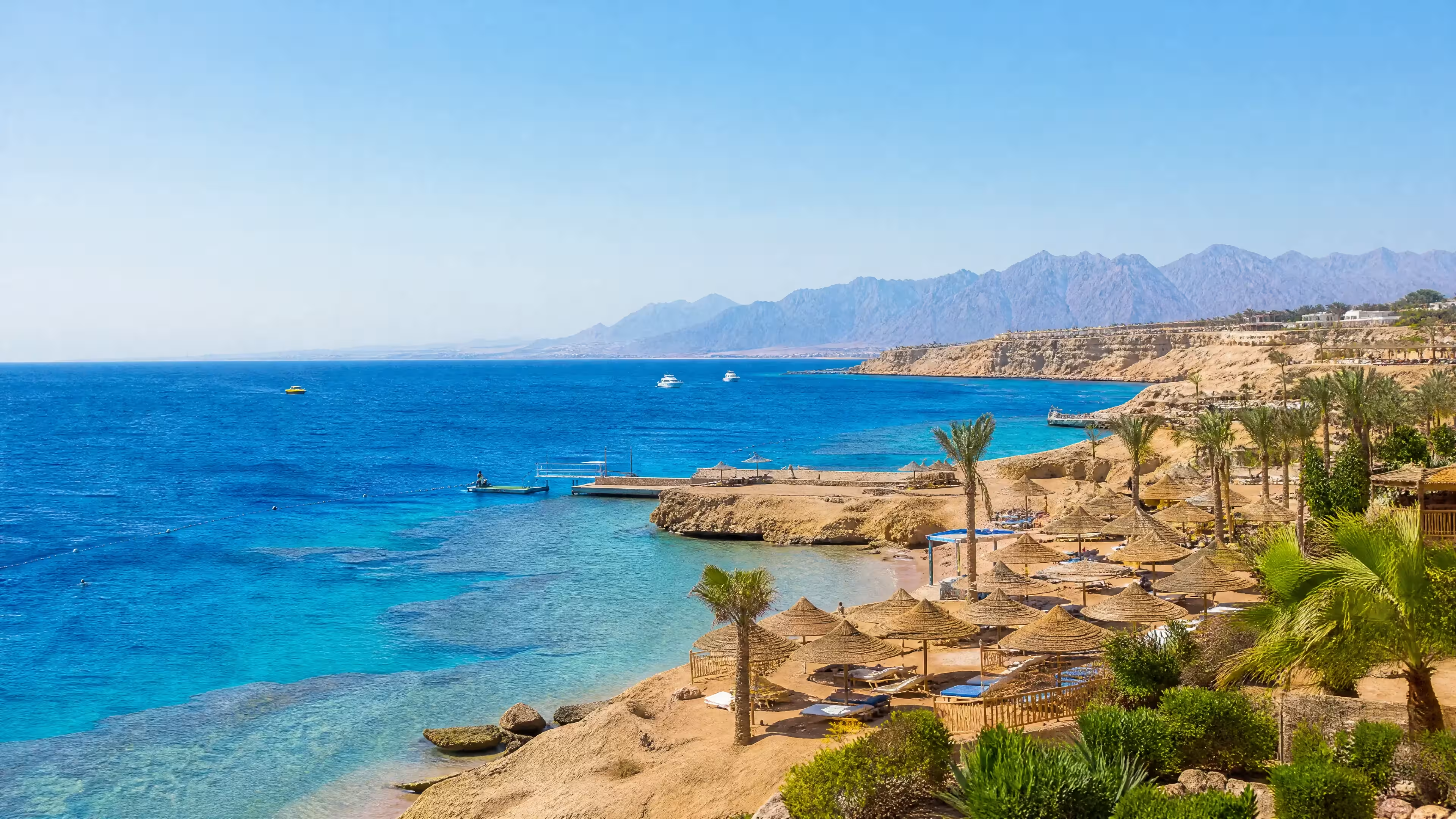
The best time for tours to Egypt from Almaty is from October to April, when the sea is warmed to 24–26 degrees and there is no exhausting heat. The flight to Hurghada will take 6–7 hours with a connection in Istanbul or Sharjah, so choose morning flights so as not to lose the first day.
What you need to know before buying
There is no direct flight from Almaty to Egypt, so the flight requires planning. Most routes take about 7 hours including the stopover. It is most convenient to fly to Hurghada, as this resort receives the main flights from Kazakhstan.
How the flight works and why travel time matters
The flight from Almaty to Hurghada usually lasts 6–7 hours, and almost always it is a connecting flight. A stopover in Istanbul or Sharjah adds several hours of waiting to the journey. For a tourist from Kazakhstan, this means that it is worth choosing morning departures so as not to lose the first day of vacation. Evening flights arrive in Egypt late, and the transfer to the hotel takes another hour and a half. Keep in mind that after a long journey, it is better to plan a light day without excursions right away. The return flight also takes a full day, so factor it into your vacation schedule.
What documents and visa does a Kazakhstani tourist need
To enter Egypt, a Kazakhstani citizen only needs a passport valid for at least 6 months. A visa is issued right at the airport upon arrival, and this takes about 15–20 minutes. The cost of a visa for citizens of Kazakhstan is approximately 25–30 US dollars. Payment is accepted in cash, so keep money ready before passing passport control. The time difference with Almaty is 3 hours in winter and 2 hours in summer: Egypt changes its clocks (UTC+2 in winter, UTC+3 in summer), while Kazakhstan stays on UTC+5 all year round.
When to go so that the vacation is a success?
The choice of time for a trip to Egypt determines the entire nature of the vacation. The beach season and the period for excursions do not coincide in terms of comfort. A tourist from Almaty should focus on their preferences in temperature and humidity.
How the seasons for beach and excursions differ
The high beach season in Egypt lasts from October to April, when the sea temperature stays at 24–26 degrees. During these months, a vacation in Egypt is most comfortable for families with children, as there is no exhausting heat. In summer, the air warms up to 38–42 degrees, and you can stay on the beach only until noon. For excursions, it is better to choose November, February, or March, when trips to the pyramids do not turn into a trial. In December and January, evenings are cool, so a light jacket will be needed for walks around cities.
How weather affects the choice of resort and clothing
The weather in Egypt differs on the coasts of the Red and Mediterranean Seas, although tourists usually choose the former. Hurghada and Sharm El Sheikh offer consistently warm weather almost all year round. In Marsa Alam, it is slightly cooler in summer thanks to ocean winds, which is appreciated by nature lovers. For a trip to Egypt from Almaty, pack light clothing made of natural fabrics, but be sure to take a windbreaker for evenings. In winter, the water in hotel pools is heated, while the sea may seem cool in January.
What to consider when choosing a resort?
Each Egyptian resort has its own character, and a mistake in choosing can ruin the impression. A vacation in Egypt from Almaty most often starts with Hurghada or Sharm El Sheikh. However, for repeat trips, tourists discover less well-known places.
How the beaches and infrastructure of Hurghada and Sharm El Sheikh differ
Hurghada is considered the most democratic resort with developed infrastructure and a long promenade. The beaches here are sandy with a gentle entry into the sea, which is convenient for children and unsure swimmers. Sharm El Sheikh offers more expensive hotels and coral reefs right off the shore. Entering the water there requires special footwear, but the underwater world is richer. In Hurghada, there are more Russian-speaking tourists and affordable cafes, while Sharm is positioned as a premium-class resort. For evening walks, Hurghada has the Old Town with a colorful market, while Sharm has the modern Naama Bay promenade.
Where to find solitude: Marsa Alam, Dahab, El Gouna, and Safaga
Marsa Alam attracts divers and those who value untouched nature, as the reefs there are considered the best in Egypt. Dahab is a place for budget vacations with a bohemian atmosphere and excellent spot beaches. El Gouna is an artificial resort with canals and European service, where there is no hustle and bustle of eastern cities. Safaga is famous for its therapeutic mud and calm sea, suitable for families with small children. These resorts offer a vacation in Egypt away from the crowds but require readiness for limited infrastructure. Transfers to them from Hurghada airport take from 30 minutes to three hours.
When Taba is more convenient for a sightseeing program
Taba is located in the north of the country near the border with Israel, which makes it a base for excursions. From here, tourists go to Jerusalem, Bethlehem, and the Dead Sea in one day. The Taba resort consists of several hotels with private beaches surrounded by mountains. For a Kazakhstani tourist, such a trip is convenient if you want to see as much as possible in one trip. However, the swimming season here is shorter, and the sea is cooler than in Hurghada. Choose Taba only if the sightseeing program is more important than beach holidays.
How to prepare for local rules and habits?
Egypt lives by its own rules, and a tourist from Kazakhstan should study local peculiarities in advance. A holiday in Egypt will be more comfortable if you prepare for cultural differences. Knowing the basic rules will protect you from misunderstandings at the resort.
Money, tips, and where it is safe to pay by card
In Egypt, US dollars and euros are accepted, but it is more profitable to pay in local pounds. Exchange rates in hotels and exchange offices differ, so it is better to change money at specialized points. ATMs are available in hotel lobbies and large shopping centers, but there are few of them in small towns. Tips are part of the local culture, and it is customary to leave 1–2 dollars to a guide or housekeeper for a service. Pay by card only in large hotels and restaurants, while markets require cash. Alcohol is served only in hotels and licensed establishments; its consumption in public places is prohibited.
Food, water, and first aid kit: what to bring from Almaty
Tap water in Egypt is unsuitable for drinking; even for brushing teeth, it is better to use bottled water. Local cuisine abounds with fresh vegetables and fish, but spicy seasonings may be unusual for the stomach. From Almaty, it is worth bringing familiar medicines for digestive disorders and allergies, since pharmacies at resorts sell products from other manufacturers. The sun in Egypt is aggressive, so SPF 50 cream is mandatory even in December. During the first days of stay, minimize time in direct sunlight to avoid burns. Medical insurance is not required for entry, but having it will save you when visiting a paid clinic.
Clothing, sockets, and communication: little things that save a holiday
Egyptian sockets are standard C and F, voltage 220 V, so an adapter for Kazakh appliances is not needed. For visiting mosques and religious sites, closed clothing is required: shoulders and knees must be covered. On the beach, closed shoes for corals and a mask with a snorkel are mandatory, as reefs start near the shore. In Almaty, before departure, check whether temporary restrictions on currency export have been introduced, since amounts over 10,000 dollars must be declared. Buy a SIM card from a local operator right at the airport to stay in touch with your family. Bargaining at markets is the norm, and the initial price is often inflated by 2–3 times.
What to do on site: beach, reefs, and excursions
The holiday program in Egypt depends on your interests and physical fitness. Tours to Egypt usually include beach holidays, but the country offers much more. Active travelers combine swimming with exploring ancient sites.
How to protect yourself from the sun and corals on Egyptian beaches
The Egyptian sun burns even in cloudy weather, so apply cream every two hours. For swimming near coral reefs, use special shoes to avoid injuring your feet. A mask with a snorkel will allow you to see colorful fish right near the shore, especially in Sharm El Sheikh. In the first days of stay, do not dive deep, giving your body time to acclimatize after the flight. After each exit from the sea, rinse with fresh water so that salt does not irritate the skin. Be sure to drink at least two liters of water a day to avoid dehydration.
Rules of behavior in public places and during Ramadan
Egypt has strict rules of decency, and tourists should respect them. The day off in the country is Friday, when many museums and shops operate on a reduced schedule. During Ramadan, many cafes and restaurants outside hotels are closed during the day, so plan your meals in advance. For travel between resorts, it is more convenient to use transfers from the hotel or domestic flights rather than taxis. When visiting religious sites, women need to cover their heads with a scarf, and men should wear trousers. You can photograph local residents only with their permission, otherwise you risk getting into trouble.
Visa and entry rules change: check the primary source — the e-visa portal of the Arab Republic of Egypt, https://visa2egypt.gov.eg/eVisa/. The information on this page was verified on 09.09.2026.
In short
- A holiday in Egypt from Almaty requires planning a flight with a layover of about 7 hours.
- A visa is issued at the airport upon arrival, but it is better to clarify the exact rules before departure.
- The high season lasts from October to April, and in summer the heat reaches 40 degrees.
- Hurghada is suitable for families, Sharm El Sheikh for reef lovers, and Marsa Alam for divers.
- Tap water cannot be drunk, and special shoes are needed for coral beaches.