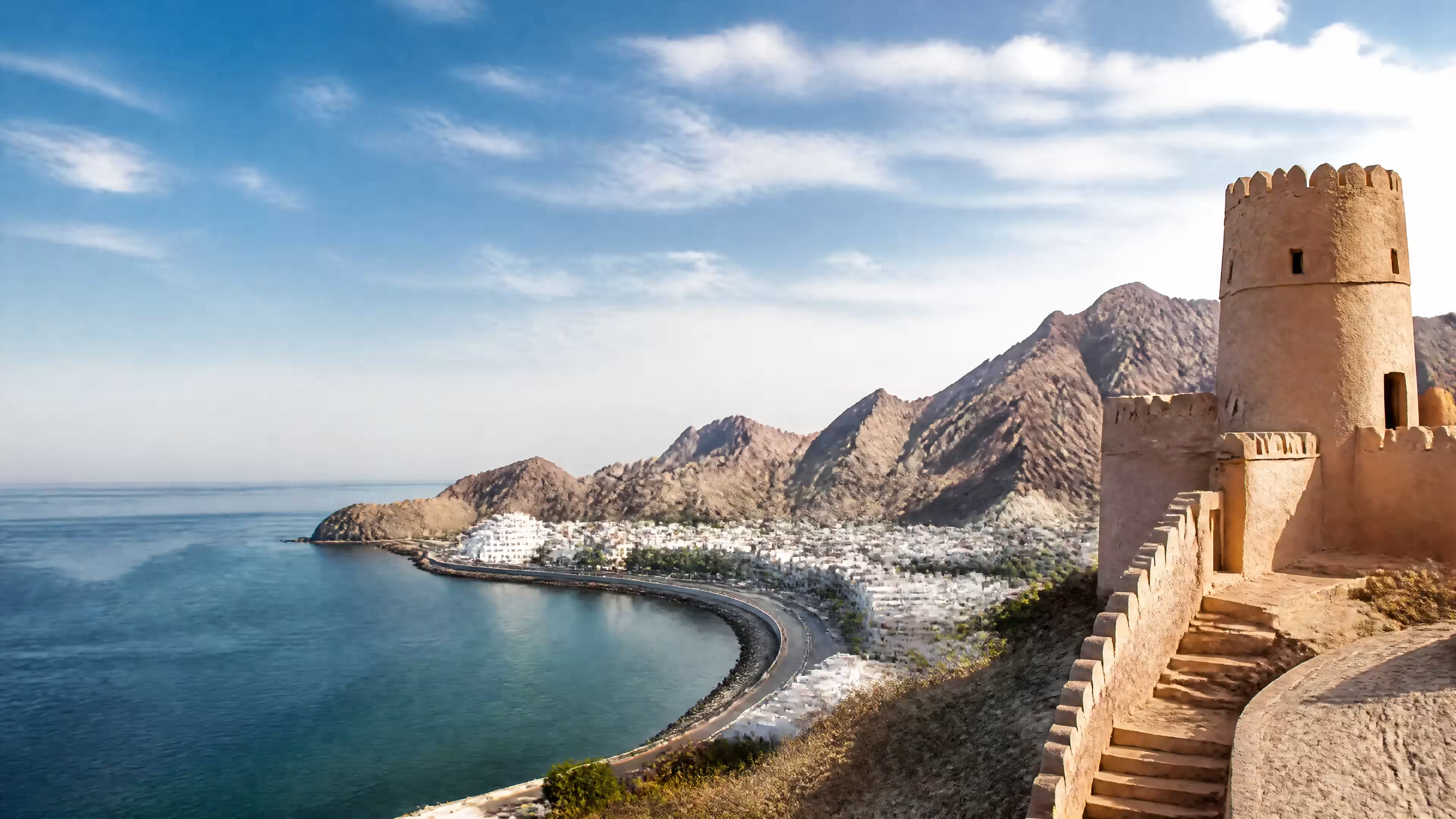
Tours to Oman from Almaty are a flight with a connection (there are no direct flights), holidays most often in Muscat or Salalah, and the best season is from November to March, when it is comfortable to walk and go on sightseeing tours during the day. In summer, the capital is very hot, but the south turns green because of the monsoon. The trip usually lasts 7–10 nights and includes a hotel, transfer, and insurance.
Oman is a destination for those who want a calm holiday without crowds and heat. Here the desert neighbors the ocean, and ancient fortresses neighbor modern hotels. Trips here are almost always built around two points: the capital and the south.
What tour operators offer and how packages differ
Here they are most often built around two points — the capital and the south. Muscat offers mountains, sea, and markets; Salalah attracts with its monsoon and greenery in the height of summer. Packages differ in the number of nights, hotel, and set of sightseeing tours. Some take only the flight and accommodation, while others add a jeep safari over the dunes and a trip to a wadi. Holidays here are rarely beach holidays in their pure form: swimming is combined with trips into the interior of the country. Some operators offer combined routes with travel between cities.
Booking conditions, payment, and what is included in the price
Booking deadlines and payment procedure depend on the specific operator and season. In high season, hotels in the capital sell out quickly, so early booking saves especially noticeably here.
How to prepare for a trip from Almaty?
Preparations for this country begin long before departure. There are no direct flights from Almaty, so the route and documents should be thought through in advance.
Visa, insurance, and entry documents
The procedure for issuing entry permits changes, and before buying a trip it must be checked separately. Medical travel insurance is mandatory, and it is usually included in the package. Issue it for the entire duration of the holiday, not only for the flight dates. Keep copies of the hotel booking and return tickets at hand — they are sometimes asked for at the counter. It is more convenient to take the destination from Almaty with insurance already included, so as not to add it yourself.
Money, cards, and cash on site
The currency here is the Omani rial, and the rate at exchange offices in Muscat is better than at the airport. Cards are accepted in hotels and large shopping centers, but cash is needed in markets and small cafes. Keep a small supply of rials for the day: taxi, water, entrance tickets. ATMs in the capital are common, in remote areas — less so. A holiday in Oman is calmer when part of the amount is in cash.
Communication, internet, and useful apps
It is easiest to buy a SIM card from a local operator at Muscat airport with a passport. The internet in hotels and cafes is stable, but in the desert and mountains there is almost no signal. Download offline maps in advance — they help in wadis and on highways. Taxi and translator apps will come in handy on the very first day. Tours here often include transfer, but for independent trips out, communication is needed.
When is it better to plan a holiday
The season here depends on the region: the north and south live by different weather schedules. It is worth planning a trip with this in mind.
High season and hotel occupancy
The peak falls in the cooler months, when it is comfortable to walk in the capital during the day. At this time, hotels in Muscat become more expensive, and budget options sell out first. Salalah lives by its own rhythm: its high season is shifted toward the summer monsoon. It is worth booking both jeep tours and hotels by the sea in advance. Those traveling for calm choose the shoulder season — fewer people, and the weather still allows sightseeing tours.
Weather in different months and choosing time for sightseeing tours
In summer, most of the country is very hot, and during the day it is better to stay by the water. In winter, the air is fresher, but in the mountains it is cool in the evenings. The south turns green during the monsoon period and attracts tourists. It is more convenient to schedule sightseeing tours to the desert and to wadis in the morning, before the sand heats up. The Omani winter is the best time for long journeys between cities.
How to get around the country and what to see
Logistics here are half the impression. Distances are long, and transport between cities is poorly developed.
Transport between cities: plane, bus, car rental
It is more convenient to get to Salalah by plane than by bus. Buses run between the capital and Nizwa, but the schedule is sparse. Car rental gives freedom, however traffic here is left-hand, and an international license is needed for the car. Mountain roads require experience, especially in the dark. Trips to Oman with a driver remove these worries and often cost no more than renting on your own.
Sightseeing tours to the desert, wadis, and mountain areas
Jeep tours to the Wahiba desert and to wadis are booked in advance — places are limited. Trips usually take half a day or a full day with an early start. Mountain routes lead to viewpoints and old fortresses. In wadis, people swim in freshwater reservoirs among rocks, but shoes with good grip are needed. The Omani desert is colder at night than it seems during the day, so take a layer of clothing.
What a tourist should consider: customs, food, and safety
Local customs are honored here, and this is noticeable in everyday life. A few simple rules will save you from awkward situations.
Dress code, rules of conduct, and Ramadan
Conservative clothing: women should cover their shoulders and knees, especially outside resort areas. To visit the Sultan Qaboos Mosque, women are given an abaya, and entry is possible at certain hours. During Ramadan, many establishments are closed during the day, and eating and drinking in the street during daylight hours is not welcomed. Photographing people without permission is not advisable. A calm holiday in Oman is built on respect for local norms.
Omani cuisine, alcohol and tips
The cuisine is halal, with many dishes made from lamb, fish and rice. Alcohol is sold only in licensed hotels and restaurants. Tips are not mandatory, but are welcomed in restaurants and for guide services. Try local coffee with dates — it is part of hospitality. Portions are generous, and street food is cheaper than restaurant food.
Medicine, pharmacies and health during the trip
Pharmacies are available in major cities, but there are few in remote areas. Take basic medicines with you, including remedies for heat and dehydration. Drinking tap water is not advisable; buy bottled water. In the desert and mountains, it is especially important to monitor your water balance. Insurance covers treatment, but it is better to assemble a first aid kit in advance.
Visa and entry rules change: check with the primary source — the Royal Oman Police, https://evisa.rop.gov.om/. The information on this page was verified on 12.09.2026.
Briefly
- There are no direct flights from Almaty; the route involves a connection.
- The rial exchange rate is better in Muscat exchange offices, not at the airport.
- Cards work in hotels; cash is needed in markets.
- Renting a car requires an international driving permit; traffic is left-hand.
- Alcohol only in licensed places, tips optional.