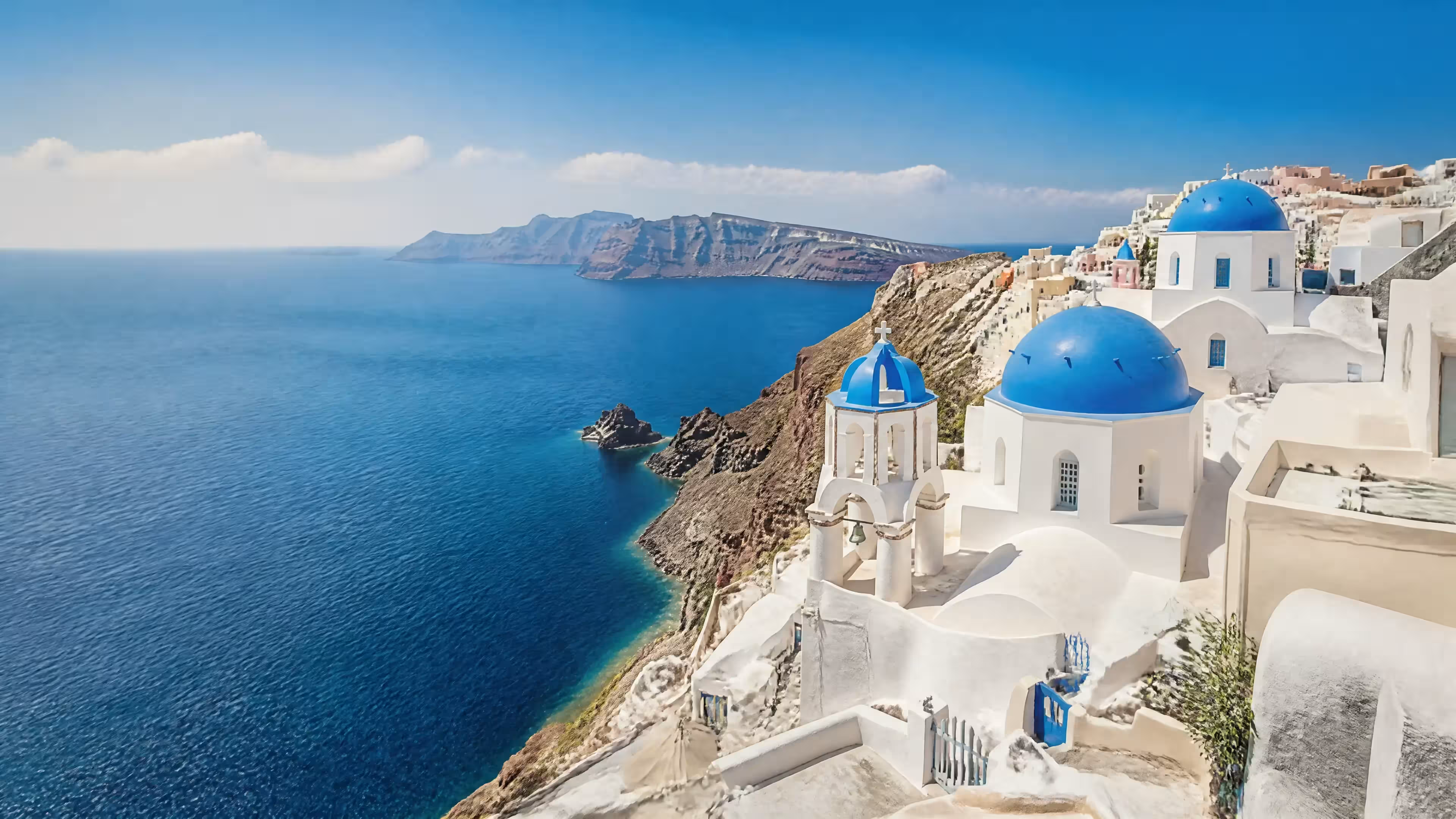
Tours to Greece from Almaty involve a flight with one or two connections, most often through Istanbul, and a holiday on the islands or mainland from May to October. The best months for a trip are May, June, September and October: the sea is warm, the heat is mild, and there are fewer tourists. In winter, the islands are cool and some hotels are closed, but Athens is comfortable for sightseeing.
Visa, documents and fees before the trip: what do you need to know?
Before the trip, it is worth sorting out the formalities and booking conditions. Greece requires preparation in advance, especially in high season.
What documents are needed for citizens of Kazakhstan
For a trip to Greece, citizens of Kazakhstan need a Schengen visa. The full list of requirements and processing times is published by the consular department; current information should be checked on the official website — https://www.mfa.gr/ru/ (checked 01.02.2026). Standard preparation includes a passport with sufficient validity, photographs, confirmation of accommodation and ticket bookings, a bank statement and medical insurance. Insurance coverage must meet Schengen requirements; the minimum amount is specified when applying. Documents are submitted in advance, several weeks before departure from Almaty, so that there is time left for possible clarifications. A holiday in Greece begins with this paperwork, and it is better not to leave it until the last moment.
Booking conditions and payment for the tour with the tour operator
The booking conditions and payment procedure for the tour with the tour operator should be clarified before signing the contract. The amount of the deposit, the deadlines for paying the balance and the refund rules in case of cancellation are fixed in the contract. Clarify which services are included in the price and which are paid separately on site. For a trip to Greece from Almaty, it is important to know the departure date and the meeting time at the airport in advance. These details are usually confirmed a few days before the trip.
The journey from Almaty: how to get there and where are the connections?
There may be no direct flights from Almaty to Greece. The route is usually built with one or two connections, which noticeably lengthens the journey.
Connections through Istanbul, Dubai and Moscow
Istanbul is the most common connection option for trips to Greece from Almaty. The flight to Istanbul takes about five hours, then it is another hour and a half to two hours to Athens or the islands. Dubai is convenient for connections with a good choice of flights, but the total travel time increases. Moscow offers many options, however it adds an extra detour to the route. Allow at least two to three hours for the connection, and preferably more. A holiday in Greece begins already at the airport, and a calm connection saves energy. With a short connection, baggage may not make it onto the next flight.
Time difference and acclimatization after the flight
The time difference with Almaty is 3 hours in winter and 2 hours in summer: Greece changes its clocks (UTC+2 in winter, UTC+3 in summer), while Kazakhstan stays on UTC+5 all year round. In the first days, the body may confuse day and night, so plan your arrival without morning excursions. Trips to Greece from Almaty often include early check-in, but it should be confirmed in advance. On the day of arrival, it is better to walk in the daylight and go to bed according to local time. This way a holiday in Greece will get into rhythm faster, and acclimatization will be smoother.
Seasons and weather: when is the best time to plan a trip
The swimming season in Greece starts in May and lasts until October. The choice of month depends on what you expect from the trip.
The velvet season and its advantages for sightseeing
The velvet season in Greece falls in September and October. The sea is still warm, and the heat subsides, so sightseeing is easy. At this time there are fewer tourists than in July and August, and prices for a holiday in Greece are usually lower. Crete and Rhodes in September are especially good for traveling around the island. Santorini and Corfu in October please with mild weather and calm views. Beaches in the velvet season are freer, and the water remains comfortable for swimming. For a sightseeing program, this is the best window of the year.
Winds in the Cyclades and ferry delays
In summer, strong winds blow in the Cyclades, because of which ferries may be delayed. Santorini and Kos lose some flights on such days, and the schedule shifts. Island tours should be planned with a time buffer. If there is only one day between the islands, one delay breaks the entire route. Leave extra days before the return flight from Athens. A holiday in Greece in the Cyclades in July and August requires flexibility.
How to get around between the islands and within the country
Ferries run and domestic flights operate between the islands. Athens serves as the main transfer hub for such a route.
Ferries, domestic flights and a connection in Athens
From Athens, ferries run to most islands and domestic flights operate. A connection in the capital often takes a whole day, and it is worth spending it on the Acropolis. Ferries to Crete, Rhodes and Kos take different amounts of time, so tickets in summer are booked in advance. To Santorini and Halkidiki in high season, places sell out quickly. Domestic flights are faster, but more expensive and depend on the schedule. A holiday in Greece with transfers requires careful planning.
Car rental: license, winding roads and parking
To rent a car on the islands, you need an international driver's license. Roads in Crete, Rhodes and Corfu are sometimes narrow, with winding turns, and require driving experience. Parking in coastal towns is overcrowded in summer, especially in Santorini. Take a car if you plan to travel around the island rather than sit on one beach. Such offers are convenient for Crete and Halkidiki, where distances are noticeable. Clarify the insurance conditions and deductible when receiving the car.
What to consider on site: money, food and daily routine
On the ground, everyday little things matter: currency, food, and the local rhythm of life. They noticeably affect the impression of a trip.
Euros, cash, and acceptance of cards from Kazakh banks
In Greece, payments are made in euros, and cash comes in handy on the islands and in tavernas. Cards from Kazakh banks may not be accepted in small establishments, especially on Kos and small islands. Keep cash on you for food, taxis, and small purchases. Holidays in Greece on Santorini and in Halkidiki also require a reserve of cash. Large hotels and shops in Athens accept cards more often. Exchange money at banks or withdraw from ATMs, not at exchangers near the beach.
Greek cuisine, tips, and siesta
Greek cuisine is built on moussaka, souvlaki, Greek salad, and fresh fish. Portions are usually large, and the local olive oil is worth trying. Tips in Greece are not mandatory, but it is customary to leave a small amount in tavernas and cafes. Siesta affects the schedule: shops and museums in small towns close during the day. Greek holidays also change working hours. Holidays in Greece on Crete and Rhodes without taking siesta into account can ruin plans for the day.
In short
- Tours to Greece from Almaty are usually built with a transfer in Istanbul, Dubai, or Moscow.
- Holidays in Greece are best planned for May–June or September–October.
- In summer, winds and ferry delays are possible in the Cyclades.
- Athens is convenient as a transfer hub with a day at the Acropolis.
- Renting a car requires an international license and experience on winding roads.