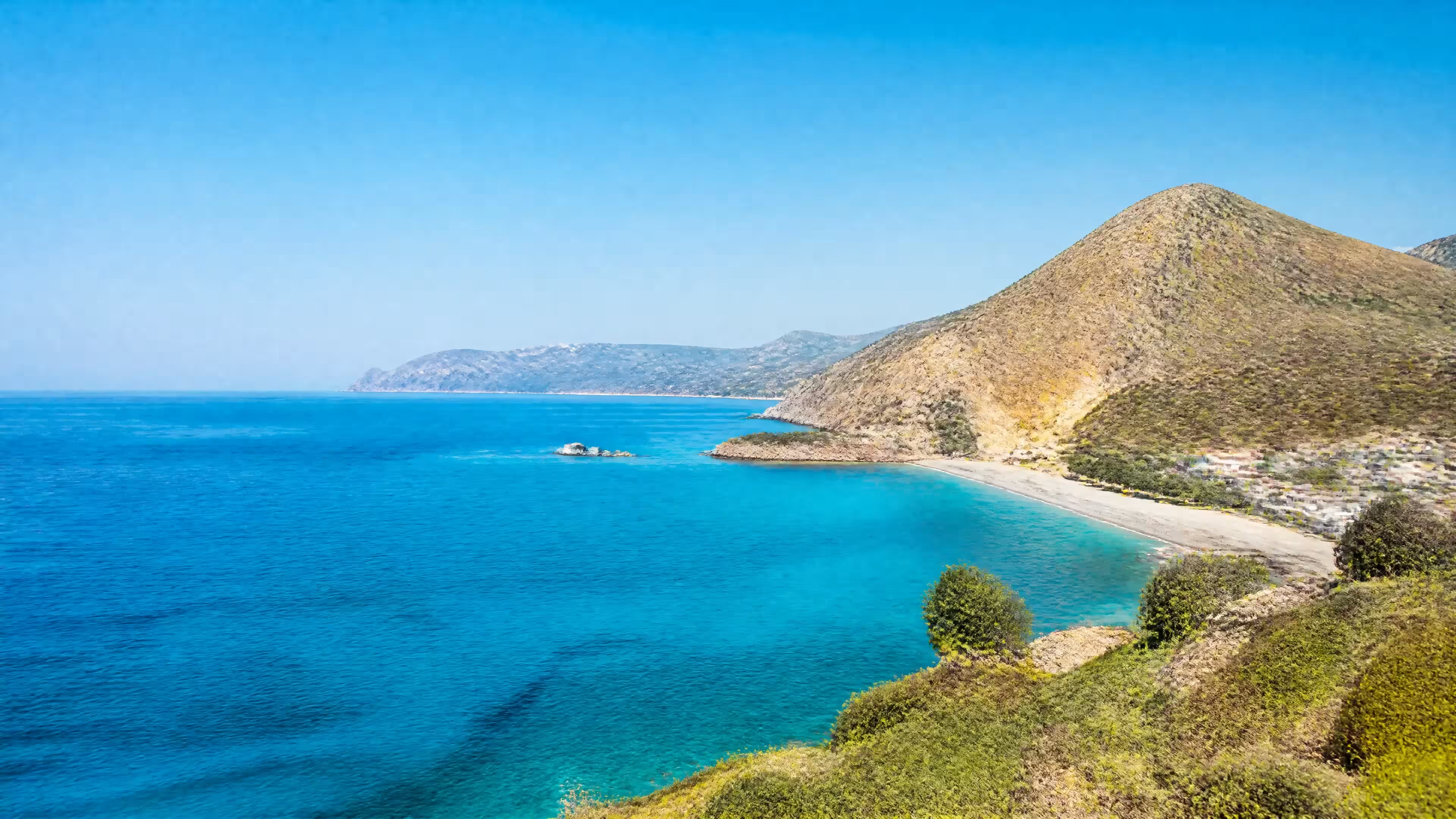
A holiday in Crete is a season from May to October, with the peak falling in July and August, when the sea is warmed to 25–26 degrees. There are no direct flights from Almaty: they fly with one transfer through Istanbul or Athens, and the journey takes from eight to fourteen hours. The island is large, and the resorts are different: Heraklion and Hersonissos are noisy, Rethymno and Chania are calmer, and the southern coast is quieter and windier.
Visa and documents for a trip to Crete: what documents are needed for citizens of Kazakhstan?
A trip to Crete begins with paperwork, and accuracy matters here. Greece is part of the Schengen Area, so a holiday in Crete requires a full package.
What documents are needed for citizens of Kazakhstan
A trip by a citizen of Kazakhstan begins with a Schengen visa, which is issued by the consulate of Greece. The passport must be valid for at least three months after the intended return, and blank pages must be left in the document itself for the stamp. Photographs of the established format, a completed form, and copies of previous visas, if there were any, are attached to the application. The consulate almost always requests confirmation of accommodation booking and tickets in both directions, and tours usually already include these papers in the package. Financial solvency is confirmed by a bank statement or a certificate from work. Medical insurance for Schengen is mandatory, the minimum coverage is set by the consulate, and this should be asked about in advance. It is better to check the exact list on the visa center website before submitting.
Processing times and submission in Almaty
For a resident of Almaty, it is more convenient to submit documents at the visa center of Greece, where appointments are made in advance. The standard processing time reaches fifteen calendar days, but in high season it stretches longer. It is advised to submit the papers a month to a month and a half before departure, so that there is a margin for additional certificates. The visa center accepts applications by prior appointment, and biometrics are taken on site. The finished passport is returned by courier or issued at the window, and the method is reported upon submission. Citizens of Kazakhstan should take into account that in May and June the lines are longer.
The road to the island and travel time: how to get there and how long does it take?
There are no direct flights from Almaty to Crete, and the journey almost always goes with one transfer. The Greek side receives tourists through several major hubs.
Routes with a transfer through Istanbul and Athens
From Almaty it is most convenient to fly through Istanbul, from where there are direct flights to Heraklion or Chania. The second popular option for a holiday in Crete is a transfer in Athens, where planes fly to the island and ferries depart from the port of Piraeus. There are routes through Thessaloniki, but they are longer and more expensive. The total travel time, taking into account the connection, takes from eight to fourteen hours, and in winter the schedule is less frequent. Athens airport is large, and at least two hours are allowed for the transfer between terminals. Tickets for connecting flights are taken as a single booking, otherwise the baggage to Crete will have to be collected and checked in again. Tours to Crete often already include the flight, and then the operator thinks about the connections.
Time difference and acclimatization
The time difference with Almaty is 3 hours in winter and 2 hours in summer: Greece changes its clocks (UTC+2 in winter, UTC+3 in summer), while Kazakhstan stays on UTC+5 all year round. In summer the gap narrows because Greece switches to summer time. The body handles such a shift more easily than a flight across the ocean, but the first day of rest is still better not planned to be busy. After arriving in the morning, it is worth spending more time in the light and going to bed according to the local schedule. Coffee and a heavy dinner late in the evening interfere with readjustment. Children and people with blood pressure need a margin of a couple of calm days. Greek cuisine and sea air usually speed up adaptation.
How much does a holiday cost and how to pay
The budget of a trip to the island consists of the flight, accommodation, food, and movement. The currency here is the euro, and this determines all calculations.
Seasonal fluctuations in prices for accommodation and flights
The difference between May and August for accommodation in Crete reaches twofold, and this is the main item of savings. Tours to Crete in July and August rise in price the most, because the heat and school holidays coincide. Booking a hotel three to four months in advance is almost always more profitable than looking on the spot. In June and September prices stay in the middle, and the weather remains comfortable. The flight from Almaty also becomes more expensive on peak dates, so flexible dates save noticeably. The Greek side offers the lowest rates in winter, but some hotels are closed.
Cash, cards, and tips in tavernas
The euro remains the main currency in Crete, and cards from Kazakhstani banks do not always work abroad. It is worth bringing cash with a reserve, especially small notes for taxis and markets. Large hotels and shops accept cards, but in villages and tavernas there may be no terminal. Exchange offices are found in cities, and the rate at the airport is usually less favorable. Tips in tavernas are left as small change or the bill is rounded up, and a separate service charge is rarely found. In Greece it is not customary to bargain in shops, but in markets it is appropriate. ATMs dispense euros, however the commission depends on the bank.
Movement around the island and communication
The island is large, and the mode of movement determines how much you will manage to see. Public transport does not cover everything, so the choice should be made in advance.
Car rental and international rights
A rental car gives freedom and allows you to reach quiet beaches where no bus goes. An international driver's license is required by almost all rental companies, and without it the contract will not be issued. The driver's age is usually at least twenty-one years, and for powerful cars the bar is higher. Roads in the mountains are narrow and winding, so driving experience must be confident. Extended insurance is taken, otherwise minor scratches are paid out of pocket. Gasoline on the island is more expensive than in mainland Greece, and gas stations in the countryside are rare. Parking in old towns is paid and tight, which is worth considering.
Buses, SIM cards and coverage in the mountains
Buses connect major cities on a schedule, but reaching remote beaches and gorges by them is inconvenient. Tickets are bought from the driver or at the ticket office, the schedule changes by season. A local SIM card costs less than roaming of Kazakh operators, it is issued with a foreign passport. Coverage along the coast is stable, but in the mountains the signal disappears in places entirely. Downloaded offline maps help in gorges and on mountain roads. Wi-Fi is available in hotels and cafes, but the speed in villages can be weak. For a short trip, roaming of your own operator is sometimes enough.
Health, safety and local rules
A holiday on the island is rarely associated with risks, but basic precautions will not hurt. Local customs are honored here, and this applies even to tourists.
Insurance, pharmacies and heat in August
Medical insurance for Schengen is mandatory, and it is arranged before submitting documents. August brings the peak of heat, when the temperature rises above thirty-five degrees in the shade. At noon it is better to stay indoors or near the water, and wear a hat at all times. Pharmacies are available in large cities, in small villages there may be none at all. Medicines are sold by prescription, so usual drugs are brought with you. Windy days on the southern coast occur even in summer, and sea trips are then canceled. At the first signs of overheating, you should go into the shade and drink water.
Dress code in monasteries and buying souvenirs
When visiting monasteries and churches, shoulders and knees must be covered, women are sometimes given a scarf at the entrance. Shorts and open T-shirts in temples are inappropriate, even if it is hot outside. Photography inside is often prohibited, signs warn about this. Souvenirs and local products are more convenient to buy not in tourist shops, but at markets in cities. Olive oil, honey, herbs and ceramics cost noticeably less there. Bargaining at the market is appropriate, in stores — not. The Greek side is proud of its products, and tasting is often included in the purchase.
Visa and entry rules change: check with the primary source — the Ministry of Foreign Affairs of the Hellenic Republic, https://www.mfa.gr/en/visas/. The information on this page was verified on 10.09.2026.
Briefly
- A Schengen visa is arranged in advance, submission goes through the visa center in Almaty.
- There are no direct flights, it is more convenient to fly through Istanbul or Athens with one transfer.
- The time difference with Almaty is 3 hours in winter and 2 hours in summer: Greece changes its clocks (UTC+2 in winter, UTC+3 in summer), while Kazakhstan stays on UTC+5 all year round.
- The currency is the euro, cards of Kazakh banks do not work everywhere.
- Cash should be brought with a reserve, especially small bills.