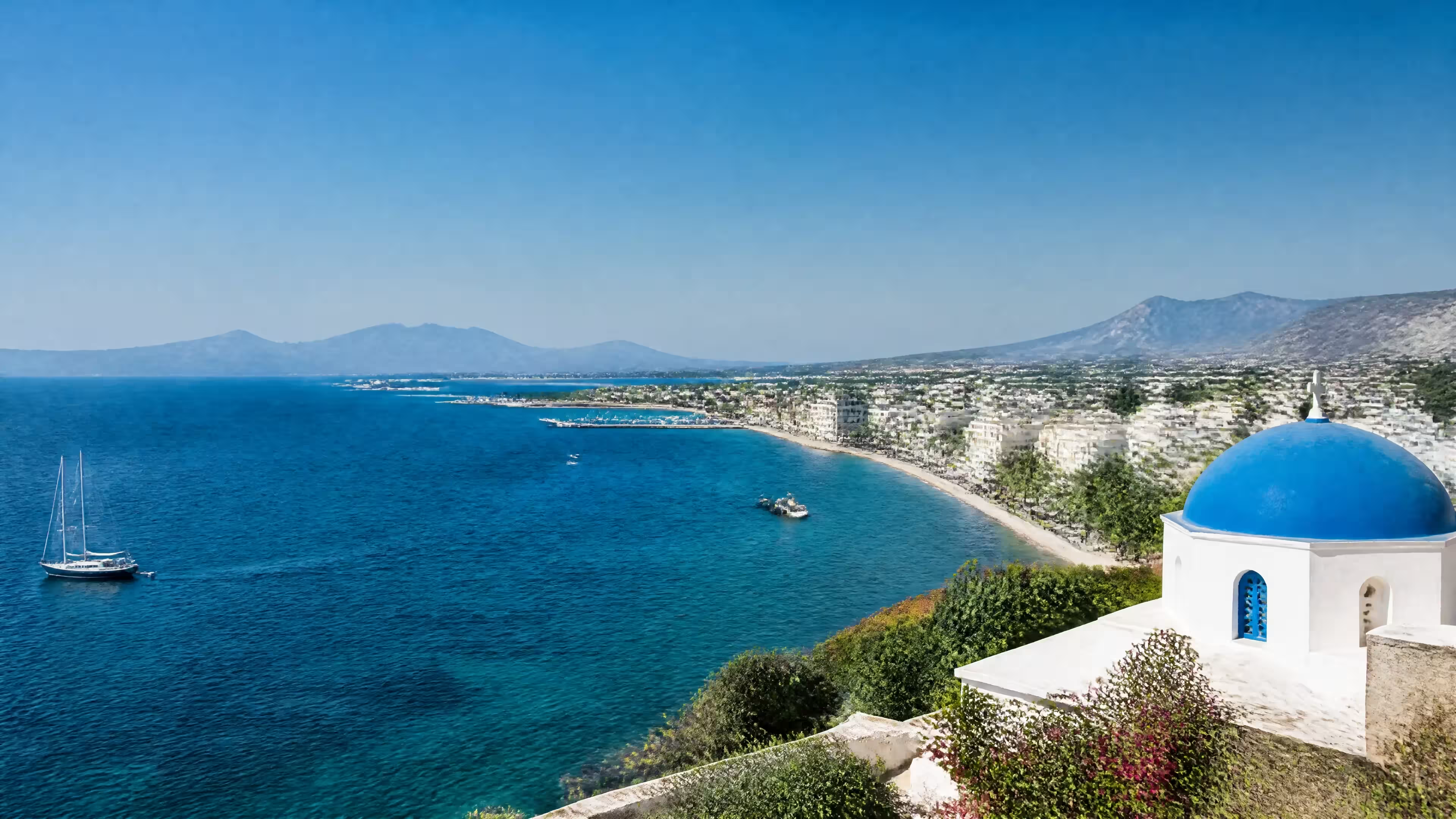
Holidays on Kos are a Greek island with a mild climate, where the season lasts from May to October. From Almaty, people fly with one transfer via Istanbul, Athens or a European hub, and the journey takes from eight to fifteen hours. The peak of heat and prices is July and August, while June and September are the most comfortable. Tours to Kos include the flight and transfer, and it is better to book in advance.
How to prepare for a trip to the island
Planning a trip to Kos begins long before departure. Weather, seasons and packing are what you should start preparing with.
When it is better to go: seasons and weather
The best time for a trip is from late May to early October. In July and August, the island is under thirty-five degrees of heat, and the sea warms up to comfortable values. June and September give mild warmth without exhausting heat, and these are the months families with children choose. May and October are the velvet season: the air is around twenty-five, the water is still warm, and prices are noticeably lower than peak. In winter, the resorts empty out, many hotels close, and the island lives its usual life. The Greek side of the island welcomes tourists for about six months, and during these months the choice of hotels is the widest. Plan your trip so that you catch comfortable weather, not only the peak of the season.
Packing a suitcase from Almaty
From Almaty to Greece, people travel light, but a few things are taken without fail. Sunscreen with a high factor, a hat and sunglasses are the first things needed on the beach. A swimsuit, sandals and light clothing made of natural fabrics will be useful every day. In the evening by the sea it can be cool, so a light sweater is not superfluous. Medicines for stomach upset, painkillers and bandages go into the first aid kit. An adapter for sockets in Greece is not needed — the plugs there are like in Kazakhstan. Money is exchanged for euros in advance or withdrawn from an ATM on site.
Tours to the island and the journey from Almaty
There are no direct flights from Almaty, so the route is built with a transfer. Travel time and price depend on the chosen hub and season.
Routes with transfers and travel time
The journey from Almaty to Kos, Greece goes through one of three convenient hubs. Most often people fly via Istanbul: this is a short first segment and a convenient connection. The second option is via Athens, where an internal flight to the island is added. The third is via a European hub such as Frankfurt or Vienna, but there the connection is longer. The total travel time including waiting is from eight to fifteen hours, and everything depends on how long you wait between flights. Night connections are cheaper, but harder for a family with children. Tours to Kos from Almaty usually include the flight, and the connection is selected for a convenient departure time.
What the tour price depends on and when it is higher
The cost of a trip to the island consists of the season, hotel category and meal type. The peak of prices falls in July and August, when it is hot and crowded on the island. In June and September, the same hotels cost noticeably less with comfortable weather. A hotel with the all inclusive system adds to the price, but saves on meals on site. Apartments and guest houses cost less if you cook yourself. Early booking gives the best price, and last minute offers appear closer to departure. The Greek side of the island welcomes tourists from May to October, and during these months the choice is wider.
Accommodation, transfer and budget on site
Accommodation on the island is chosen to suit your rhythm: a noisy city or a quiet bay. The road from the airport and money on site are what is calculated in advance.
Accommodation areas and hotel types
The island's resorts are divided into noisy and quiet, and the choice depends on the company. Kos town suits those who want bars, the embankment and shops a step from the hotel. Kardamena and Tigaki are sandy beaches and wind for windsurfing. Marmari and Mastichari are chosen by families with children because of the gentle entry into the sea. Hotels on the island range from apartments with room only to complexes with the all inclusive system. Guest houses run by locals cost less and give a Greek atmosphere. Distance from the sea is the main price factor: the second line is cheaper than the first by a noticeable amount.
How to get from the airport to the hotel
The island's airport stands next to Kos town, and the road to hotels takes different amounts of time. A taxi to the center takes about ten minutes, and to distant resorts up to an hour. The bus runs on schedule and costs less, but is inconvenient with suitcases. A booked transfer meets you in the arrivals hall and takes you straight to the hotel. Tours to Kos often include a group transfer, and then you will have to wait for other tourists. Renting a car at the airport gives freedom, but requires a license and driving experience. A trip with a transfer from the tour operator saves you from searching on site.
Money: euros, tenge exchange rate and bank cards
Greek euros circulate on the island, and the tenge to euro exchange rate is calculated before departure. Exchange at the airport is unprofitable; it is better to exchange in the city or withdraw from an ATM. Cards of Kazakhstani banks do not work everywhere abroad, so cash is taken with a reserve. Small shops and taverns accept only cash, while large hotels accept cards. ATMs stand in Kos town and large resorts; in villages there are almost none. The withdrawal commission is checked with your bank in advance. Part of the budget is kept in cash so as not to depend on terminals.
Entertainment on the island?
The island offers both beach relaxation and active days. Entertainment here is for every taste — from boat trips to night bars.
Excursions, sea trips and diving
Sea trips are the main entertainment on the island, and they are booked on the embankment. Boat tours go to neighboring islands, where people swim in bays with clear water. Diving on Kos is popular because of sunken ships and reefs near the shore. Renting a yacht for a day suits companies that want their own route. Excursions around the island include ancient ruins and thermal springs. Greek cuisine in taverns by the sea becomes part of the walk. Tickets for popular tours are taken a day ahead, otherwise places run out.
Active holidays and water sports
The wind on the southern coast makes the island a magnet for windsurfing. Board and kite rentals are available on the beaches of Kardamena and Tigaki. Cycling routes run along the coast and through olive groves. Hiking trails lead to viewpoints and old churches in the mountains. Water skiing, parasailing and banana boats are offered on every major beach. Equipment is provided on site, and instruction is included in the price. It is best to plan such active leisure for the morning, while it is not yet hot.
Nightlife, shopping and local souvenirs
Nightlife is concentrated in Kos Town and along the resort promenades. Bars stay open until morning, and clubs open closer to midnight. Evening walks along the promenade are a separate kind of holiday for families. Water parks provide relief for children during the day while adults are on the beach. Shopping on the island means olive oil, honey, olive-based cosmetics and local sweets. Souvenirs are also brought back in the form of ceramics and handmade textiles. Greek herbal cosmetics are in demand among tourists.
What to consider before the trip?
The little things in preparation determine how calm the holiday will be. Communication, safety and local customs are what is worth thinking through in advance.
Communication, internet and the language barrier
Roaming of Kazakhstani operators abroad is expensive, so the tariff is calculated in advance. A local SIM card is bought in Kos Town, and it provides cheap internet. Wi-Fi is available in hotels, cafes and most taverns, but the speed varies. The language barrier is hardly felt: in tourist areas people speak English. Greek will be useful for greetings, and locals appreciate it. Menus in taverns are usually duplicated in English. A translator on the phone helps in rare situations outside the resorts.
Safety, tips and local customs
The island is considered safe, but basic rules have not been canceled. Valuables and money are left in the hotel safe, not on the beach. Tips in cafes and restaurants are customary but not mandatory: people round up the bill or leave about ten percent. In taverns, a compliment from the establishment is sometimes brought. Local customs are simple: respect for elders and calm behavior in churches. Emergency numbers are written down in advance so as not to search for them in a panic. The Greek side of the island is hospitable, and a smile decides more than a tip.
In short
- Booking a tour to the island begins with choosing a date and a hotel.
- Insurance and a first aid kit are packed before departure, not on site.
- Cash euros are taken with a reserve, cards do not work everywhere.