
Tours to Tunisia from Uralsk: prices
Instalments up to 24 months on any tour A manager replies within 15 minutes
Tours to Tunisia

Low-price calendar for tours to Tunisia
The lowest price by month for the chosen destination.
Tour collections for Tunisia


How to buy a tour to Tunisia
- 01
Find a tour
Departure city, destination, dates, nights and who is travelling — five fields in one row.
- 02
Choose and book
Compare the price for two, the board and the beach line, then hold your choice with a request.
- 03
Pay
By card, in instalments through a bank, by bank transfer or in cash at the office.
- 04
Get the documents
The contract, the voucher, the insurance policy and the itinerary receipts arrive by e-mail.
Tours to Tunisia: facts for the traveller
Ready to travel?
Leave a request and a manager will suggest options for your budget, dates and party.
Tours to Tunisia: what to know
The best time to travel is from May to October: in September and October the sea is still warm, and prices are lower than in the July peak. The main resorts are Hammamet, Sousse, Monastir, Mahdia and Djerba.
Visa, money and fees before the trip
A package holiday in Tunisia saves you from most formalities, but the tourist prepares some of the paperwork themselves. Below — about money, insurance and fees, without which a trip from Uralsk will not take place.
How a visa is arranged for citizens of Kazakhstan
When buying a package to Tunisia, the operator usually takes care of the paperwork, and the tourist only has to collect a minimal set of documents. The exact list and submission deadlines depend on the receiving party and change, so check them with the manager before payment. In advance, prepare color copies of the ID card, fill out the form, attach a photo of the established format. For families with children, birth certificates are added. If one of the parents is traveling without the other, this point is clarified separately. Tours to Tunisia from Uralsk are convenient because the receiving party handles the formalities, and the tourist receives a ready-made itinerary. The hotel name, dates and meal type are fixed in the voucher. Print it and take it with you, and do not keep it only on your phone.
Insurance policy and what to check before payment
The policy is arranged together with the tour, and two points are important in it: coverage of medical expenses and assistance during hospitalization. Check the minimum amount and the list of risks at the time of arrangement, because insurers' terms differ. The policy is printed and kept in hand luggage, not in baggage. If a doctor is needed at the resort, first call the service line using the number from the policy, and only then go to the clinic. Without this call, expenses may not be reimbursed. Holidays in Tunisia with children should be arranged with extended coverage. Keep copies of documents separately from the originals — a simple rule that helps in a disputed situation.
Currency exchange and cards of Kazakhstani banks
The rate at the airport, bank and resort differs noticeably, and the difference is sometimes in favor of the one who does not rush. Changing the entire amount immediately upon arrival is unprofitable: in Hammamet, Sousse or Monastir exchange points are found at every step. Dollars and euros are accepted more readily than tenge, so take part of the cash in foreign currency while still at home. Cards of Kazakhstani banks do not work everywhere: payment goes through in large hotels, but cash will be required at the market and in small cafes. Before the trip, notify the bank of the dates and country, otherwise the transaction will be blocked as suspicious. ATMs in tourist areas exist, but the commission is noticeable. Keep small change with you — it helps in a taxi and when buying water.
When is the best time to go and how much does it cost?
The season on the coast determines both the weather, the price, and the hotel occupancy. Let's break down when it is more profitable to go and what the cost of a holiday consists of.
High and low season on the coast
Peak demand falls in July and August, when the sea is warmed up and the heat is steady. During this period, prices for tours to Tunisia from Uralsk are maximum, and hotels are booked months in advance. The velvet season is September and October: the water is still warm, the air is milder, and the cost is noticeably lower. From November to March, the low season begins, when swimming is not comfortable for everyone, but excursions are easier to handle. Spring, April and May, is the golden mean for those who do not like crowds. In winter, some hotels close for renovation, and the choice of entertainment narrows. For families with children, June and September are better suited. If the goal is a calm holiday in Tunisia without fuss, choose the shoulder season.
Cost of tours and what affects the price
The price consists of several components, and understanding each helps to save without losing quality. First — the season: the difference between July and October for the same hotel can be multiple. Second — the category of accommodation and meal type, from breakfasts to all inclusive. Third — the distance of the resort from the airport: Djerba and Mahdia require a longer journey, which is reflected in the transfer. Fourth — booking time: early planning is almost always cheaper. Fifth — the length of the trip, since the flight takes a significant share of the bill. A Tunisian economy-class four-star and a premium hotel differ not only in the room, but also in the set of services. Compare offers by composition, not only by the final figure.
| Resort | Season | Type of accommodation | Price guideline |
|---|---|---|---|
| Hammamet | June–September | 4 stars hotel, all inclusive | Above average |
| Sousse | May–October | 3–4 stars hotel, bed and breakfast | Average level |
| Monastir | June–September | 4–5 stars hotel, all inclusive | Above average |
| Djerba | April–November | 4 stars hotel, half board | Average level |
| Mahdia | May–October | 3–4 stars hotel, bed and breakfast | Below average |
How to prepare for the trip?
Packing takes more time than it seems, and it is better to break it down point by point. Below — health, suitcase and communication at the resort.
Sanitary formalities and vaccinations
Mandatory vaccinations for a trip to resorts are usually not required, but a number of recommendations exist. Doctors advise planning vaccination against hepatitis A and tetanus in advance, a month before departure. Holidays in Tunisia take place in a hot climate, so it is worth taking care of sun protection and drinking regimen. Water is drunk only bottled, even for brushing teeth in the first days. Fruit is washed and peeled, and street food is tried cautiously. If there are chronic diseases, take an extract from the medical record in Russian and English. Before the trip, it is worth visiting a general practitioner and discussing personal risks. The first aid kit is assembled for yourself, and not according to a universal list.
What to put in the suitcase and first aid kit
The main rule is light items made of natural fabrics and comfortable shoes. The list is basic, supplement it for your route.
- A hat and sunglasses for walks in the heat.
- High-SPF cream and after-sun product.
- A swimsuit, flip-flops and a light pareo for the beach and pool.
- A warm sweater or windbreaker for cool evenings and air conditioning.
- A first-aid kit: painkillers, antipyretics, remedies for diarrhea and allergies.
- Bandages, antiseptic and insect bite remedy.
- Personal medications with a supply for the entire trip.
- A plug adapter and a power bank for the phone.
Communication, internet and SIM cards
Mobile communication at the resort is handled in two ways, and the choice depends on how much you plan to call. A local SIM card costs less than roaming with Kazakh operators, but requires a passport and time to arrange it at a salon. Roaming is more convenient because the number stays the same, and it can be activated back home with one call to the operator. Wi-Fi in hotels in Hammamet, Sousse and Monastir is usually available in the lobby, while the signal is weaker in the rooms. Hotel internet is enough for maps and messengers, but for video calls it is better to get a local card. The speed on the coast is acceptable, while deeper on the island of Djerba it can be lower. Download offline maps and a translator in advance — this will help where the network disappears.
How should you behave on site?
Respect for local customs noticeably simplifies the holiday and opens more doors. Below are the rules of behavior, language and safety at the resort.
Local laws, customs and dress code
Tunisia is a secular country with Muslim traditions, and finding a balance here is not difficult. On the hotel grounds and on the beach, tourists dress as they are used to, but outside them it is worth dressing more modestly. In the city, women are better off choosing clothes that cover the shoulders and knees, especially near mosques and in markets. Photographing people without asking is not customary, and filming is restricted in some places. During Ramadan, one should not eat or drink on the street during the day — this is respect for those fasting. Public displays of affection are restrained. Alcohol is sold in hotels and licensed establishments, but not everywhere. Local residents are friendly and readily help if approached politely. Calm behavior removes most misunderstandings.
Language barrier and useful phrases
The official language is Arabic, but French is widely used in the tourism sector. In hotels in Hammamet, Sousse and Monastir, staff often understand English, but in the market and in taxis it helps less often. A few words in French noticeably win over the interlocutor.
| Situation | French | Pronunciation |
|---|---|---|
| Greeting | Bonjour | bonjour |
| Thank you | Merci | merci |
| How much does it cost | Combien | combien |
| Please | S'il vous plaît | sil vu ple |
| Goodbye | Au revoir | o revuar |
Safety and medicine at the resort
Tunisia's resorts are considered calm, but basic precautions have not been canceled. Keep valuables and money in the hotel safe, and do not carry them with you to the beach. In crowded places, watch your bag, especially in the markets of Mahdia and in the medina of Sousse. Pharmacies on the coast are common, and familiar medications there are mostly available under different names. In case of heatstroke, move the person into the shade, give water and cool them down. If you feel unwell, contact the hotel clinic or call the insurance service. Swim in areas where lifeguards are on duty, and do not swim beyond the buoys when there are waves. The sun is treacherous when you are not used to it, so in the first days it is better to spend time on the beach in the morning and evening.
Tipping in hotels, cafes and taxis
Tipping in Tunisian hospitality is part of the culture, and this should be treated calmly. Leave a small amount for housekeeping for cleaning, preferably daily, rather than one bill at the end. Give the porter a symbolic amount in cash for the suitcases. In cafes and restaurants outside the hotel, tips are added to the bill if the service charge is not included. It is customary to leave the taxi driver a rounded-up amount or a small bill on top. Thank the guide and bus driver at the end of the trip. Keep small change at hand, because staff often do not have change. A smile and a couple of words of gratitude are valued no less than money.
Visa and entry rules change: check with the primary source — the Ministry of Foreign Affairs of the Tunisian Republic, https://www.diplomatie.gov.tn/. The information on this page was verified on 17.09.2026.
Holidays with children and independent movement
The family format and independent trips require separate preparation. Let's look at transport, food and entertainment for children.
Airport transfer and car rental
Group transfer is included in most package offers and starts as tourists are gathered. The road to Hammamet and Sousse takes about an hour, to Monastir a little longer, and to Djerba and Mahdia noticeably longer. The bus makes stops at hotels along the route, so travel time depends on your place on the list. Renting a car gives freedom, but requires attention: traffic in the country is busy, and local drivers interpret the rules loosely. An international license will come in handy, although rental companies sometimes accept national ones too. Book the car in advance, especially in high season. There are gas stations on the coast, but fewer on secondary roads. For short trips around the resort, it is easier to take a taxi.
Gastronomy outside the hotel and shopping
Tunisian cuisine is based on fish, vegetables, olive oil and spices, and outside the hotel it reveals itself more vividly. Try couscous, brik with egg, the spicy shorba soup and grilled fried fish. Harissa is a local pepper paste, served almost everywhere. Choose an establishment where locals are sitting: there it is fresher and cheaper. Souvenirs include ceramics, olive oil, dates, carpets and leather goods. Haggling in markets is customary and even expected — the starting price is calmly reduced by half. Do not agree to the first offer and do not show strong interest. Large stores work at fixed prices.
Family holidays and infrastructure for children
Hotels on the coast are aimed at families, and the infrastructure for children there is well developed. Heated children's pools, mini-clubs and animation are found even in 4 stars. Meals for little ones are usually arranged, but check this when booking. Water parks are available in the Sousse and Hammamet areas, and tickets there are best bought for the whole day. Beaches with a gentle entry are suitable for little ones, but on Djerba the wind can be stronger. A stroller is worth taking only if it is compact — on the cobblestones of old towns it is inconvenient. Baby food and diapers in hotel shops are more expensive than in the city. For a calm holiday in Tunisia with children, choose a resort with a well-developed area and a nearby airport.
Briefly
- A package tour covers the formalities, but copies of documents are prepared in advance.
- The insurance policy is checked before payment, not at the airport.
- The best balance of weather and price is offered by September, October and May.
- In the suitcase, light clothing, a head covering and a personal first aid kit are important.
- For children, hotels with a mini-club and a gentle entry into the sea are chosen.
Tours by destination and departure city
Turkey
Tours to Turkey from Almaty Tours to Turkey from Astana Tours to Turkey from Shymkent Tours to Turkey from Kostanay Tours to Turkey from Aktobe Tours to Turkey from AktauEgypt
Tours to Egypt from Almaty Tours to Egypt from Astana Tours to Egypt from Shymkent Tours to Egypt from Kostanay Tours to Egypt from Aktobe Tours to Egypt from AktauUAE
Tours to UAE from Almaty Tours to UAE from Astana Tours to UAE from Shymkent Tours to UAE from Kostanay Tours to UAE from Aktobe Tours to UAE from AktauFrequent questions about tours to Tunisia
The optimal months for holidays in Tunisia are from May to October, when the sea is warm.
From Uralsk, the journey to Tunisia takes from ten hours including transfers.
Tunisia is washed by the Mediterranean Sea with a gentle sandy entry.
In winter, it is warmest on Djerba, where the air warms up better than on the mainland.
Yes, Hammamet and Sousse are famous for their gentle entry into the water and water parks.
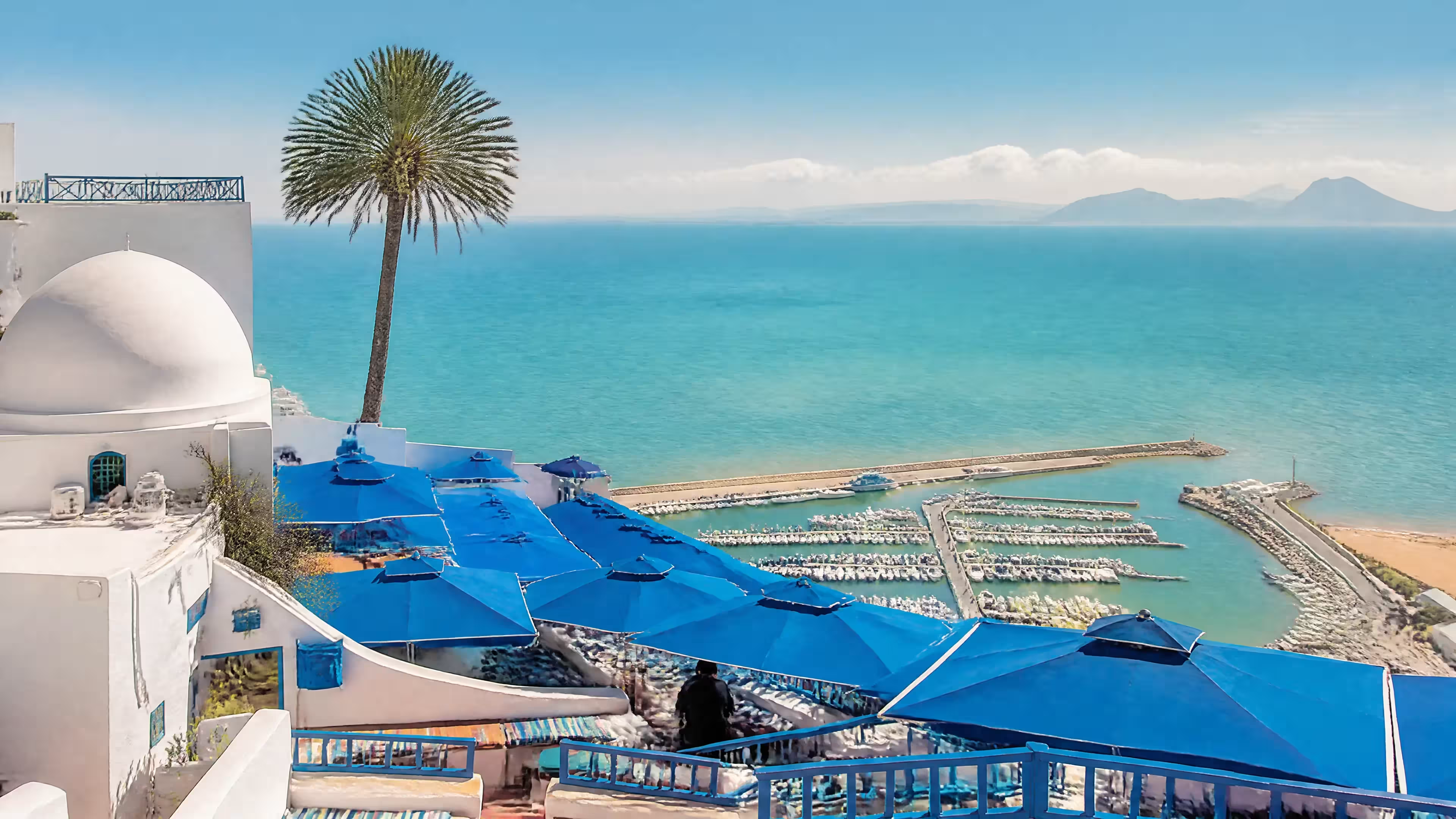
Tours to Tunisia from Uralsk often include the Sahara, Carthage and Sidi Bou Said.
Tunisian thalassotherapy is considered one of the strongest in the Mediterranean.
In Tunisia, it is worth trying couscous, brik and the spicy harissa sauce.
The velvet season in Tunisia falls on September and October.
In November, swimming in Tunisia is possible, but it is more comfortable on Djerba.
Sousse in Tunisia is suitable for clubs, bars and evening entertainment.
From Tunisia people bring olive oil, ceramics, dates and carpets.
Reviews of tours to Tunisia
What travellers write afterwards: the hotel, the dates and what is worth knowing in advance.
No data yet
No one has left a review yet. Yours would be the first.
Write a review
The review appears on the site after a moderator checks it.
Destination guide
Short guides: season, hotels, money and documents.
Are international driving permits required
The answer depends on the country and on whether you plan to get behind the wheel.
ReadHow to dress when visiting temples
Many tourists wonder in advance how to dress when visiting temples. Modesty rules apply in mosques, Hindu and Buddhist temples.
ReadOnline check-in for the flight
Online check-in opens 24 hours before departure. The procedure takes a few minutes and saves you from queues at the airport. Check that your luggage meets the baggage allowance.
ReadConsent for a child's departure
Consent for a child to travel abroad is arranged in advance. A notary in Almaty certifies a power of attorney for the accompanying person. Parents decide who will take the minor on the trip.
ReadHand luggage rules
Hand luggage is the items a passenger takes into the aircraft cabin. Airlines set their own weight and size standards. Carriage of large bags in the cabin is usually not allowed.
ReadTransfer between flights
A transfer between flights is a stop at an intermediate airport, after which the traveler continues the journey on another plane.
Read