
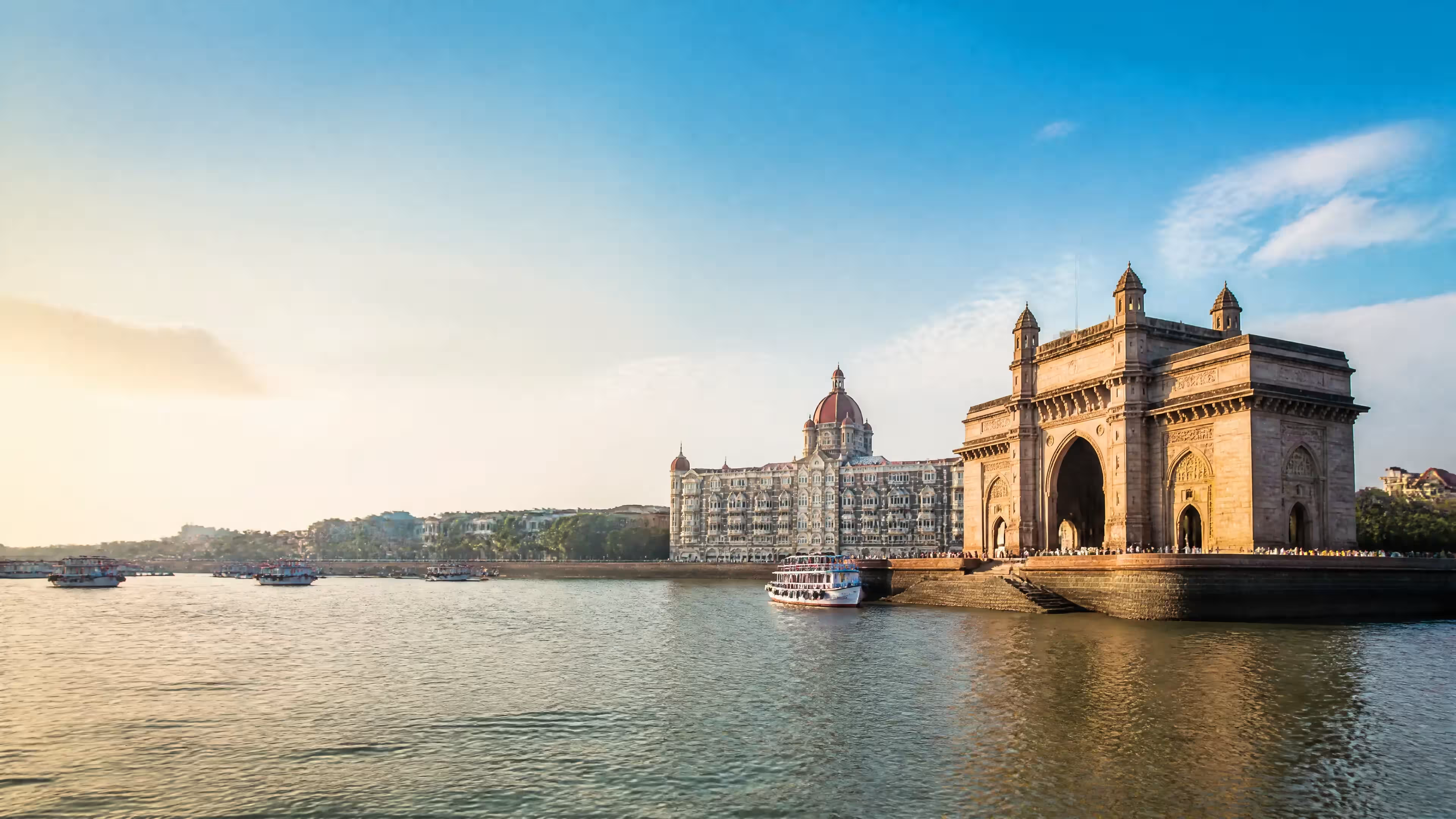
Tours to India from Aktobe: prices
Instalments up to 24 months on any tour A manager replies within 15 minutes
Tours to India


Low-price calendar for tours to India
The lowest price by month for the chosen destination.
Tour collections for India


How to buy a tour to India
- 01
Find a tour
Departure city, destination, dates, nights and who is travelling — five fields in one row.
- 02
Choose and book
Compare the price for two, the board and the beach line, then hold your choice with a request.
- 03
Pay
By card, in instalments through a bank, by bank transfer or in cash at the office.
- 04
Get the documents
The contract, the voucher, the insurance policy and the itinerary receipts arrive by e-mail.
Tours to India: facts for the traveller
Ready to travel?
Leave a request and a manager will suggest options for your budget, dates and party.
Tours to India: what to know
Planning tours to India from Aktobe? The best time for a holiday is from November to February, when the coast is dry and warm. There are no direct flights from Aktobe; travellers get there via Almaty with a transfer. In winter, prices in Goa are at their maximum; in the shoulder season they are cheaper. Allow at least ten days for the trip: the flight is long, and the country is big. India is suitable both for beach holidays and for sightseeing.
Planning trips to India from Aktobe begins with simple steps that will save time and nerves on the spot. Below is what is worth deciding in advance, before buying tickets.
Visa and entry documents
The permit for the trip is arranged online before departure, and the stamp is placed on arrival. Documents are submitted through the official portal, filling out the form in English. The photo is needed in digital form, with a white background and without glasses. Filling it out takes about half an hour if the data is prepared in advance. On arrival in Delhi or Goa, the passenger fills out an immigration card. Print out the confirmation and keep it at hand together with the return ticket. The hotel booking for the first nights is sometimes requested to be shown at the desk. At the airport, the queue for passport control can take an hour or more. It is convenient to book a trip to this country with a time margin precisely because of these formalities. Save copies of all papers on your phone and in your email.
Medical requirements and insurance
A yellow fever vaccination for a trip to India from Kazakhstan is not required. A medical policy with hospitalisation coverage is strongly recommended: medicine for foreigners is paid. Without insurance, even a simple consultation at a clinic in Delhi will cost a hefty sum. Vaccinations against hepatitis A and typhoid fever are desirable, especially if the plans include rural areas, and not only the beaches of Goa. It is worth getting them a month before departure so that the body has time to react. The first-aid kit is assembled in advance: remedies for diarrhoea, painkillers, antiseptic, plasters. Mosquito repellents will come in handy in the rainy season and in Kerala. Chronic medications are taken with a supply and in factory packaging. A holiday in India rarely goes without an upset stomach in the first days, and that is normal.
When is it better to plan a holiday in India?
The season on different shores of India runs out of sync, and the month of the trip decides more than the chosen resort. Let us break down when to go and what to expect from prices.
High and low season on the coast
The most comfortable time on the coast of India is from November to February. At this time in Goa it is dry, the sea is calm, and the air is warmed to thirty degrees. North Goa in December is overcrowded, and prices for accommodation reach their annual maximum. South Goa is a little calmer and cheaper, but even there during the holidays there are almost no free guesthouses. From March it starts to scorch, and by May the heat reaches forty degrees. From June to September, monsoons pour on the western shore, and many cafes and hotels close. Kerala during this period is also wet, but green and cheap. The eastern coast, on the contrary, receives rain from October to December. When planning a holiday in India, check against the region, not the country as a whole.
| Season | Goa coast | Kerala | Accommodation prices |
|---|---|---|---|
| November–February | Dry, comfortable | Warm, dry | Maximum |
| March–May | Hot, stuffy | Hot, humid | Average |
| June–September | Monsoon, part closed | Heavy rains | Minimum |
| October | Humid, transition | Rains | Below average |
Holidays and festivals affecting prices
India's festival calendar can double the cost of accommodation for a couple of weeks. Diwali in late autumn and Holi in early spring are the most notable dates, and hotels are booked months in advance. Christmas and New Year in Goa gather crowds of Europeans, and prices soar. Indian weddings in Delhi and the northern states also occupy hotels entirely. On the days of major holidays, transport is overcrowded, and train tickets are snapped up instantly. But festivals are the best occasion to see Indian culture live, and not from postcards. If the budget is limited, choose the gaps between the dates. A quiet week at the end of January will cost noticeably less than the New Year one.
How to get there and move around the country
Internal logistics in India are cheap, but require patience and a time margin. Here is what is worth knowing about moving between regions and within cities.
Flights and trains between regions
Internal flights around India cost less than people usually think. A ticket from Delhi to Goa or Kerala is often comparable in price to a good dinner. It is better to book in advance: in a couple of weeks the cost grows, and convenient flights disappear. Trains are advantageous for long distances and let you see the country from the window. Places in sleeper carriages are snapped up quickly, especially during holidays. Class AC2 and AC3 is more comfortable than the general one, but also more expensive. Schedules shift, and delays of several hours are a common thing. At the airports of Delhi and Mumbai, a margin is needed for screening and traffic jams. Between Goa and Kerala it is more convenient to fly than to travel overland for a day. Keep a bottle of water and a light snack at hand.
| Method | Features | What to consider |
|---|---|---|
| Internal flights | Cheaper than people usually think | Book in advance, in a couple of weeks it gets more expensive |
| Trains | Advantageous for long distances | Places in sleeper carriages are snapped up quickly |
| Class AC2 and AC3 | More comfortable than the general one | More expensive than the general one |
| Airports of Delhi and Mumbai | A margin is needed for screening | Traffic jams |
| Goa and Kerala | More convenient to fly | Overland takes a day |
Transport within cities and haggling with drivers
Taxi apps work in the large cities of India, and this is the most predictable option. The price is fixed before the trip, and there is no need to haggle. Rickshaws on the street are cheaper, but they name the price at random. Haggling is obligatory: boldly halve the starting sum. Agree on the price before getting in, otherwise the payment at the end will become an unpleasant surprise. In Delhi the metro is fast and cheap, but very crowded at rush hour. In Goa it is more convenient to rent a scooter if you have a licence and experience. Renting a scooter in Kerala is also popular, but the traffic is chaotic. For women travellers, it is better to use official apps rather than hail a car on the road.
Where to stay and what to eat
Accommodation and food in India adapt to any budget, from ascetic to quite comfortable. Let's look at the options and how not to ruin your holiday.
Accommodation options: from guesthouses to ashrams
Guesthouses and budget hotels in tourist areas of India are inexpensive. For little money you will get a bed, a fan and a shower, sometimes with interruptions in hot water. Homestays in Kerala offer a home atmosphere and local cuisine. Hosts often cook themselves and suggest where to go. Ashrams are suitable for long stays and practices, but the rules there are strict. In North Goa the choice of accommodation is wider, in South Goa it is quieter and more expensive. Hotels in Delhi near the main attractions are booked in advance. Always look at fresh reviews: in a year an establishment can change a lot. Air conditioning costs extra, but in the hot months it is worth it.
Features of local cuisine and food safety
Indian cuisine is spicy, aromatic and almost always vegetarian at its core. Beef is hard to find, in some states it is banned. Chicken, fish and lamb are on the menu of most restaurants. Street food is risky for an unaccustomed stomach, especially in the first days. It is safer to eat where there is high foot traffic and food is cooked in front of you. You can only drink bottled water, it is better not to take ice in drinks on the street. Raw vegetables and salads in cheap cafes should also be avoided. Fruits are washed with boiled water and peeled before eating. Start with simple dishes: rice, flatbreads, stewed vegetables. After a week the body usually adapts, and a holiday in India becomes tastier.
What a tourist from Kazakhstan should consider
Everyday details decide how calm the trip will be. Here is what is worth thinking through in advance.
Money, ATMs and tips
The national currency of India is the rupee, and its exchange rate is unstable. It is better to exchange money in banks and official exchange offices, not on the street. ATMs accept Visa and Mastercard, but the withdrawal fee is high. Cash is always needed: cards are accepted far from everywhere. Small notes will come in handy for rickshaws, tea and entrance tickets. Tips in Indian restaurants are five to ten percent of the bill. Drivers and porters are given small notes, it is not customary to bargain about tips. Keep large sums in the hotel safe, not in a backpack.
Communications, internet and the language barrier
A local SIM card in India requires registration with a passport. Processing takes a day or two, so it is better to set up communications in the first 24 hours. Mobile internet is more reliable than hotel Wi-Fi, the speed there is unstable. English is understood in the tourist areas of Goa, Kerala and Delhi. In the outback it is harder to make yourself understood, basic phrases in Hindi will come in handy. Learn the words for greetings and thanks, locals appreciate it. A translator on your phone helps at the pharmacy and at the train station. Download offline maps in advance, the signal disappears on the road.
Safety, clothing and rules of behaviour
India is generally safe for tourists, but precautions are not superfluous. Female travellers are not recommended to walk alone at night, especially in sparsely populated areas. When visiting temples, cover your shoulders and knees. Shoes are removed before entering, socks will come in handy on hot stone. Photographing in temples and at some sites is prohibited or paid. Ask people for permission before filming. Do not touch food with your right hand and do not point a finger at people. Dress more modestly outside the beaches, especially in Delhi and the northern states. Calm behaviour and a smile remove most questions.
Visa and entry rules change: check with the primary source — the portal of electronic visas of the Republic of India, https://indianvisaonline.gov.in/. The information on this page was checked on 17.09.2026.
In short
- The beach season on the coast lasts from November to February, in summer there are monsoons.
- In winter prices in Goa are at their maximum, in the shoulder season accommodation is noticeably cheaper.
- Domestic flights and trains are cheap, but require booking in advance.
- It is safer to eat in crowded places, drink only bottled water.
- In temples, shoulders and knees are covered, shoes are removed at the entrance.
Tours by destination and departure city
Turkey
Tours to Turkey from Almaty Tours to Turkey from Astana Tours to Turkey from Shymkent Tours to Turkey from Kostanay Tours to Turkey from Aktobe Tours to Turkey from AktauEgypt
Tours to Egypt from Almaty Tours to Egypt from Astana Tours to Egypt from Shymkent Tours to Egypt from Kostanay Tours to Egypt from Aktobe Tours to Egypt from AktauUAE
Tours to UAE from Almaty Tours to UAE from Astana Tours to UAE from Shymkent Tours to UAE from Kostanay Tours to UAE from Aktobe Tours to UAE from AktauFrequent questions about tours to India
Most comfortable from October to March, when it is dry and warm.
Worth seeing the old quarters, markets and monuments of Indian architecture.
North Goa is noisier and younger, South Goa is calmer and greener.
Yes, the mild climate and calm canals are liked by families.
From July to September it is humid and rainy, but prices are lower.
Light clothing, sunscreen, repellent and comfortable shoes.
In Delhi in winter the evenings are cool, a light jacket will come in handy.
Spicy and flavorful, with many vegetarian dishes and rice.
In Goa the swimming season lasts from October to March.
Sightseeing tours, Ayurveda, markets and getting to know Indian culture.
Prices depend on the season and resort; the agency will tell you the exact amount.
Reviews of tours to India
What travellers write afterwards: the hotel, the dates and what is worth knowing in advance.
No data yet
No one has left a review yet. Yours would be the first.
Write a review
The review appears on the site after a moderator checks it.
Destination guide
Short guides: season, hotels, money and documents.
Are international driving permits required
The answer depends on the country and on whether you plan to get behind the wheel.
ReadHow to dress when visiting temples
Many tourists wonder in advance how to dress when visiting temples. Modesty rules apply in mosques, Hindu and Buddhist temples.
ReadOnline check-in for the flight
Online check-in opens 24 hours before departure. The procedure takes a few minutes and saves you from queues at the airport. Check that your luggage meets the baggage allowance.
ReadConsent for a child's departure
Consent for a child to travel abroad is arranged in advance. A notary in Almaty certifies a power of attorney for the accompanying person. Parents decide who will take the minor on the trip.
ReadHand luggage rules
Hand luggage is the items a passenger takes into the aircraft cabin. Airlines set their own weight and size standards. Carriage of large bags in the cabin is usually not allowed.
ReadTransfer between flights
A transfer between flights is a stop at an intermediate airport, after which the traveler continues the journey on another plane.
Read