
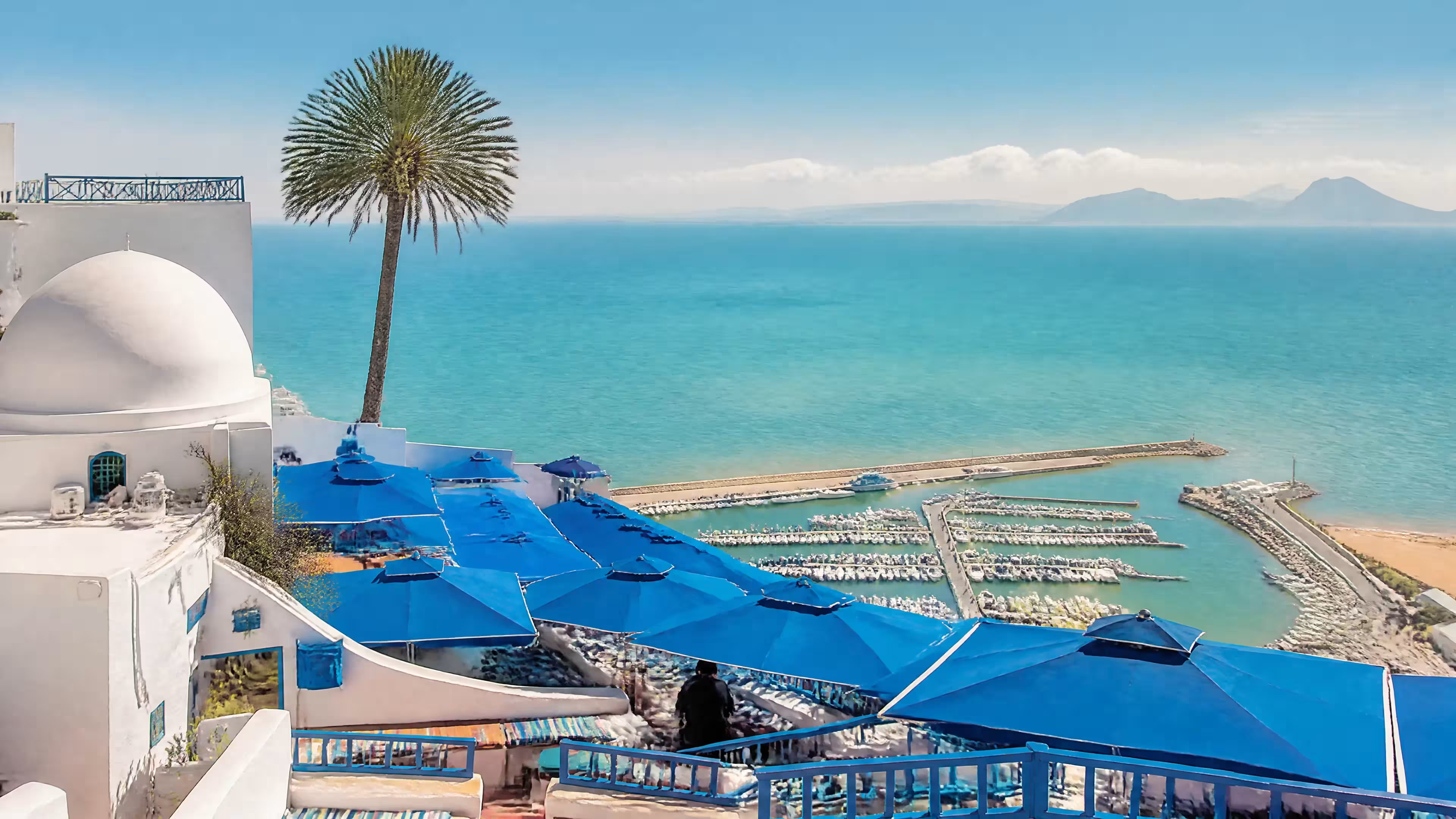
Tours to Tunisia from Aktobe: prices
Instalments up to 24 months on any tour A manager replies within 15 minutes
Tours to Tunisia

Low-price calendar for tours to Tunisia
The lowest price by month for the chosen destination.
Tour collections for Tunisia


How to buy a tour to Tunisia
- 01
Find a tour
Departure city, destination, dates, nights and who is travelling — five fields in one row.
- 02
Choose and book
Compare the price for two, the board and the beach line, then hold your choice with a request.
- 03
Pay
By card, in instalments through a bank, by bank transfer or in cash at the office.
- 04
Get the documents
The contract, the voucher, the insurance policy and the itinerary receipts arrive by e-mail.
Tours to Tunisia: facts for the traveller
Ready to travel?
Leave a request and a manager will suggest options for your budget, dates and party.
Tours to Tunisia: what to know
Tours to Tunisia from Aktobe are flights with one transfer via Almaty or Istanbul, with a total travel time of twelve hours or more. Swimming is comfortable from May to October, and the velvet season is September and October, when the sea is warm and the heat subsides. In winter, the coast is windy, but calm and cheaper. The resorts — Hammamet, Sousse, Monastir, Mahdia and Djerba — differ in atmosphere and prices.
What to consider before traveling to Tunisia from Aktobe
A trip to Tunisia from Aktobe requires preparation: there is no direct connection between the cities. Let's look at the route, documents and insurance for tourists from Kazakhstan.
Route and connections: Almaty or Istanbul
The journey to Tunisia from Aktobe is built through one of two transfers. From Aktobe to Almaty, travelers get there by plane in a couple of hours or by train in a day. In Almaty or Istanbul, the tourist transfers to a flight to Tunisian cities, allowing a whole day for the connection. Istanbul is convenient for frequent departures and short waiting times.
Documents, insurance and passport validity
Medical insurance for a trip to Tunisia is mandatory, and it is arranged together with the tour. The policy covers treatment and emergency care in Tunisian clinics. Copies of the insurance are kept on the phone and in paper form. Pharmacies in tourist areas of Tunisia exist, but it is better to take usual medicines with you. A holiday in Tunisia begins more calmly when documents are collected in advance.
When is it comfortable to swim on the coast?
The swimming season in Tunisia lasts a long time, but comfort depends on the month and resort. Let's look at the velvet season and the features of the winter months on the coast.
Velvet season and mild autumn
The velvet season in Tunisia falls in September and October. The sea in Hammamet and Sousse remains warm, and the heat subsides to comfortable levels. The beaches at this time are freer than at the height of summer, and hotel prices are lower. In Monastir and Mahdia, autumn is quiet, the water is clear, and the winds are moderate. During the day, the air warms up to twenty-five degrees, and in the evening a light jacket is needed. A holiday in Tunisia in autumn is chosen by those who do not like exhausting heat. Tunisian autumn is suitable for excursions and walks around the medina.
Winter months: wind and hotel pools
In winter, the Tunisian coast is cool and windy. Swimming in the sea in Hammamet, Sousse and Monastir at this time is uncomfortable. Tourists spend time at heated hotel pools and on spa treatments. Djerba is warmer in winter than other resorts, but even there the sea is bracing. Excursions to the Sahara and to ancient monuments are easier to endure in winter than in summer. A holiday in Tunisia in winter is chosen for calm and low prices. Tunisian winter is a time for spa, markets and gastronomy, not for the beach.
Money and expenses on site
Financial matters in Tunisia are resolved simply if you know the local rules of exchange and payment. Let's look at currency, cards and tips.
Dinar, exchange and export ban
| Exchange method | Where available | Feature |
|---|---|---|
| Bank | Cities and resorts | Official rate |
| Hotel | Reception desk | Lower rate, convenient |
| Exchange office | Tourist areas | Fast, no queue |
The Tunisian dinar is a closed currency, and it cannot be taken out of Tunisia. Money can be exchanged in banks, hotels and exchange points in resorts. The remaining dinars before departure are exchanged back according to the receipt from the exchange office. Without a receipt, the reverse exchange will not be made, so receipts are kept until the end of the holiday. The rate in hotels in Hammamet and Sousse is usually less favorable than in a bank. A holiday in Tunisia is planned with the expectation that large sums are exchanged in parts.
Cards, cash and tips
Bank cards in Tunisia are not accepted everywhere. In hotels in Djerba and Mahdia, card payment works, but in markets and taxis cash is needed. Small bills will be useful for taxis, water and souvenirs. Tips in Tunisian restaurants and hotels are customarily left for service. In markets and in the medina, bargaining is customary, and the price drops several times. A holiday in Tunisia is more convenient when part of the money is kept in cash. The Tunisian medina without cash turns into a long walk without purchases.
How is a holiday arranged in hotels of different resorts?
Hotels in Tunisia differ in meal plan and resort atmosphere. Let's look at "all inclusive", half board and local cuisine.
"All inclusive" and half board
| Meal type | Where it is more common | What is included |
|---|---|---|
| All inclusive | Hammamet, Sousse | Breakfast, lunch, dinner, drinks, snacks |
| Half board | Djerba, Mahdia | Breakfast and dinner |
| Breakfast | City hotels | Only morning buffet |
The "all inclusive" system is common in hotels in Hammamet and Sousse. It covers breakfast, lunch, dinner, drinks and snacks throughout the day. Half board is more common in hotels in Djerba and Mahdia. There, breakfast and dinner are included, and lunch is paid separately. Families with children choose "all inclusive" for predictable expenses. Couples and independent tourists take half board in order to try local cuisine in the city. A holiday in Tunisia on Djerba is calmer than in noisy Sousse. Tunisian cuisine in the city costs less than hotel restaurants.
Cuisine, alcohol and Ramadan
Tunisian cuisine is based on couscous, fish, olive oil and the spicy seasoning harissa. In Hammamet and Sousse there are many seafood restaurants. Alcohol is sold in hotels and specialized stores. During Ramadan, alcohol sales are limited, and establishments operate on a special schedule. In Monastir and Mahdia, the choice of restaurants is more modest, but prices are lower. A holiday in Tunisia during Ramadan is quieter, but requires respect for local customs. Tunisian harissa is spicy, and it is tried in small portions.
Rules of behavior and communications
Local customs and communications are two topics that a tourist resolves on site. Let's look at clothing, filming, SIM cards and pharmacies.
Clothing in religious places and the ban on filming
To visit mosques and religious sites, women need a headscarf and modest clothing. Men also cover their shoulders and knees. Photography of military and police facilities in Tunisia is prohibited. Photographing locals without consent is frowned upon. In the medina of Hammamet and Sousse, respectful clothing saves you from unwanted attention. Holidays in Tunisia are calmer when a tourist respects local norms. The Tunisian medina is not a beach, and modest attire is appropriate there.
SIM card, roaming and pharmacies
| Connection option | Arrangement | Comment |
|---|---|---|
| Roaming | Home operator | Expensive, but immediate |
| Local SIM | Phone shops with passport | Cheaper, passport required |
| Hotel Wi-Fi | Reception | Free, weak signal |
A local SIM card in Tunisia is arranged with a passport at phone shops. Roaming with Kazakhstani operators is expensive, so it is activated only for the first few days. Pharmacies are available in the tourist areas of Hammamet, Sousse and Monastir. Prescription medicines at a Tunisian pharmacy are dispensed with a local form. Holidays in Tunisia are more convenient with working communications and a pharmacy nearby. A Tunisian pharmacy in a resort area speaks French and English.
Visa and entry rules change: check the primary source — the Ministry of Foreign Affairs of the Tunisian Republic, https://www.diplomatie.gov.tn/. The information on this page was verified on 17.09.2026.
In brief
- A flight to Tunisia from Aktobe is routed through Almaty or Istanbul with a buffer for connections.
- Swimming is comfortable from May to October, the velvet season is September and October.
- In winter the coast is windy, and hotel pools replace swimming.
- Dinars are not taken outside Tunisia, the remainder is exchanged with a receipt.
- Cards are not accepted everywhere, cash is needed at markets and in taxis.
Tours by destination and departure city
Turkey
Tours to Turkey from Almaty Tours to Turkey from Astana Tours to Turkey from Shymkent Tours to Turkey from Kostanay Tours to Turkey from Aktobe Tours to Turkey from AktauEgypt
Tours to Egypt from Almaty Tours to Egypt from Astana Tours to Egypt from Shymkent Tours to Egypt from Kostanay Tours to Egypt from Aktobe Tours to Egypt from AktauUAE
Tours to UAE from Almaty Tours to UAE from Astana Tours to UAE from Shymkent Tours to UAE from Kostanay Tours to UAE from Aktobe Tours to UAE from AktauFrequent questions about tours to Tunisia
The optimal time for holidays in Tunisia is from May to October. The destination from Aktobe is most in demand during this period.
There are no direct flights, the journey takes from eight hours. Tours to this country from Aktobe include a connection.
Hammamet and Monastir are suitable for holidays in Tunisia with children. Tunisian infrastructure is best developed there.
The local currency is the Tunisian dinar. Holidays in Tunisia require exchanging cash on site.
Russian-speaking guides work in Hammamet and Sousse. Trips to Tunisia from Aktobe often include their services.
The Tunisian desert, Carthage and the medina of Sousse are worth attention. Holidays in Tunisia will become more diverse with sightseeing tours.
Tunisian cuisine is based on seafood, spices and olive oil. Holidays in Tunisia will introduce you to couscous and brik.
In winter the sea is cool, few people swim. Tours to Tunisia in winter are taken for the sake of sightseeing tours.
Domestic flights fly to Djerba and a ferry runs. Tunisian Djerba is accessible via the mainland.
Comfortable shoes, water and headwear. Holidays in Tunisia on sightseeing tours require protection from the sun.
Sousse is known for its clubs and parties. Such trips for young people from Aktobe often lead there.
The velvet season in Tunisia runs from September to October. Holidays in Tunisia during this time are especially comfortable.
Reviews of tours to Tunisia
What travellers write afterwards: the hotel, the dates and what is worth knowing in advance.
No data yet
No one has left a review yet. Yours would be the first.
Write a review
The review appears on the site after a moderator checks it.
Destination guide
Short guides: season, hotels, money and documents.
Are international driving permits required
The answer depends on the country and on whether you plan to get behind the wheel.
ReadHow to dress when visiting temples
Many tourists wonder in advance how to dress when visiting temples. Modesty rules apply in mosques, Hindu and Buddhist temples.
ReadOnline check-in for the flight
Online check-in opens 24 hours before departure. The procedure takes a few minutes and saves you from queues at the airport. Check that your luggage meets the baggage allowance.
ReadConsent for a child's departure
Consent for a child to travel abroad is arranged in advance. A notary in Almaty certifies a power of attorney for the accompanying person. Parents decide who will take the minor on the trip.
ReadHand luggage rules
Hand luggage is the items a passenger takes into the aircraft cabin. Airlines set their own weight and size standards. Carriage of large bags in the cabin is usually not allowed.
ReadTransfer between flights
A transfer between flights is a stop at an intermediate airport, after which the traveler continues the journey on another plane.
Read