
Tours to India from Astana from Astana: prices
from $1,562 ≈ 704,000 ₸ for 2 adults with a flight from Astana or from 33,440 ₸/month in instalments A manager replies within 15 minutes
Tours to India


Last-minute tours to India
Departures in the coming weeks from the selected city. Seats are limited.
Low-price calendar for tours to India
The lowest price by month for the chosen destination.
Tour collections for India


How to buy a tour to India
- 01
Find a tour
Departure city, destination, dates, nights and who is travelling — five fields in one row.
- 02
Choose and book
Compare the price for two, the board and the beach line, then hold your choice with a request.
- 03
Pay
By card, in instalments through a bank, by bank transfer or in cash at the office.
- 04
Get the documents
The contract, the voucher, the insurance policy and the itinerary receipts arrive by e-mail.
Tours to India: facts for the traveller
Ready to travel?
Leave a request and a manager will suggest options for your budget, dates and party.
Tours to India: what to know
The best time for tours to India from Astana is from October to March, when the weather is dry and warm. Holidays in India during this period are suitable for the beaches of Goa, sightseeing tours of Delhi, and quiet days in Kerala. Tickets are cheaper in the low season, from June to September.
When is the best time to plan a trip to India?
Trips to this country from Astana depend on the season more strongly than destinations in Europe. Monsoons and dry months divide the year into two halves, and whether you end up on the beach or in a downpour depends on the choice of dates.
Monsoon season and dry period
The dry season in India lasts from October to March, and this is the best time for holidays. In Goa during these months the weather is clear, the temperature stays around +30 °C, and there is almost no rain. From April the heat increases, and from June the monsoon arrives and brings humidity and daily downpours. Holidays in India in July and August are possible, but the beaches of Goa empty out at this time, and the sea is stormy. The north of the country, including Delhi, is cooler in winter than the south, and in the mornings it is fresh there. Kerala lives by its own rhythm: its monsoon begins earlier and ends later. A trip should be planned so as to catch the dry window.
| Season | Months | Weather | Region |
|---|---|---|---|
| Dry season | October — March | clear weather, around +30 °C | Goa |
| Heat | from April | the heat increases | India |
| Monsoon | from June | humidity, daily downpours | India |
| Monsoon | July and August | beaches empty out, the sea is stormy | Goa |
| Winter | winter | cooler, fresh in the mornings | North, Delhi |
| Monsoon | begins earlier, ends later | its own rhythm | Kerala |
Climate by region and month
Each region of India has its own weather character, and one month does not suit everywhere. Below is a comparison of three popular destinations.
| Region | Best months | Feature of the season |
|---|---|---|
| North Goa | November — February | Dry, warm, lively |
| South Goa | November — March | Milder, calmer, longer season |
| Kerala | October — March | Humid, green, warm |
Delhi in winter requires a jacket in the mornings, and in summer it is exhausting with heat above +40 °C. The Indian side of the Himalayas saves you from beach stuffiness in summer. The choice of month should be tied to what you want from your holiday.
How to get there and what to consider on the way?
The journey from Kazakhstan to India takes from several hours to a day depending on the route. The flight determines both the budget and how much energy remains for the first day.
Cost of tickets in high and low season
The price of a flight to India changes noticeably by month. In the high season, from December to February, tickets cost the most. In the low season, from June to September, the flight costs noticeably less. Buying in advance is more profitable: two to three months before departure the choice is wider, and prices are lower. Holiday dates and New Year holidays raise the cost regardless of the season. Flexible departure dates save more than searching for a specific flight.
Domestic flights and trains between regions
Within the country the distances are large, and ground transport takes a lot of time. Between Delhi and Goa it is more convenient to fly than to drive. Indian railways are cheap, but tickets for popular routes are taken in advance. Trains should be chosen with air conditioning if you are traveling in a hot month. Kerala is connected to the rest of the country both by flights and by trains. Domestic flights are booked after the dates of the holiday have been determined.
What formalities and documents are needed
Preparation for the trip begins long before departure. Some papers are arranged remotely, some — already on the spot, and it is better to know about this in advance.
E-visa and visa on arrival for citizens of Kazakhstan
Citizens of Kazakhstan have access to an e-visa before the trip and a visa on arrival. The electronic permit is arranged through the official website, and it arrives by email. The visa on arrival is issued at the airport of arrival, but not at all airports. The category of the permit depends on the purpose of the trip and the length of stay. Arranging it in advance is calmer: at the border you will not have to fill out papers after a long flight.
Medical insurance and vaccinations
Medical insurance for India is a reasonable part of preparation for a holiday. A policy with hospitalization coverage should be taken even for a short trip. Vaccination against hepatitis A and tetanus should be discussed with a doctor in advance, a month before departure. In tropical areas, vaccinations against typhoid and hepatitis B are relevant. A first-aid kit is assembled with a reserve: painkillers, remedies for diarrhea, antihistamines, sun protection. Medicines are carried in factory packaging.
What is important to know about money, communications and safety
The everyday side of the trip is resolved on the spot, but it is worth preparing for it at home. Money, communications and behavior in a foreign country determine how calm the holiday will be.
Currency, exchange and bank cards
The Indian rupee is the only currency for payments within the country. It is better to exchange money in banks and official exchange points, and not with random money changers. The rate at the airport is usually less favorable than in the city. Bank cards are accepted in hotels and large stores, but cash is needed in markets. ATMs are common, however the withdrawal fee can be high. Small notes will come in handy for rickshaws and tips.
SIM cards, internet and roaming
A local SIM card provides cheap internet and calls within the country. Registration requires a passport and takes time, sometimes up to several hours. Roaming with a Kazakhstan operator is more convenient but costs more. Wi-Fi is available in hotels and cafes, but the speed is not always stable. For navigation and translation, download maps and a dictionary in advance. The Indian side of tourist areas speaks English reasonably well.
Cultural norms and precautions
India is a country with strong traditions, and respect for them noticeably simplifies the holiday. Modest clothing is accepted in temples and small towns. Shoes are removed when entering religious sites. Photographing people should be done with their consent. Drink water only from bottles, and it is better not to take ice in street cafes. Documents and money are kept in different places, and a bag is carried on the shoulder on the side facing away from the road.
Visa and entry rules change: check with the primary source — the electronic visa portal of the Republic of India, https://indianvisaonline.gov.in/. The information on this page was verified on 16.09.2026.
Indian cuisine, transport and shopping
The everyday side of the trip consists of food, movement and purchases. Here there are the most small details that are remembered after returning.
What to try and how to choose safe food and water
Indian cuisine is built on spices, vegetables and rice. In Delhi, it is worth trying street flatbreads and tandoori dishes. In Goa, the cuisine is milder and closer to coastal, with fish and coconut. In Kerala, they cook with coconut oil and serve many seafood dishes. It is better to choose food where it is prepared in front of you and where there are many local visitors. Raw vegetables and salads in the heat are safer to replace with heat-treated ones. Water is drunk only bottled, and teeth are brushed with it as well.
Taxis, rickshaws and scooter rental
Taxis in India are conveniently hailed through an app: the price is known in advance. Auto-rickshaws are cheaper, but the price is agreed before boarding. A scooter is rented for short trips along the coast; a license and helmet are mandatory. Intercity journeys are best planned during the day. Renting a car with a driver is worthwhile for long routes. Road traffic is dense, and it is better not to start driving on the first day.
Souvenirs and what people bring back from the trip
From India, people bring spices, tea and textiles. The Indian side is famous for cotton and silk, as well as leather goods. In Goa, jewelry, bags and handmade items are bought. In Kerala, tea from plantations and spices for curry are taken. In Delhi, crafts and wooden items are of interest. Bargaining in markets is customary and appropriate.
Briefly
- The dry season from October to March is the best window for a trip.
- Tickets are cheaper in low season and when purchased in advance.
- Cash rupees are needed in markets, on transport and for tips.
Tours by destination and departure city
Turkey
Tours to Turkey from Almaty Tours to Turkey from Astana Tours to Turkey from Shymkent Tours to Turkey from Kostanay Tours to Turkey from Aktobe Tours to Turkey from AktauEgypt
Tours to Egypt from Almaty Tours to Egypt from Astana Tours to Egypt from Shymkent Tours to Egypt from Kostanay Tours to Egypt from Aktobe Tours to Egypt from AktauUAE
Tours to UAE from Almaty Tours to UAE from Astana Tours to UAE from Shymkent Tours to UAE from Kostanay Tours to UAE from Aktobe Tours to UAE from AktauFrequent questions about tours to India
The best time for a trip to India is from November to March. During this period it is dry and warm in most of the country. In summer it is hot, and from June the rains come.
There are no direct flights from Astana to India. The journey with a transfer takes from eight to fifteen hours. The travel time depends on the connection.
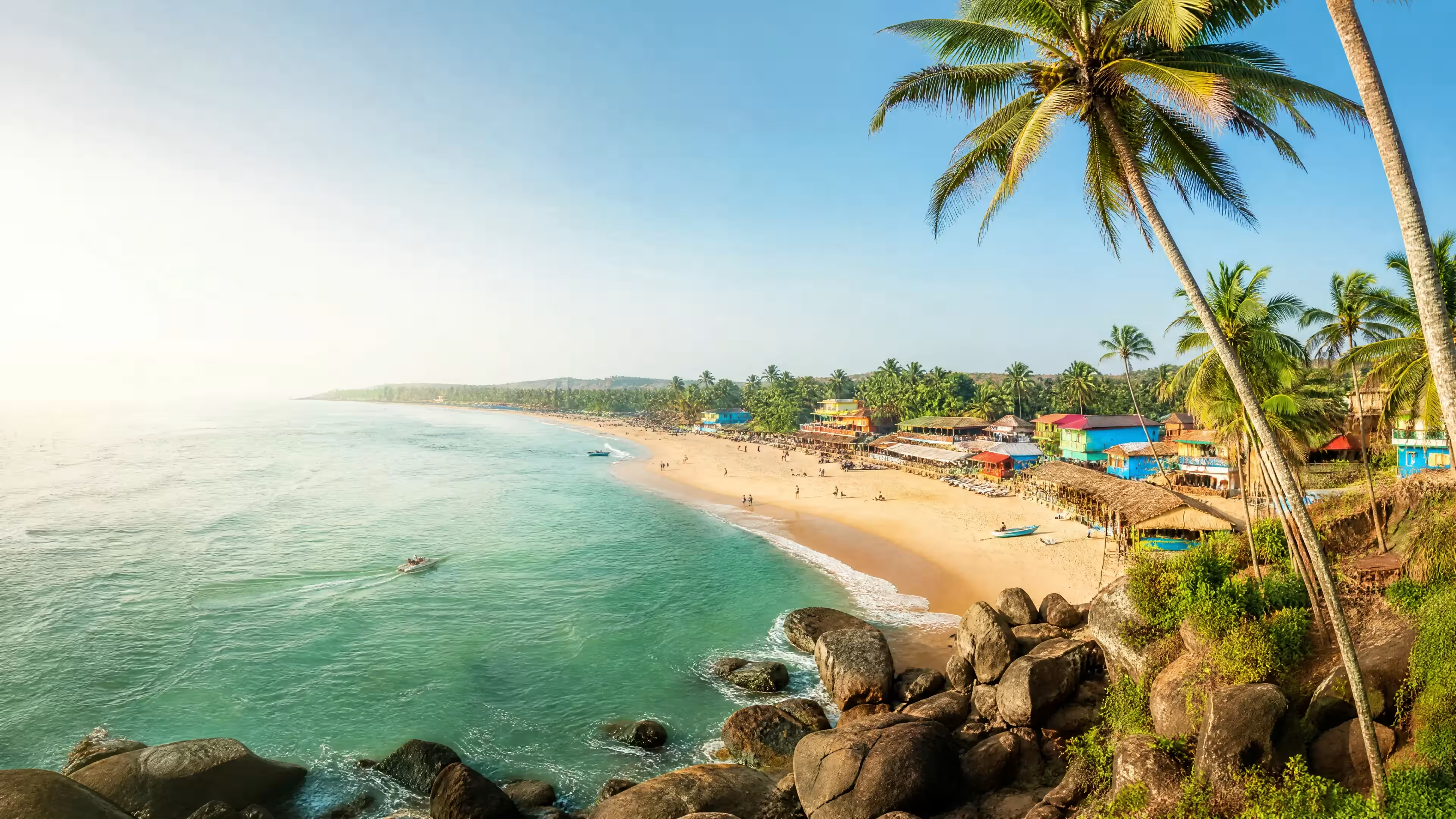
For beaches, Goa is most often chosen. North Goa suits lovers of music and markets. South Goa is calmer and suits families.
North Goa is noisy, with bars and nightclubs. South Goa is quiet, with wide beaches and hotels. The choice depends on your mood.
In Delhi it is worth seeing the old quarters and historical monuments. The city often becomes the first point of the route. From here it is convenient to travel to the north of the country.
Kerala is known for its canals, palms and Ayurveda. The climate here is milder than in the north. The region suits an unhurried holiday.
In winter in India it is dry and warm, and in the south it is hot. In Delhi the mornings are cool. This is the high season for trips.
Take light clothing, a hat and sunscreen. A repellent and a first aid kit will come in handy. Choose shoes comfortable for walking.
Indian cuisine is often spicy, but you can ask for the spiciness to be reduced. In tourist places they cook it milder. Try the dishes gradually.
In India the sockets are types C and D. It is worth taking an adapter from home. In hotels it is sometimes given at reception.
You should not drink tap water in India. Buy bottled water. The same rule applies to ice at street stalls.
From India people bring spices, tea and textiles. In the markets of Goa there is a lot of clothing and jewellery. Haggling is customary here.
Reviews of tours to India
What travellers write afterwards: the hotel, the dates and what is worth knowing in advance.
No data yet
No one has left a review yet. Yours would be the first.
Write a review
The review appears on the site after a moderator checks it.
Destination guide
Short guides: season, hotels, money and documents.
Are international driving permits required
The answer depends on the country and on whether you plan to get behind the wheel.
ReadHow to dress when visiting temples
Many tourists wonder in advance how to dress when visiting temples. Modesty rules apply in mosques, Hindu and Buddhist temples.
ReadOnline check-in for the flight
Online check-in opens 24 hours before departure. The procedure takes a few minutes and saves you from queues at the airport. Check that your luggage meets the baggage allowance.
ReadConsent for a child's departure
Consent for a child to travel abroad is arranged in advance. A notary in Almaty certifies a power of attorney for the accompanying person. Parents decide who will take the minor on the trip.
ReadHand luggage rules
Hand luggage is the items a passenger takes into the aircraft cabin. Airlines set their own weight and size standards. Carriage of large bags in the cabin is usually not allowed.
ReadTransfer between flights
A transfer between flights is a stop at an intermediate airport, after which the traveler continues the journey on another plane.
Read