
What to put in a travel first aid kit
What to take on the road
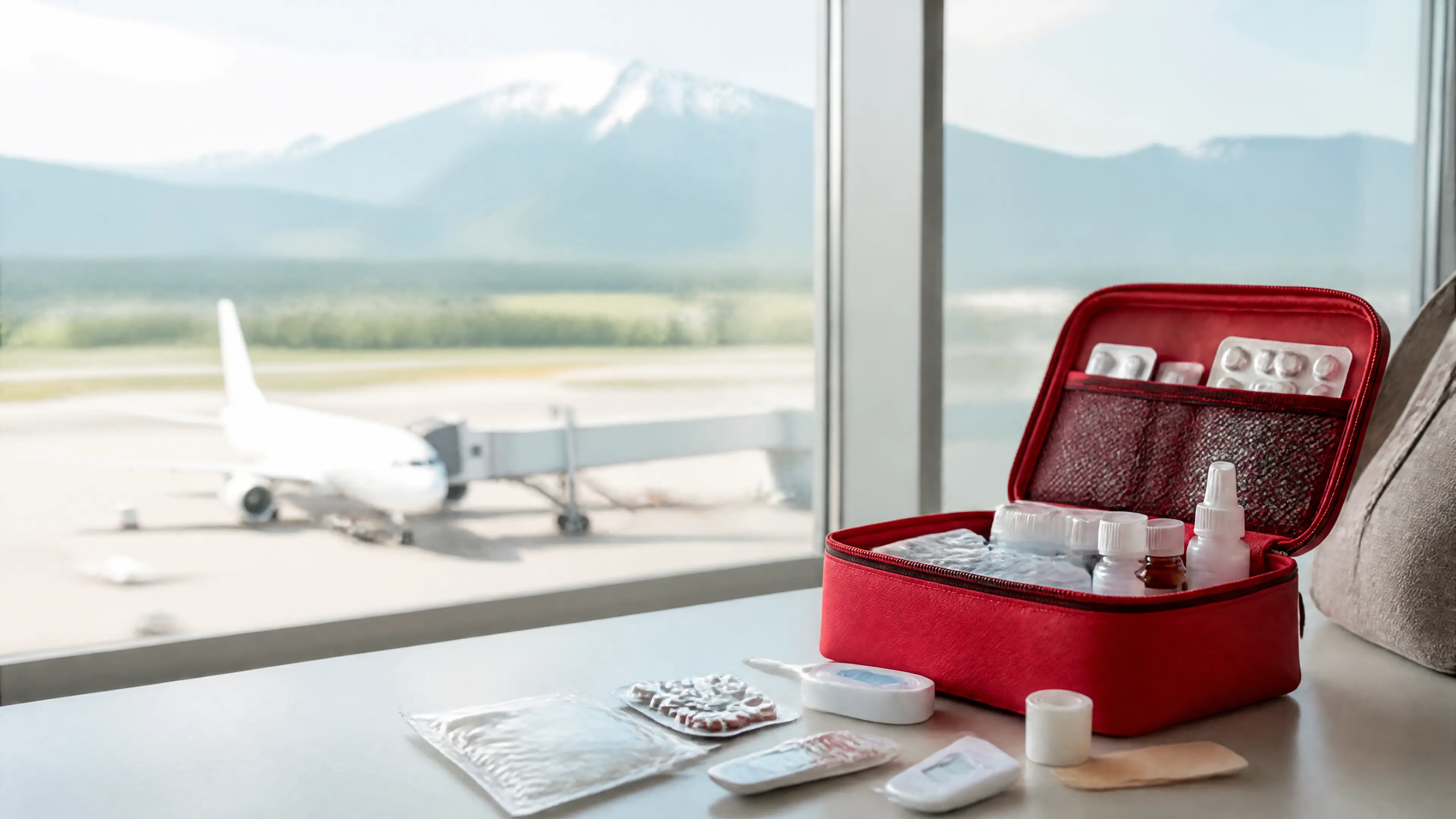
When preparing for a trip from Almaty, think ahead about what to put in a travel first aid kit. Only what will actually be needed on the road goes into a travel first aid kit. It is convenient to keep the first aid kit in a separate zippered pouch.
Basic set
Assemble a travel first aid kit so that it contains remedies for pain, fever and stomach upset. Put a painkiller, a fever reducer and a sorbent into a travel first aid kit. For nausea on the road, a motion sickness remedy will come in handy. Supplement the first aid kit with an antiseptic and adhesive bandages of different sizes. A bandage and sterile wipes are worth putting into a travel first aid kit.
Take an antihistamine in the first aid kit in case of allergies. If you are flying from Almaty to hot countries, add a sunburn remedy. Pack liquids in a travel first aid kit in a sealed bag.
Seasonal additions
In summer, a repellent and an after-bite remedy go into a travel first aid kit. In winter, add moisturizing nose drops and lip balm to the first aid kit. In spring, when Almaty greenery is blooming, put an allergy remedy into a travel first aid kit. In autumn, a fever reducer and nasal drops are worth adding to the first aid kit. For a trip to the mountains, add mountain sickness remedies to a travel first aid kit.
Forms of medicines
Tablets are more convenient, but both drops and a spray are worth putting into a travel first aid kit. For a child, syrups and suppositories go into a travel first aid kit. Take solutions in a travel first aid kit in small bottles. Put each medicine in the first aid kit in its factory packaging with instructions.
Expiration dates and storage
Before a trip, check that the expiration date of the medicines in the travel first aid kit has not passed. Throw expired items out of the first aid kit immediately. Store the travel first aid kit in a place inaccessible to children. Do not leave the first aid kit in the car under direct sun.
Transportation rules
Check carry-on recommendations with the carrier in advance. Tablets in a travel first aid kit go in their original packaging. Take prescription drugs in the first aid kit with a doctor's prescription.
Packing checklist
- painkiller
- fever reducer
- sorbent
- motion sickness remedy
- antiseptic
- adhesive bandage
- bandage
- antihistamine
- nasal drops
- repellent
- sunscreen
- wet wipes
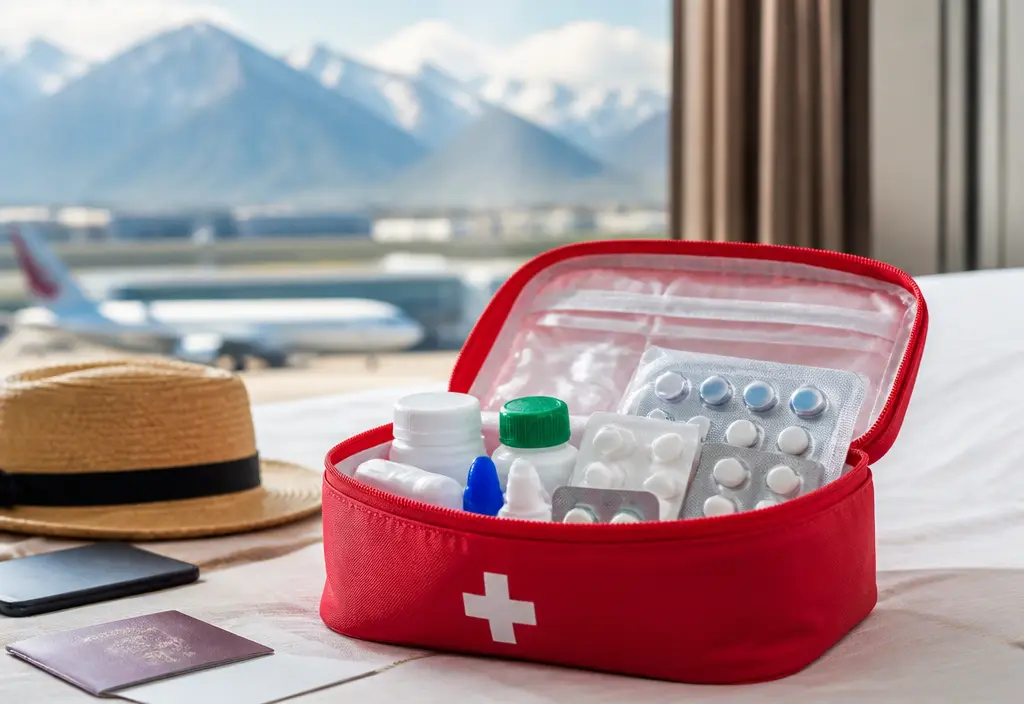
What to put in a travel first aid kit is a question that has no single list for everyone. The set depends on the season, the destination, and who is traveling with you. In winter, people fly from Almaty to hot Thailand, in summer they go to Shymbulak, and in autumn they drive on the highway to Astana.
The universal base is painkillers, antiseptic, dressing materials, motion sickness remedies, and a supply of personal medications.
What should be considered when packing for a trip from Almaty?
Packing for a trip from Almaty begins with two questions: where and when you are flying. The answer determines what to put in the first aid kit and how much space it will take up.
Climate and season at the destination
The climate of the destination determines half of the contents of a travel first aid kit. In winter, people fly from Almaty to Thailand, where it is humid and hot, and in summer they go up to Shymbulak, where the temperature is below freezing and there is wind. In hot countries of Southeast Asia and Turkey, the rainy season falls in different months, and high humidity accelerates the spoilage of medicines.
A first aid kit for a trip to the UAE or Egypt is packed taking into account dry air and scorching sun, and for a trip to the mountains of Kyrgyzstan, taking into account sharp temperature changes and nighttime frosts. A travel first aid kit for a hot climate includes remedies for heatstroke and burns; for a cold one, warming ointments.
The flowering season in Almaty and the mountains from April to May adds antihistamines even for those who usually do not suffer from allergies. Before packing, check the forecast for the entire duration of the trip, not just for the day of arrival.
Trip duration and number of layovers
The longer the route, the more medicines a travel first aid kit requires. A trip for a week and for a month differ in the supply of medications and the number of layovers. On a flight with a layover in Istanbul or Dubai, some medicines will be needed in carry-on luggage, not in checked baggage. A long flight of more than six hours requires remedies for thrombosis prevention and moisturizing the mucous membranes.
If there are excursions with long drives in the heat ahead, add motion sickness and rehydration remedies to the travel first aid kit. For each layover, allow a one-day supply: the flight may be delayed. The more segments in the route, the more important it is to keep the first aid kit at hand, not in a checked suitcase.
How does the set change for different types of travel?
The type of vacation determines the contents of a travel first aid kit more than the country does. Beach, mountains, and highway require different remedies.
Beach holidays and islands
For beach holidays, a travel first aid kit is built around protection from the sun and sea water. In the Maldives and Phuket, local pharmacies may not have the medications you are used to, so you take a supply with you. For diving and snorkeling, add remedies for jellyfish burns and antiseptics for coral wounds. High-factor sunscreen, remedies for sunburn, and rehydration are the base for islands.
A humid climate accelerates the spoilage of tablets, so choose sealed packaging. If you are flying to the islands, take a supply for the entire duration: the pharmacy may be far from the hotel.
Mountain routes of Kazakhstan and Kyrgyzstan
In the mountains, the risk of injuries and altitude sickness is higher than at the beach, and a travel first aid kit takes this into account. Hikes to Medeu, Kolsai, and the Ala-Archa gorge require remedies for bruises, sprains, and blisters. Altitude sickness at high altitude manifests as headache and nausea, so the appropriate medications are put in the first aid kit.
For winter trips to Shymbulak and Akbulak, remedies for frostbite and warming ointments are needed, which are not in the summer set. In the mountains there are no pharmacies on the route, so the supply is calculated for the whole group and all days. An elastic bandage, antiseptic, and painkillers take up little space but solve a lot.
When packing a travel first aid kit for the mountains, add an extra day's supply beyond the plan: weather may delay the group.
Road trips along the country's highways
On the highways of Kazakhstan, the distance between settlements determines the composition of the travel first aid kit. The routes Almaty — Astana and Almaty — Aktau pass through sections where there are no pharmacies for hours. A travel first aid kit for a road trip includes motion sickness remedies, painkillers, and dressing materials.
If you are traveling to Uzbekistan or Kyrgyzstan by ground transport, check whether your insurance is valid in those countries. When traveling to Europe by train or bus, the first aid kit should be at hand, not in a suitcase in the luggage compartment. The heat in the cabin spoils medicines, so store them in a thermal bag. Keep a separate small set in the glove compartment for quick access.
Who is traveling with you: adjustments to the contents
Travel companions change the composition of a travel first aid kit more noticeably than the destination. Children and elderly parents require separate items.
Children on the trip
If you are traveling with children, the composition of the travel first aid kit changes. Children's dosages and fever reducers in syrup require a separate place in the packaging. A thermometer, remedies for colic, and antihistamines in children's form are worth taking even on a short trip. A travel first aid kit for a child includes motion sickness remedies: flights and mountain serpentine roads are harder to endure.
Wet wipes and hand sanitizer are used up faster than with adults. Store children's medicines separately from adults' so as not to mix up the dosage in a hurry. An extra couple of days' supply beyond the trip duration will come in handy if the flight is delayed.
Elderly parents and chronic medications
For elderly parents flying with you, it is important to take into account chronic medications and their supply for the entire duration of the trip plus several days. Add a blood pressure monitor to the travel first aid kit if your parents measure their blood pressure daily.
In Kazakhstan, prescription medications are dispensed more strictly than in some countries of Southeast Asia, so it is better to take a supply with you. Blood pressure, heart, and diabetes tablets must not be interrupted for even a day, including flights and layovers. Keep some of the medications in carry-on luggage: baggage may be delayed.
Keep a written list of medications taken with dosages in the travel first aid kit. Before the trip, check with your doctor about how flights and time zone changes are tolerated.
What to check before departure
Preparing for a trip includes not only packing but also checking requirements. Some issues are resolved in advance, not at the airport.
Vaccination and Prohibited Medications
For trips to countries with hot climates, it is worth checking in advance whether vaccination is needed. This is not part of a standard travel first aid kit and is planned a month before departure. Some common medications fall under restrictions, and it is better to replace them in advance. Check requirements through official sources of the destination country, not through forums.
If the necessary information is unavailable, take medications in factory packaging with readable labeling. Check the expiration dates of all items in the travel first aid kit before departure.
Insurance and Prescriptions for Medications
An medical insurance policy should be checked before departure, not at the moment of use. If you are traveling to a country with mandatory medical insurance, the policy may cover part of the medication costs. Clarify this in advance so you understand what to buy on site. For regularly taken medications, take a prescription with you in the travel first aid kit: it will confirm the prescription.
In Kazakhstan, prescription medications are dispensed more strictly than in some countries of Southeast Asia, so it is better to take a supply with you. Keep prescriptions separate from the medications themselves, but in the same place as the first aid kit. Keep copies of prescriptions on your phone in case the paper ones are lost.
How to Pack and Distribute Medications
Packaging determines whether the needed remedy ends up at hand or in the luggage compartment. The travel first aid kit is divided into two parts while still at home.
Carry-on Baggage and Transfers
On a flight with a transfer in Istanbul or Dubai, some medications may be needed in carry-on baggage rather than in checked luggage. In the travel first aid kit for carry-on baggage, put medications for one day and everything needed daily. Liquids in carry-on baggage are limited by volume, so pour syrups and solutions into small bottles.
Keep tablets in factory packaging: this makes it easier to show them during screening. If you are traveling to Europe by train or bus, the first aid kit should be at hand, not in a suitcase in the luggage compartment. The main supply goes in checked luggage, and a duplicate minimum stays with you. This way you will not be left without medications if the suitcase arrives later.
Storage in Heat and Frost
Storage temperature affects the properties of medications more than it seems. In heat, tablets and ointments spoil, so keep the travel first aid kit in a thermal bag or in the shade. Do not leave it in the car in the sun: the interior heats up quickly. In frost, liquid forms freeze and lose their properties, so in winter the first aid kit is carried in an inner pocket.
For trips to the mountains of Kyrgyzstan and Kazakhstan, this is especially important due to temperature changes. Check the packaging after the journey: swollen blister packs and a changed color are a reason to replace the medication. At home, keep the travel first aid kit in a dry place and review it before every trip.
Briefly
- The kit is assembled for the season and climate of the destination, not according to a single template.
- On islands, take medications for the entire duration: the pharmacy may be far away.
- In the mountains, remedies for injuries, altitude sickness, and frostbite are needed.
- For children, separate dosages are included; for the elderly, a supply of chronic medications.
- Take some medications in carry-on baggage; in heat, store them in a thermal bag.


