
Mobile internet abroad

Mobile internet on the road
Planning a vacation from Almaty, and mobile internet abroad has become the main preparation question. Roaming, a SIM card, eSIM, traffic and gigabytes seem simple until you compare carrier rates. Let's break down what really matters.
Roaming with a carrier
Your home carrier offers roaming as a ready-made solution for a trip. Mobile internet in this scheme works right after landing, without swapping a SIM card and without searching for a Wi-Fi hotspot. Traffic and gigabytes are deducted according to the package terms, and the price depends on the country and duration.
It's better to check coverage and limits in advance, because on site internet may turn out to be more expensive. Roaming is convenient for a short trip when simplicity matters.
SIM card and eSIM on site
A local SIM card gives the cheapest traffic and gigabytes in the country of travel. Mobile internet through it works on local carrier networks, but the card needs to be bought and activated. A digital eSIM solves this faster: the profile is installed before departure, and internet appears right away. Roaming isn't needed here, but a phone with eSIM support is required.
A SIM card and eSIM are two different approaches to the same question.
Wi-Fi hotspot as a backup
A Wi-Fi hotspot helps when mobile internet is slow or gigabytes run out. In a cafe, hotel and airport such a hotspot provides connectivity without spending, but requires a password and caution with data. Roaming at that moment is better turned off so the SIM card doesn't pull traffic in the background. The carrier often offers its own access points, and it's worth asking about them in advance.
Internet via someone else's Wi-Fi hotspot is suitable for email and maps, but not for payments.
Preparing the phone for the trip
Before departure, check whether the device supports eSIM and the required frequencies. Mobile internet abroad depends on access point settings, which sometimes get reset when changing carrier. A SIM card and eSIM are better set up at home, where there's stable Wi-Fi. Turn off app auto-updates, otherwise gigabytes will be gone on the very first day. Keep data roaming off until landing.
How to choose a connectivity option
The choice between roaming, a SIM card and eSIM depends on duration and route. For a week in one city, an eSIM is enough, while for a long route a local SIM card is more profitable. Mobile internet in roaming is convenient when you don't want to deal with settings. Count traffic and gigabytes by your own habits, not someone else's experience. The carrier will tell you about coverage in the country you need.
Traffic usage by task
Mobile internet on a trip is consumed unevenly, and this is worth considering. Messengers and maps barely eat gigabytes, while video and the cloud consume traffic quickly. A Wi-Fi hotspot at the hotel relieves the load on the SIM card in the evening. Unlimited roaming seems profitable, but the carrier often reduces speed after a threshold. Plan an eSIM with a margin.
Mistakes on a trip
A common mistake is leaving roaming on for the entire journey. Mobile internet then works, but traffic and gigabytes go at a high rate. Another mistake is buying a SIM card at the airport, where the price is higher. A Wi-Fi hotspot with open access is also a risk for data. An eSIM without a compatibility check won't activate, and there will be no connectivity.
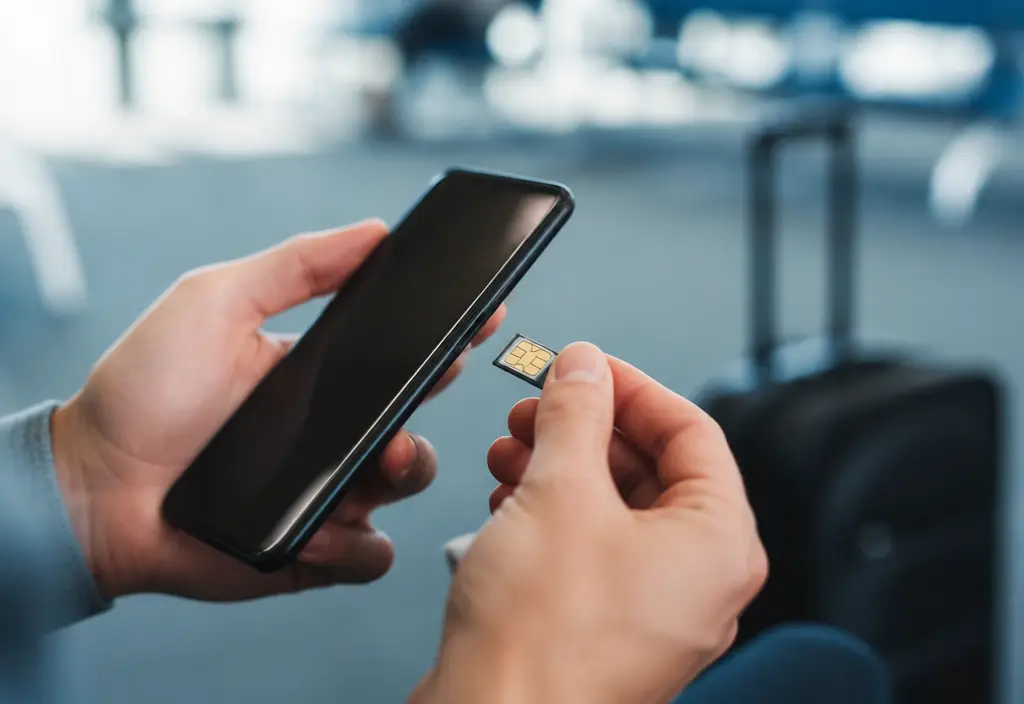
Mobile internet abroad on a trip from Almaty is resolved a couple of days before departure: roaming with your own operator, a local SIM card upon arrival, or an eSIM while still at home. Roaming is convenient for short trips, eSIM — for a week or longer, a local SIM card is cheaper with large gigabytes of traffic. It is worth checking the connection right away at the arrival airport.
Season and destination: when is it cheaper to fly from Almaty?
Trip planning begins with choosing the period. What matters here is the region's climate, the tourist season, and the time zone difference, which affects communication and well-being after the flight.
Weather and tourist season by region
In winter, it is more convenient to fly from Almaty to Southeast Asia, where this time is the dry season and stable heat. Mobile internet abroad works differently in different regions, and this does not depend on the weather, but the load on networks at resorts depends on the season. In high season, the access point at the hotel may be overloaded, so roaming or a local SIM card helps out.
The time zone difference with Asia is 2–3 hours, with Europe — 4–5 hours, and after landing the body needs time to adapt. The first connection to the network is best checked right away at the airport so as not to be left without communication on the road.
High season and holidays: when to book in advance
It is worth booking accommodation and tickets from Almaty several months before the July-August peak and the New Year holidays. During these periods, prices are noticeably higher, and the choice of hotels shrinks. The operator does not affect the cost of the flight, but roaming rates on holiday dates sometimes change.
A traveler with a SIM card and eSIM should check the tariff conditions in advance so that the gigabytes do not run out on the very first day. Traffic on a trip is used up faster than at home, especially if you use maps and messengers. Planning communication in advance saves you from unnecessary expenses and nerves on the spot.
What to consider before departure: documents and money?
Preparation for a trip includes checking documents, financial instruments, and medical protection. These steps are best completed a few weeks before departure.
Passport, visas and electronic permits
Document requirements for entry into different countries change, so they need to be clarified in official sources before buying tickets. Mobile internet abroad will not help resolve issues at passport control if the papers are not ready. Some states ask for confirmation of a return ticket and accommodation booking, and these documents should be kept at hand in printed form.
Electronic permits are issued in advance through official portals, and processing times may take several days. A SIM card and eSIM for communication will come in handy right after arrival to contact those meeting you or call a transfer. Without properly processed papers, the trip may end already at the airport, so checking documents is the first step of preparation.
Insurance, vaccinations and first aid kit
Medical insurance for a tourist from Kazakhstan is often mandatory when entering Schengen countries and some states of Asia. The policy covers treatment and emergency evacuation, and without it, expenses fall on the traveler. In hot countries, it is worth taking an insect repellent: in the tropics, the risk of infections is higher than in Kazakhstan.
For trips to certain regions of Africa and Latin America, a vaccination certificate may be required, for example for yellow fever. The first aid kit is assembled with a supply of personal medications and the composition is checked for restrictions. The operator has nothing to do with this, but the country's emergency service number should be saved in the phone in advance.
Cash, cards and bank notification
Bank cards of Kazakhstani banks are not accepted everywhere: in Southeast Asia, cash is often needed. Currency exchange is more profitable to do in cities, not at the arrival airport, where the rate is usually worse. It is worth notifying the bank about the departure in advance so that the card is not blocked abroad at the very first transaction.
Mobile internet abroad helps control expenses through the banking app and check the balance. Roaming for bank SMS is sometimes expensive, so it is better to enable notifications in the app. It is reasonable to keep part of the cash separately from the main amount in case of losing a wallet.
Communication in the transit zone and at layovers
Flights with layovers through Istanbul, Dubai or Doha require separate attention to communication. In the transit zone, connection rules differ from the usual ones.
Layover airports: where to look for an access point
In the transit zone of large hubs, a Wi-Fi access point is usually available, but it requires authorization by phone number or boarding pass. Mobile internet abroad at this moment may not work if roaming is not enabled with the operator. Stalls with local SIM cards in the transit zone are rare, and an eSIM can be activated even before departure.
Gigabytes of traffic at a layover are spent on maps, messengers and checking the flight. If the access point does not catch, it is worth looking for charging stations near the waiting areas. Pre-downloaded offline maps and boarding passes save nerves in an unfamiliar airport.
Time zones and the first connection after landing
After landing in Asia, the difference with Almaty is 2–3 hours, in Europe — 4–5 hours, and this affects the time of the first going online. Mobile internet abroad is best checked right away at the arrival airport: this way it is clear whether roaming works or a local SIM card is needed. The operator sometimes sends a welcome SMS with tariffs, and it is worth reading it before starting active use.
An eSIM is activated through the phone settings in a couple of minutes if the profile is installed in advance. Traffic in the first hours goes to maps and transfer, so gigabytes should be spent sparingly. The first connection sets the tone for the whole trip, and it is better not to postpone it until the evening.
How to prepare your phone for the trip
The phone is the main tool of a traveler. Preparing it for the trip includes settings, apps and a reserve of charge for a long day.
Device settings and saving charge
Before departure, it is worth disabling background app refresh and photo sync so that traffic is not consumed unnoticed. Mobile internet abroad drains the battery faster, especially in roaming with a weak signal. Power saving mode and reduced screen brightness extend the phone's operation on the road. The carrier in roaming may switch between networks, and this also drains the charge.
A 10,000 mAh power bank is enough for two or three full charges of a smartphone. Gigabytes of traffic are saved if maps and music are downloaded in advance rather than streamed online.
What to install and download in advance
Offline maps, a translator, and a taxi-hailing app should be installed before departure while home internet is available. Mobile internet abroad works unstably in the first hours, so navigation should be available without a network. A SIM card and eSIM require checking access point settings, especially on Android. An airline app with a boarding pass speeds up passing through control in the transit zone.
Traffic for downloading apps in roaming is consumed quickly, and gigabytes on a trip are always limited. Downloaded series and podcasts save you on a long flight without network access.
Local rules and customs worth knowing
Knowledge of local customs and restrictions helps avoid awkward situations and feel more confident in a foreign country.
Tipping, working hours, and Ramadan
In some countries tips are included in the bill, in others they are expected separately, and this is worth clarifying with locals. The working hours of shops and cafes in hot countries are often shifted to the evening, while a siesta occurs during the day. In Muslim countries during Ramadan, the operating hours of establishments change, and it is better to plan the day with this in mind.
Mobile internet abroad helps check working hours and find an open cafe nearby. The carrier does not influence customs, but maps and online reviews help in an unfamiliar city. Respect for local traditions makes the trip more comfortable for both sides.
Importing medicines, food, and alcohol
In some countries, the import of certain medicines is prohibited, so the contents of the first aid kit are checked before departure. The rules for transporting food and alcohol also differ: in some places strict restrictions apply. Communication abroad allows you to check current regulations on official websites on the day of travel.
A local carrier's SIM card provides access to reference resources without expensive roaming. Gigabytes of traffic for such checks are used minimally, while the benefit from them is noticeable. Disputed situations at customs are easier to prevent than to resolve on the spot.
Car rental and driver's license
Car rental abroad often requires an international driver's license, which is arranged in Kazakhstan in advance. Communication on the trip helps book a car online and compare rental companies' prices. Navigation in roaming consumes gigabytes, so the route is better downloaded in advance. A Wi-Fi point at the hotel will be useful for planning the next day's route.
The carrier in roaming sometimes offers packages for navigation, and they are worth studying. An eSIM with a local plan costs less if the trip lasts more than a week.
Visa and entry rules change: check with the primary source — the Ministry of Foreign Affairs of the Republic of Kazakhstan on the gov.kz portal, gov.kz. The information on this page was verified on 15.09.2026.
Briefly
- The article examines communication on a trip: roaming, a SIM card and eSIM, traffic and gigabytes, Wi-Fi points.
- The season and direction from Almaty affect network load, but not the choice of communication method.
- Documents, insurance, and bank cards are prepared several weeks before departure.
- In the transit zone, an access point is sought near waiting areas and charging stations.
- The phone is prepared at home: offline maps, a translator, a power bank, and charge-saving settings.


