
How to cope with motion sickness
Causes of motion sickness on the road
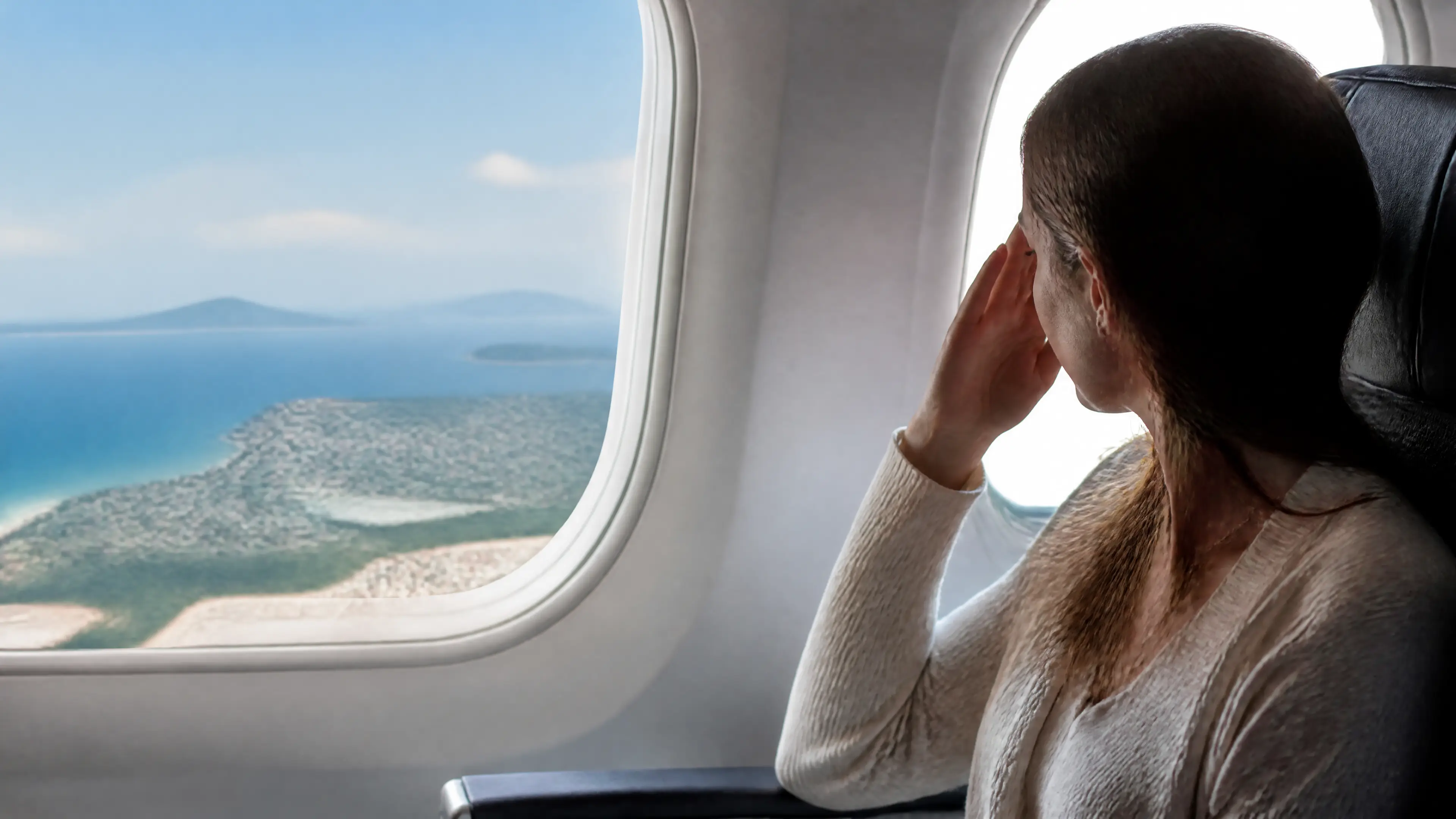
Motion sickness is familiar to many tourists from Almaty. The body loses its footing when the road puts unusual stress on it. A weak vestibular system reacts to shaking and changes in altitude. Strong smells in the cabin also trigger an attack. Understanding the cause helps choose the right tactics.
Preparation before departure from Almaty
The evening before the flight, get enough sleep and do not overeat. Motion sickness rarely affects those who have slept well and eaten lightly. In the morning, limit yourself to a light breakfast without fatty or spicy food. Take water, ginger candies, and wet wipes into your carry-on. Choose a seat by the wing, where there is less swaying. Remedies prepared in advance save energy on the road.
Seat in the cabin and posture
The right seat reduces an attack by almost half. Motion sickness is weaker in the front part of the cabin and by the wing. Ask for a swap at the counter or from the flight attendant if seats are already assigned. Keep the seatback reclined and your head on the headrest. Look at the horizon or a point ahead, do not read. An even posture reduces the load on the vestibular system.
Breathing and gaze
Slow breathing calms the nervous system in a couple of minutes. Inhale for four counts, exhale for six — a simple rhythm. Motion sickness recedes when the gaze finds a fixed support. Do not look at a screen and do not read small text. Close your eyes if the picture outside the window flickers. Fresh air from the vent also helps.
What to take on the road
- ginger candies or tea
- mint lozenges
- wet wipes without a strong smell
- a bottle of water
- a light scarf or sleep mask
- headphones without noise cancellation
Remedies for motion sickness
Pharmacy medications work if taken in advance. Motion sickness does not recede when the pill is taken during an attack. Choose a remedy together with a doctor, not on the advice of a fellow traveler. Bracelets with a pressure point help some people. Ginger in the form of tea or candies acts gently. Discuss dosage and compatibility with a specialist.
Motion sickness in a bus and car
Mountain serpentine roads near Almaty sway more than an airplane. Motion sickness in a car is intensified by sudden braking and turns. Sit in the front, closer to the windshield. Ask the driver to drive smoothly and without overtaking. Open the window if the weather allows. Stop for short breaks every two hours.
Motion sickness on the water
Ferries and boats near the coast add rocking to the road. Motion sickness on the water is often stronger than in the air. Stay on deck, closer to the center of the vessel. Look at the distant shore, not at the waves by the side. Do not go down into the stuffy cabin. At the first signs, breathe evenly and slowly.
Food and drinks on the road
Food on the road affects how you feel no less than pills. Motion sickness worsens after fatty, spicy, and sweet food. Eat a little and only light food. Drink water in small sips. Coffee and soda increase nausea. It is better to exclude alcohol before the road entirely.
Anxiety and mindset
Worry before a flight itself triggers an attack. Motion sickness often begins even before takeoff, from the mere thought of it. Distract yourself with conversation or calm music. Breathe evenly and do not listen to yourself. A positive mindset for the trip reduces the severity of the attack. A calm fellow traveler nearby also helps.
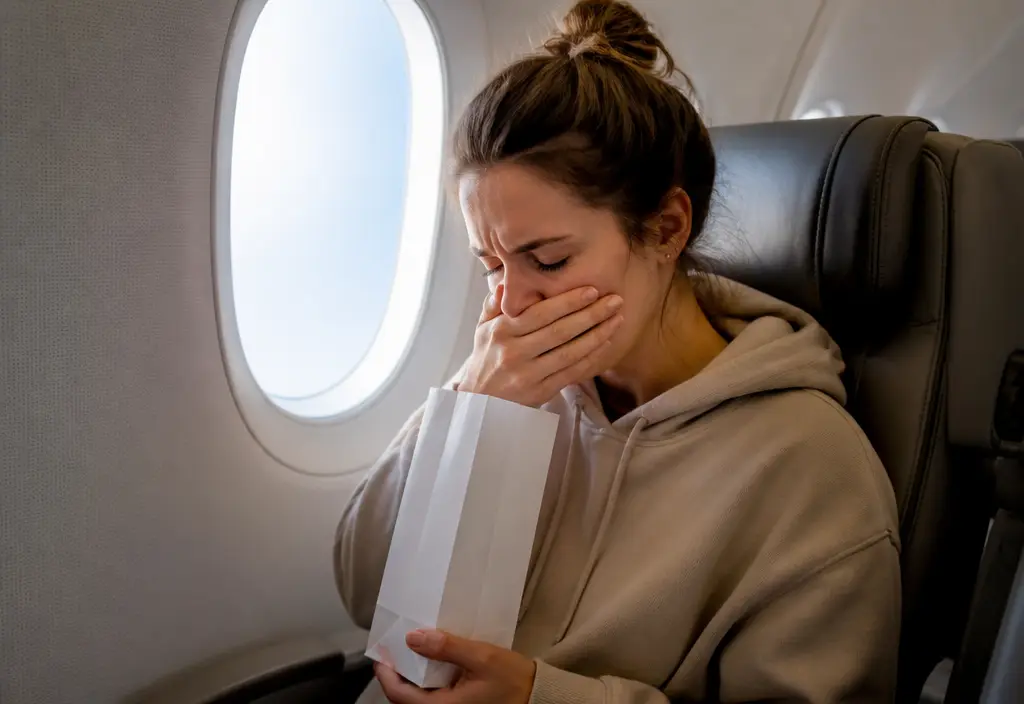
Motion sickness on the road depends on the season, terrain and type of transport. In summer in the south of Kazakhstan, stuffiness in the cabin intensifies symptoms, so leave early in the morning. In spring, dirt roads are washed out; in winter, mountain passes are closed. The hardest sections are the Kordai Pass and the serpentines of the Trans-Ili Alatau.
On a plane, morning flights from Almaty are calmer than afternoon ones. Stop every 1.5–2 hours, eat little and often — and the road will pass more easily.
Seasons and routes: when does the road test your endurance?
The road in Kazakhstan changes with the seasons, and how much motion sickness spoils the impression of the route depends on the month of travel. Below — when the risk is higher and why.
Summer heat in the south and in the steppe zone
From June to August, stuffiness in the cabin becomes the main amplifier of motion sickness. In Turkestan and Kyzylorda, the air in a bus without air conditioning warms up to 40 °C. The steppe zone between Almaty and Astana adds monotony: long straight sections make you sleepy, while rare turns hit the vestibular system more sharply.
A tourist from Almaty heading south in July spends several hours in a stuffy cabin in a row. Motion sickness is easier to tolerate in the morning hours, before the sun rises high. If you still have to travel during the day, a wet wipe on your neck and cool water help. Plan your transfers so that the heat does not coincide with the longest leg of the journey.
Spring mud and closed passes in winter
In March and April, dirt roads are washed out, and the car begins to be pulled from side to side. Such shaking provokes motion sickness more strongly than smooth asphalt. From December to February, mountain passes are closed, and some routes are moved to flat highways. This reduces the risk but lengthens the road. In spring in the south, the mud lasts longer than in the north.
In winter, on closed sections, buses take detours, and travel time increases. If the trip falls in the off-season, choose transport with good suspension.
Mountain serpentines and off-road: what to expect from the terrain
The terrain of Kazakhstan offers two different scenarios of discomfort: prolonged turns in the mountains and constant shaking on dirt. Both intensify motion sickness.
Turns of the Trans-Ili Alatau and the Kordai Pass
The road from Almaty toward Kyrgyzstan goes through the Kordai Pass, and this is one of the hardest sections in the region in terms of the number of turns. The serpentines of the Trans-Ili Alatau on the way to Charyn and Kolsai Lakes take 4–6 hours of continuous winding. Motion sickness here comes in waves: ascent, bend, descent, bend again.
A tourist from Almaty is helped by a seat in the front part of the cabin and a gaze at a distant point on the road. On mountain tours, stops should be made more often than usual. If the route includes Kaindy, the road will take almost the whole day. For sensitive people, it is better to choose a jeep with stiff suspension rather than a minibus.
On the cable car to Medeu and Shymbulak, motion sickness is also possible, although this is no longer transport in the usual sense.
Shaking on the dirt roads of Mangystau and the Ustyurt Plateau
Off-road in Mangystau and on the Ustyurt Plateau, the body is rocked constantly, and motion sickness acts differently than on asphalt. The shaking is continuous, without pauses for recovery. Jeep tours in these areas last for hours, and every stone under the wheels is felt in the body. A tourist from Almaty who encounters such a surface for the first time gets tired faster than expected.
The speed on dirt is low, and the journey is long, so symptoms accumulate. A snug seat and a seat belt that holds the torso help. It is worth stopping every 1.5–2 hours to walk around. In the heat, stuffiness is added to the shaking, and motion sickness doubles. If the route is long, break it into short daily segments.
How to choose transport for your route
Different types of transport place different loads on the vestibular system. The choice depends on how many hours you are ready to spend on the road and what surface it will cross.
Bus, train or plane: comfort comparison
Jeep tours and water sections: what to pay attention to
On a jeep tour, it is important to ask in advance how many people are riding in the vehicle and where your seat is. The back row off-road rocks noticeably more than the front. Motion sickness in a jeep accumulates faster than in a bus, because the shaking is continuous. A tourist from Almaty should check with the organizer whether the vehicle has air conditioning and how often stops are planned.
On water, everything is decided by the weather: wind and waves on the Caspian and Balkhash increase rocking many times over. Before boarding a boat, check the forecast and take a seat closer to the center of the vessel. If the route includes a ferry, choose a morning departure, when the sea is calmer. Motion sickness on water is tolerated harder than on land, so a day of rest after the crossing would not hurt.
What to consider when flying out of Almaty?
Almaty Airport (ALA) stands at the foot of the mountains, and this affects the nature of the flight. Let's look at how departure time and flight distance affect how you feel.
Morning flights and turbulence over the ridges
Flights from Almaty in the southern direction are more often bumpy in the second half of the day. Over the Trans-Ili Alatau, the air warms up by noon, and turbulence intensifies. Morning departures to Shymkent, Tashkent and Bishkek are calmer. Motion sickness on a plane depends not only on bumping but also on how you spent the night before the flight.
Water and light snacks are sold after the security area; bringing food from home is not necessary. If the flight still falls in the afternoon hours, choose a seat over the wing. There the amplitude of rocking is less, and motion sickness is felt more weakly.
Long domestic flights and time zone changes
The flight from Almaty to Aktau or Almaty to Atyrau lasts 2–3 hours, and it is on such routes that beginners most often complain of motion sickness. Time zone changes within the country add fatigue, which intensifies the symptoms. A trip to Baikal or to Russia by train stretches over a day or more, and here sleep schedule matters more than on a short flight.
A tourist from Almaty should go to bed and wake up according to the destination's time while still en route. Motion sickness on a long flight comes on during descent, so it is better not to eat heavily during the last hour. Keep water at hand and drink in small sips. After arrival, give yourself a day to acclimatize before getting behind the wheel or going on a sightseeing tour.
Daily routine and stops on a long journey
A long journey is exhausting regardless of the mode of transport, but a daily routine noticeably softens motion sickness. Below is what works on the road.
Frequency of pauses and warm-up on the road
Stop every 1.5–2 hours, even if the route allows driving without a break. Getting out, walking around and breathing for ten minutes is enough to relieve accumulated motion sickness. On bus tours around Kazakhstan, drivers usually make such pauses themselves, but on private trips they need to be planned. At a stop, do not sit right back down — stand, stretch your neck and shoulders.
Motion sickness accumulates gradually, and a short warm-up breaks this process. If you feel your condition worsening, ask for an unscheduled stop. On mountain tours, pauses are needed more often: turns tire you out faster than straight sections.
Sleep, food and water on schedule
Sleeping on the road helps, but only if it is not fragmented. A KTZ train gives you the opportunity to sleep, however a platzkart with open windows in summer creates stuffiness and smells that themselves provoke motion sickness. Eat little and often: heavy food before a long journey intensifies nausea. Water should be at hand, but you should drink it little by little, not in one gulp.
Coffee and soda before the road are also not the best choice. Motion sickness is weaker if you go to sleep at the same time along the route. Keep something light in your bag for a snack at a stop. Routine matters more than specific foods: stability helps the body adapt.
In brief
- In summer in the south, stuffiness in the cabin intensifies symptoms, so set out early in the morning.
- The Kordai Pass and the serpentines of the Trans-Ili Alatau are the hardest sections by number of turns.
- On the off-road of Mangystau and Ustyurt, the shaking is continuous, with no pauses for recovery.
- Morning flights from Almaty are calmer than afternoon ones, and on the train the stuffiness of the platzkart gets in the way.
- Pauses every 1.5–2 hours, light food and water in small sips make the journey easier.


