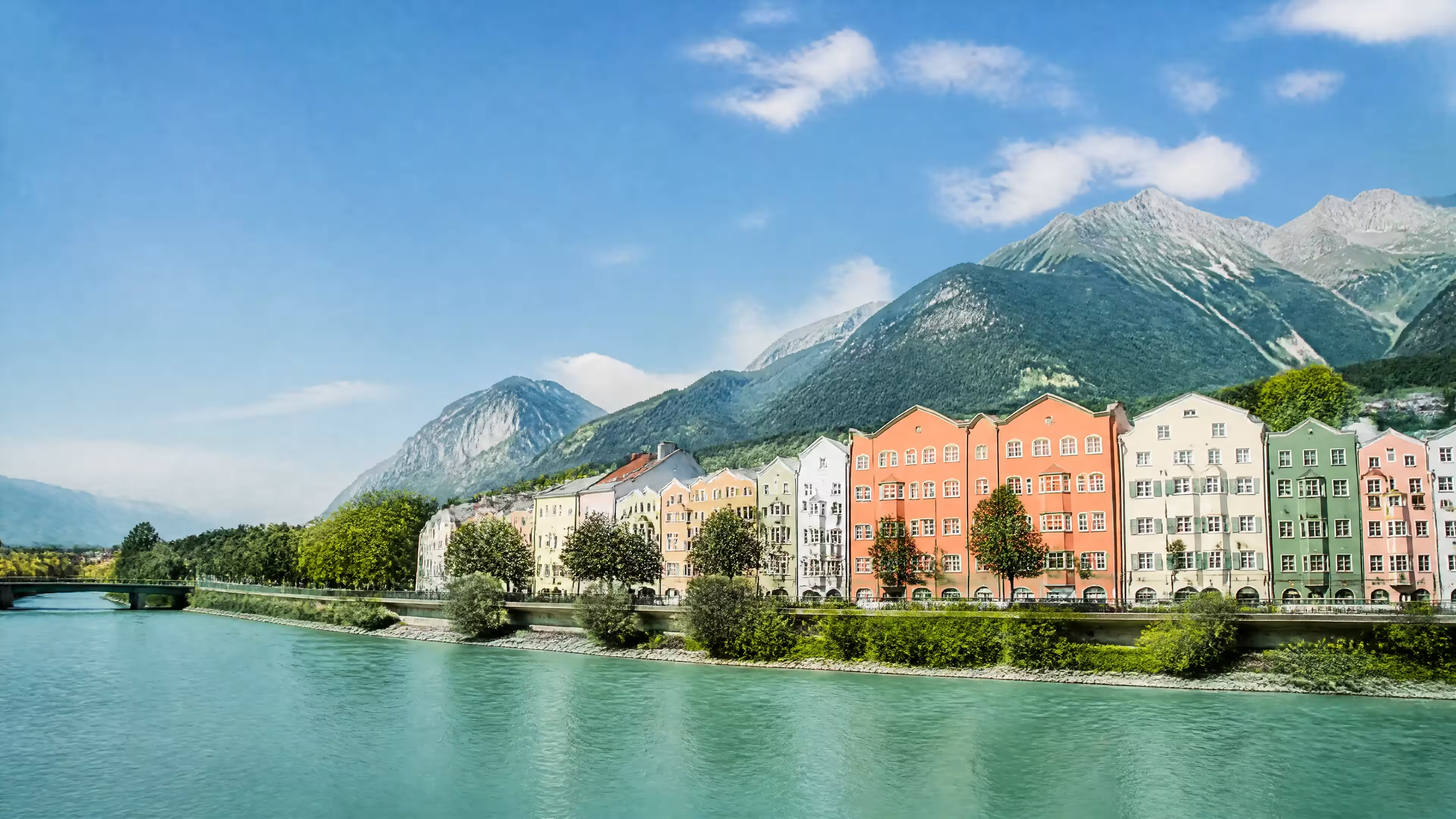
Holidays in Innsbruck are a compact Austrian city surrounded by the Alps, where the Old Town sits next to mountain lifts. The best time for a festive atmosphere is from late November to early January; for calm and low prices — April, May, October and November. In summer it is hot during the day and cool in the evening. There are no direct flights from Almaty; the route is built through Istanbul, Vienna or Frankfurt with one transfer.
Visa, flight and money: how to prepare for a trip to Innsbruck?
A trip to Austria begins long before departure. Documents, tickets and cash are sorted out in advance so that in Innsbruck you only have to relax.
Documents for a trip to Austria: what to prepare in advance
Permission to enter Austria is arranged in advance, several weeks before departure. The package of papers for the Austrian representative office is standard: a valid passport, an insurance policy, confirmation of accommodation booking and air tickets. Processing times depend on the workload of the department and the season. In summer and before the New Year holidays the queue for submission is longer, while in the shoulder season the process moves faster. Documents can be submitted through a visa centre, which saves time on a trip to the capital. Holidays in Innsbruck should be planned with a margin in dates so that a shift in deadlines does not ruin the booking. Check the exact requirements and list of documents on the website of the Austrian representative office, verified on 01.01.2025: https://www.bmeia.gv.at. Without a valid entry permit, a trip to Austria is impossible.
Flight from Almaty with a transfer: routes and choosing a ticket
There are no direct flights from Almaty to Innsbruck; the route is built through major hubs. It is most convenient to fly with one transfer. Istanbul, Vienna and Frankfurt are the main connection points on this route. Through Istanbul the flight usually takes less time, and the connection takes place in one terminal. Vienna is convenient because from there you can reach Innsbruck by train if you do not want to wait for the next flight. Tickets should be bought in advance. Prices for the route from Almaty to Austria rise noticeably a month before departure, especially for winter dates. When choosing a connection, leave a margin of time between flights of at least two hours. Holidays in Innsbruck begin with a successful flight, so do not save on a long overnight transfer.
Budget in euros: currency exchange and card payment in Austria
The tenge to euro exchange rate is unstable, so it is more convenient to calculate the trip budget in European currency right away. It is more profitable to exchange money in Kazakhstan before departure. In Austrian exchange offices the rate is usually less favourable and the commission is higher. Visa and Mastercard cards issued in Kazakhstan are accepted in Austria to a limited extent. Large hotels and shops do accept payment, but in small cafes and at markets the card may not be accepted. Therefore cash euros are needed for everyday expenses. Take with you an amount for food, transport and small purchases for the first days. Tours to Innsbruck often include accommodation and breakfast, while lunches and excursions are paid separately. Plan expenses so that part of the money remains in cash.
When to go to Innsbruck: seasons and city occupancy?
The Austrian city lives in two pronounced seasons, and both the weather and prices depend on the choice of dates. Understanding occupancy helps you choose a calm time for the trip.
Christmas markets and New Year dates
Late November opens the festive season, which lasts until early January. The markets on Maria-Theresien-Platz and in the Old Town operate daily. Here it smells of mulled wine and roasted chestnuts, music plays, and jewellery and gifts are sold. This is the most expensive and the busiest time. Hotels are booked several months in advance, and prices for New Year dates reach their annual maximum. Holidays in Innsbruck in these weeks turn out atmospheric but require early planning. If you want to catch the markets without the crowds, come on a weekday in early December. In the evening there are many people in the centre, so it is better to book dinner in advance. Tours to Innsbruck for the holidays sell out quickly, and available places remain mainly in remote hotels.
Shoulder season: calm months and closed lifts
April, May, October and November are the quietest months in the Austrian city. Accommodation prices fall, there are no queues in museums, and the streets of the Old Town are free. The downside is that some mountain lifts are closed for maintenance. The cable car and high-altitude stations may not operate until the start of the winter or summer season. But this time is suitable for walks in the valley and a leisurely acquaintance with the city. The weather in the shoulder season is changeable; rain and the first snow are possible. Holidays in Innsbruck in such months are cheaper but require flexibility in plans. Check the lift schedule before the trip so as not to be disappointed. Tours to Innsbruck in the shoulder season are chosen by those who want calm rather than activities on the slopes.
Summer weather in the Inn valley and what to put in the suitcase
In summer it is hot in the city during the day, and cool in the evening due to the proximity of the mountains. Such a temperature difference requires a thoughtful wardrobe. During the day, light clothing and a head covering are enough. In the evening a jacket or a warm sweater will come in handy. It is worth putting comfortable shoes in the suitcase for walking along cobbled streets and trails. A raincoat or umbrella will not hurt, as there are short downpours in summer. The sun in the mountains is strong, so take protection cream. Summer holidays here are good for excursions and trips around the surroundings. Austrian weather in the Inn valley is rarely stable all day. When going for a walk, take a layer of clothing with you in case of a cold snap.
Accommodation and transport on site
Accommodation and movement around the city are two expense items that can be planned in advance. Austrian infrastructure is arranged so that a tourist can conveniently do without a car.
Hotels, tourist tax and early booking
Austrian hotels often charge a tourist tax per person per night. It is paid separately on site and is not included in the room rate. In high season, accommodation in Innsbruck is booked several months in advance. New Year's and February dates are taken first, so it is not worth delaying the decision. Hotels in the Old Town are more expensive, but everything is within walking distance. Options across the Inn River are cheaper and quieter; you can walk to the center or take a tram. A trip with early booking costs noticeably less. Check whether breakfast is included and whether there is parking if you plan to have a car. Tours to Innsbruck with accommodation remove these hassles, but the choice of hotels in the package is already limited.
Trams, buses and the guest card
Public transport within the city consists of trams and buses. Tickets are sold at machines and via a mobile app. Multi-day passes are available, which is cheaper than single rides. For a tourist, the single guest card Innsbruck Card is convenient. It provides travel on public transport and entry to most museums and cable cars. Such a card pays for itself within two or three days of active movement. A trip with the card becomes simpler: you do not need to buy a ticket each time. Tram routes connect the center, the station and the mountain stations. The Austrian transport network runs on schedule, and delays are rare.
Car rental: license, deposit and parking
To rent a car, you need an international driver's license and a credit card for the deposit. Without a card, the car is not issued, even if you have cash. In the center of Innsbruck, parking is paid and limited. Hotels rarely have their own spaces, and street parking is intended for short periods. Outside the city, the situation is simpler: there are parking lots at cable cars, sometimes free. A trip with a car is convenient for traveling around Tyrol, but in the city itself the car is more of a hindrance. Austrian roads are high-quality, and the signs are clear, but in winter you need chains or winter tires. If you plan only the city and surroundings, renting is not necessary.
Tyrolean cuisine and everyday expenses
Food in an Austrian city is a separate pleasure and a noticeable budget item. The difference between tourist and local establishments is noticeable.
Old Town taverns and dishes worth trying
Old Town taverns serve Tyrolean dishes. Spätzle, knödel, Kaiserschmarrn and Wiener schnitzel are classics of the local menu. The portions are filling, so lunch often replaces dinner. Prices in the tourist area are higher than the city average. A trip should start with lunch in a traditional tavern to feel Austrian cuisine. In the evening, popular places require a reservation, otherwise you will have to wait for a table. Many establishments close early, around nine in the evening. Tours to Innsbruck sometimes include dinners in national restaurants, which saves you from searching. Try local seasonal dishes; they depend on the time of year.
Where locals eat: districts across the Inn River
The districts across the Inn River are residential neighborhoods with ordinary cafes and pizzerias. Here locals have lunch and dinner, not tourists. Prices are lower, portions are the same, the atmosphere is calmer. A trip across the river costs less, and the quality of food does not suffer. Finding such a place is easy: move a couple of blocks away from the main street. Austrian cuisine here coexists with Italian and Asian, which diversifies the menu. Local establishments rarely stay open late, so it is better to have dinner before eight in the evening. Tours to Innsbruck with a guide often point out such spots, but they are easy to find on your own.
Tipping and small cash expenses
In Austrian cafes and restaurants, it is customary to leave tips by rounding up the bill or about 5-10% of the amount. This is not an obligation, but a sign of gratitude for service. Small expenses are more convenient to pay in cash. For coffee, a ticket or a souvenir, a card may not be accepted. Keep coins and small banknotes with you. A trip to Innsbruck with cash in your pocket saves you from awkward situations at the checkout. The Austrian habit of counting small change means that change is given precisely. Leave tips directly in the bill or on the table; a separate line in the receipt is not provided.
Day trips and safety in the mountains
From an Austrian city, it is convenient to explore neighboring countries and regions. The mountains require attention to the weather and the route.
Salzburg, Munich and Verona by rail
From Innsbruck, it is convenient to take day trips to Salzburg, Munich and Verona. Rail connections are well developed, trains run on schedule. The journey to Munich takes about two hours, to Salzburg a little less, to Verona over the pass several hours. Tickets should be bought in advance, then the price is lower. Such a holiday with trips to neighboring cities requires an early start in order to return in time. Austrian trains are comfortable, with power outlets and Wi-Fi. Check the schedule the day before, especially on weekends. Tours to Innsbruck sometimes include such trips, which saves time on planning.
Weather forecast and avalanche conditions on the route
In the mountain regions of Tyrol, the weather changes quickly. Before setting out on a route, it is worth checking the forecast and avalanche conditions. In the morning it may be sunny, but by noon wind and snow may rise. A trip to Innsbruck in the mountains requires caution even on simple trails. Austrian services publish avalanche danger bulletins daily. Do not set out on a route alone and tell someone about your plans. Clothing should match the weather, with a margin for colder temperatures. Tours to Innsbruck with a guide are safer for those unfamiliar with the area.
Briefly
- A holiday in Innsbruck suits lovers of mountains, old streets and quiet walks.
- The Austrian city is convenient as a base for trips to Salzburg, Munich and Verona.
- The best time for a festive atmosphere is late November and December.
- The quiet and inexpensive months are April, May, October and November.
- In summer, take light clothing and a jacket for the evening.