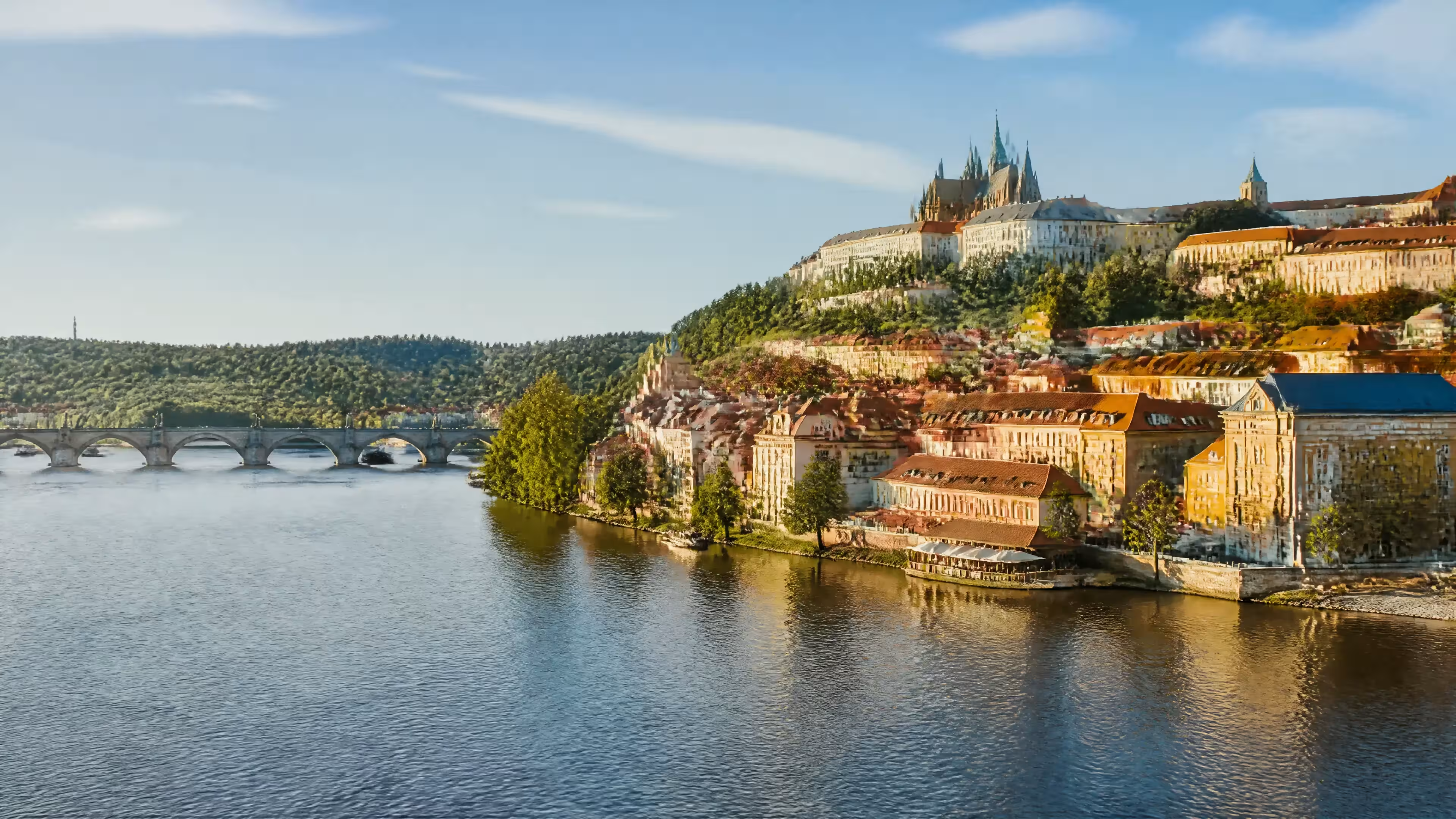
Prague is a compact city where all the main sights are close together: Old Town Square, Charles Bridge, Prague Castle. The season for a trip is chosen based on weather and prices: May, June and September offer mild warmth and long walks, December offers fairs and crowds. Flights from Almaty require a transfer, and the journey takes about a day. Three or four days are comfortably enough to see the city.
Visa and documents for a trip to Czechia: what do you need to know?
A trip to Czechia begins with paperwork, and whether a holiday in Prague takes place depends on it. Below is how documents are prepared and what is put in the folder in advance.
Submission deadlines and appointments at the visa center
Appointments at the visa center open in advance, and during high season available slots disappear quickly. It is more convenient to plan tours to Prague several months before departure. Citizens of Kazakhstan need a Schengen visa to visit Czechia, and it is arranged before buying non-refundable tickets. The package is assembled according to the visa center's list, and the form is filled out without errors. The processing time depends on the consulate's workload, so a cushion of a couple of weeks will not be superfluous. Before submitting, it is worth checking the current requirements on the official website of the department. That way a holiday in Prague will not fall through because of one missing piece of paper.
Insurance and Schengen agreement requirements
Medical insurance for a Schengen trip is mandatory, with minimum coverage of 30,000 euros. The policy must be valid throughout the territory of Czechia and cover the entire period of stay. It is arranged together with the other papers, and a printout is taken along. The trip is calmer when the policy also covers emergency dentistry. Copies of documents are kept separately from the originals. Tours to Prague often include a hint on assembling the package, but the tourist arranges the policy independently. The current requirements for the policy should be checked on the department's website before submitting.
Visa and entry rules change: check with the primary source — the Embassy of the Czech Republic in the Republic of Kazakhstan, https://mzv.gov.cz/astana/ru/vizy_i_konzulskie/index.html. The information on this page was verified on 10.09.2026.
When is the best time to go and how much does a holiday cost?
Prague welcomes guests all year round, but the seasons differ greatly in weather and prices. Below is when to go and what to expect in terms of money.
Seasons, holidays and fairs
The most expensive weeks in the Czech capital fall in December and January, when the holiday fairs are running. In spring and early autumn prices are lower, and the weather still allows long walks. In summer Prague is crowded and hot, but all the summer terraces are open. In winter the city is quieter, but it gets dark early, and an umbrella will come in handy in any month. A trip in the shoulder season costs less, and the queues at attractions are shorter. Tours to Prague for the May dates sell out first. It is worth planning the trip with an eye on school holidays and European holidays.
Trip budget and payment methods
The currency of Czechia is the Czech koruna, and euros are not accepted everywhere. It is more profitable to exchange money in Prague, not at the departure airport. Cards from Kazakh banks may not work, so cash should be taken with a reserve. A trip here is cheaper if accommodation and tickets are booked in advance. Below are benchmarks for spending without exact amounts.
How to get there from Almaty and what to consider on site
The journey from Almaty takes almost a day, and it is worth planning in advance. Below are the routes and what to prepare for upon arrival.
Routes with transfers and travel time
There are usually no direct flights from Almaty to the Czech capital; more often people fly with one transfer. Convenient connecting hubs are Istanbul, Dubai and Frankfurt. The total travel time with a transfer is noticeably longer than the flight itself. A holiday there begins with a tiring journey, so it is better not to plan excursions for the first day. Tours to Prague with a transfer cost less, but require a cushion of time between flights. During a connection, luggage sometimes has to be collected and checked in again. Schedules change, so the route should be checked before buying tickets.
Time difference and acclimatization
The time difference with Almaty is 4 hours in winter and 3 hours in summer: Czechia changes its clocks (UTC+1 in winter, UTC+2 in summer), while Kazakhstan stays on UTC+5 all year round. The body gets used to the shift in one or two days. On the first day it is better to walk in daylight and go to bed according to local time. The trip will be easier if you do not plan early rises right after arrival. Water and light food on the first evening help you get into the rhythm faster. Tours to Prague with a packed program on the second day are harder to handle. The reverse adjustment after returning takes about the same amount of time.
Transport, accommodation and everyday expenses
Getting around the city and choosing a district strongly influence the impression of the trip. Below is how transport works and where to stay.
Metro, trams and the single ticket
The single ticket in the Czech capital is valid on the metro, trams and buses. It is bought for a certain time and activated upon entry. The ticket must be validated immediately, otherwise it is considered invalid. A trip here is more convenient when the accommodation is near a metro line. Trams run frequently through the center and let you look at the city along the way. Tours do not require a car; public transport covers almost all routes. Separate tram lines run at night, but the intervals are longer.
Choosing a district to stay in
Accommodation in the historical center is more expensive, while areas near the metro are cheaper and more convenient for daily trips. It is worth booking in advance, especially for holiday dates. A trip to Prague is calmer if the metro station is five to ten minutes away on foot. Quiet districts away from tourist streets provide proper sleep. Tours to Prague often accommodate guests in the center, which is convenient for short trips. When choosing, it is worth looking at reviews and the distance to transport. Below is a comparison of two accommodation options.
Language, traditions and useful habits for a tourist
Local customs in Czechia are simple, but a couple of habits will save your nerves. Below — about tipping and communication.
Tipping and rules of behavior
Tips in Czech establishments are usually left at around ten percent of the bill. In cafes and restaurants, the amount is said to the waiter out loud when paying. A trip to the capital of Czechia does not require a strict dress code, but shorts are not worn into temples. On public transport, it is not customary to talk loudly. Tours to Prague usually include tips on local etiquette. In resort areas of Czechia, tourists are treated calmly. Small banknotes will come in handy both for tips and for paying for transport.
Language barrier and communication
In tourist places of the Czech capital, staff speak English. In the provinces and small towns, they communicate mainly in Czech. A few simple Czech words noticeably win over the locals. A trip hardly requires the language, but a translator on your phone will come in handy. Tours to Prague with a Russian-speaking guide remove the issue of communication. At a pharmacy or clinic, it is easier to show the request on a screen. A polite greeting in Czech opens any door.
Briefly
- Prague is compact: the main attractions stand close together, three to four days is enough.
- The best months for walks are May, June and September, December is expensive and crowded.
- From Almaty, flights go with a transfer through Istanbul, Dubai or Frankfurt.
- Take cash in korunas with a reserve: cards from Kazakhstani banks do not always work.
- Accommodation near the metro is cheaper than the center and more convenient for daily trips.