
Can you drink tap water
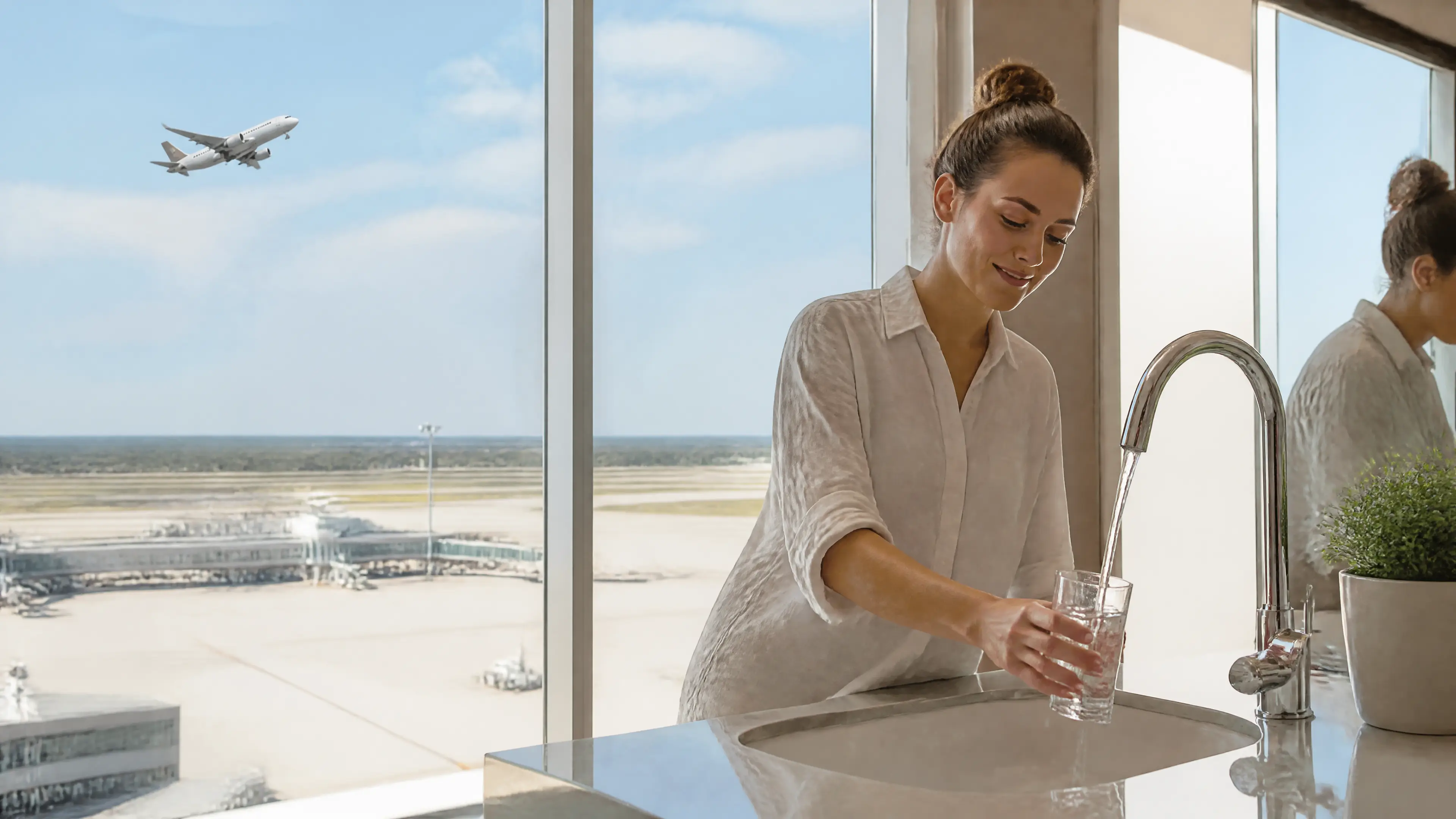
Water while traveling
Can you drink tap water in a foreign country — this is a question every tourist from Almaty asks themselves. The answer depends on the region, and it is better to check the water in advance. Drinking it without preparation is risky even where locals drink it every day. Tap water in hotels is often served purified, but this is not a guarantee.
What they say about tap water
Tap water is served differently in different countries, and there is no universal rule. In Western Europe, drinking tap water is usually safe, but in Southeast Asia and Africa you should not do so. Even if locals drink tap water, their bodies are used to the microflora, but yours is not. Drinking tap water on the first day of a trip is the worst decision, because acclimatization has not yet passed.
How to make water safe
It is better to buy water in bottles or boil it if possible. Boiling kills bacteria, but does not remove heavy metals and chlorine. A filter bottle helps, but does not replace boiling. If you are going to drink tap water, find out about the water quality in the specific city in advance.
Where you can drink water
In a number of countries, tap water is recognized as suitable for drinking, and people go there precisely for this. In Scandinavia, Switzerland, Austria and Japan, you can drink tap water almost everywhere. In UAE and Singapore, water is desalinated, and it meets standards, although its taste is specific. In Turkey and Greece, at resorts, drinking tap water is not recommended, even if it looks clean.
Water in hotels is often poured into carafes, but this does not mean you can drink it from the tap.
Where you cannot drink water
In Thailand, Vietnam and India, you cannot drink tap water in any form. Water for brushing teeth there is also taken from a bottle. Drinking tap water in these countries is a sure way to spend your vacation in your room.
Seasons and climate
In the hot season, the need for water grows, and the question of whether you can drink tap water becomes critical. From May to September, the Mediterranean is hot, and dehydration sets in faster. During this time, you need to drink water more often than it seems. In the rainy season in the tropics, the water supply can become more contaminated than usual.
In winter in the mountains, tap water is sometimes cleaner, but drinking it is still risky. In winter, bottled water is bought less often, and for no good reason. You need to drink water in any season, not only in the heat.
What to take with you
Your own bottle with a filter solves half the water problems on a trip. A compact filter removes bacteria and makes tap water suitable for drinking. Disinfection tablets will come in handy where there is no access to boiling water. A thermos bottle keeps water cold in the heat and warm in the mountains. Drinking tap water through a filter is still not worth it in countries with poor sanitation.
It is better to fill water at the airport after security, not before it.
Hotels and water
Water in the room is often left free, but not always. Drinking tap water in the bathroom is not worth it even in a good hotel. Water in the carafe is changed daily, but its source is unknown. It is better not to touch the water from the minibar because of the price.
Food and drinks
Water is added to ice, sauces and drinks, and people forget about this. Drinking tap water in the form of ice in a cocktail is the same mistake. Water for tea and coffee in cafes is usually boiled, and this reduces the risk. Drinking tap water in raw form in street cafes is not worth it. Order bottled water with a closed cap.
First aid kit
Sometimes you have to drink tap water, and the first aid kit helps. Anti-diarrhea remedies and sorbents take up little space. You need to drink water with electrolytes at the first signs of dehydration. It is better not to economize on tap water on the road.
Flight from Almaty
Water on the plane is served free, but there is little of it. You can drink tap water at Almaty airport, but in transit zones — not always. During the flight, drink water more often than you want to. Drinking tap water at a foreign airport is risky.
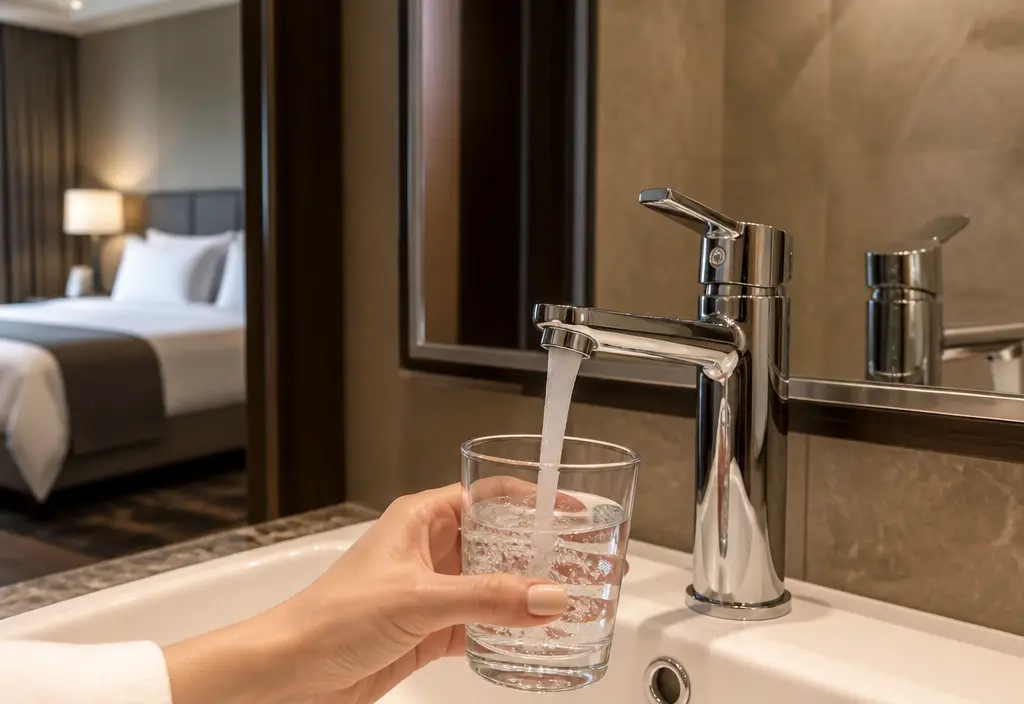
Can you drink tap water on a trip — this is a question that has no single answer for all countries. In Western Europe, Japan, Australia and Chile, tap water is safe, and locals drink it. In Southeast Asia, India, Africa and the Middle East, even residents do not drink it.
What is important for a tourist from Almaty to know?
A tourist evaluates tap water in an unfamiliar city by habit, not by fact. The home habit of trusting the water supply abroad fails most often.
How tap water differs in different regions of the world
Tap water in Western Europe, Japan and Australia is officially recognized as drinking water, and local residents pour it without fear. Water in Southeast Asia, India, most African countries and the Middle East is not drunk even by the residents themselves, but bought bottled. Water in Latin America and the Caribbean is safer for a tourist to consider technical, except for Chile and Costa Rica.
Water in large hotels is often further purified, but this applies only to the kitchen and restaurant, not to the tap in the room. Many people in Kazakhstan boil tap water out of habit, and this habit helps rather than hurts on a trip.
Why the risk of intestinal infections is higher in hot countries
Bacteria and protozoa tolerate heat actively, so water in a warm climate spoils faster. In Southeast Asia and the Middle East, the air heats water to thirty degrees and above, and microbes multiply in it within hours. In Europe, the climate cools water, and there even technical water less often becomes a source of infection.
Tap water in a hot city is better not to drink also because local sewage systems are often worn out. During the rainy season, water is additionally diluted by runoff, and the risk rises even higher. On a trip to such countries, a tourist from Almaty should perceive water as a raw material, not as a drink.
How can you check water in an unfamiliar city without a laboratory?
Drinking tap water in an unfamiliar place without checking is not worth it. Indirect signs give a quick, though not exact, assessment.
Indirect signs: smell, sediment, behavior of local residents
You can drink tap water only where it is clear, without smell and without sediment after settling. Drinking water with a smell of chlorine is still acceptable, but a smell of dampness, rotten or chemical is a signal to refuse. Drinking water with a white film on the bottom of the glass is not worth it: these are hardness salts, and the intestines react to them.
Drinking water where locals buy bottles by the case is unreasonable — they know their tap better than a tourist. Drinking water in a cafe where the waiter brings a carafe is safer if the carafe is opened in front of you. You can drink tap water at a hotel if the staff drink it themselves and offer it to guests.
What to do in the first days so that the body adapts
In the first two or three days of a trip, it is better to drink only bottled water, even in a prosperous country. You should start drinking locally produced bottled water gradually, mixing it with the usual one. You should not drink tap water at all in the first day, even if the city is considered safe. In hot weather, you need to drink water more often than usual, otherwise adaptation is harder.
It is better to drink water with local cuisine after the stomach has gotten used to the new food. In the first days, you should drink water in small portions, not in one gulp.
How to make water safe in a hostel and apartments
Water in a hostel and apartments with a kitchen is obtained in different ways. You usually cannot drink tap water in the room, and in the shared kitchen there is often a water cooler.
Boiling: which contaminants it removes and which it does not
Drinking water after five minutes of boiling is safe from bacteria, viruses and protozoa. You can drink water after boiling almost anywhere where there are no industrial discharges. Drinking water in which nitrates and heavy metals remain is not saved by boiling — the concentration only grows. Drinking water with organochlorine compounds after boiling is also not worth it.
You can drink tap water in the mountains after boiling if there are no pastures or settlements nearby. On the road, it is more convenient to drink water through a thermos with boiling water than through a glass.
Pitcher filters and camping filters: what really works on the road
Drinking water through a pitcher in apartments is convenient, but the cartridge life on a trip runs out quickly. You can drink water through a camping membrane filter from a river and lake if the water is clear. You should drink water after UV treatment only if it is clarified, otherwise the beam does not work. Drinking water with chlorine tablets in a hot country is unpleasant in taste, but acceptable.
You can drink tap water through a household faucet filter with a caveat: it does not save from viruses.
What to drink and eat on a trip so as not to get sick
You can drink water and eat local food on a trip without fear if you follow simple rules. Drinking tap water in this list is the first thing to give up.
How to wash vegetables and fruits if you only have tap water at hand
Tap water is not suitable for washing fruits if you cannot drink it. You should wash fruits with tap water only if they are peeled. It is better to wash vegetables and greens with bottled water, and then pour boiling water over them. Washing hands with tap water is acceptable with soap, but they must be dried with a paper towel.
You can wash dishes in apartments with tap water if you then pour boiling water over them. You should not wash berries and grapes with tap water at all: they are not peeled.
Why ice in drinks and street food are a separate risk
Drinking drinks with ice in a hot country is dangerous because ice is often made from tap water. You should drink cocktails on the street only where ice is brought in factory packaging. A tourist does not recognize tap water in the form of ice, and this is the main trap. Drinking juices and smoothies from street stalls is also risky: they are diluted with the same water.
It is safer to drink water in a street cafe from a sealed bottle that is opened in front of you. You should not drink tap water in the form of sauce or gravy with street food either.
How to prepare for a change of water in advance
Drinking water on a trip is easier if you prepare at home. You won't have to drink tap water in the first days if you gather everything you need in advance.
What to take from home and how to put together a first aid kit
Drinking tap water at home is worth doing before departure, so as not to change the habit abruptly. Drinking water on a trip is helped by a sorbent taken from home: it relieves the first reaction to new water. Drinking water with electrolytes in the heat is worth doing if the tourist sweats a lot. Drinking water on the road is convenient from a collapsible bottle with a filter.
Drinking tap water in a foreign country is not worth doing without hand sanitizer. Drinking water on a trip is worth doing with a supply of tablets for diarrhea and for dehydration.
How to choose accommodation and insurance taking into account access to clean water
Drinking tap water in the room is possible only in hotels with post-treatment, and this is worth checking in advance. Drinking water in apartments is more convenient if the description mentions a water cooler or filter. Drinking tap water in a hostel is almost never possible, but there is usually a water cooler in the kitchen. Drinking water in a guesthouse is worth doing from bottles that the host brings to guests.
Drinking water on a trip is calmer with insurance covering infectious diseases and hospitalization. Drinking tap water in a remote area is riskier than in the city center.
Briefly
- In prosperous countries, tap water is drunk without concern, in hot regions — only bottled.
- For the first two days of the trip, it is worth drinking bottled water, even if the city is considered safe.
- Cloudy water, a smell of dampness or sediment at the bottom of a glass — a reason to refuse to drink.
- Boiling kills microbes, but does not remove nitrates, metals and organochlorines.
- Ice, smoothies and sauces from street stalls are more dangerous than they seem at first glance.


