
How to choose sunscreen
Climate and sun in Almaty
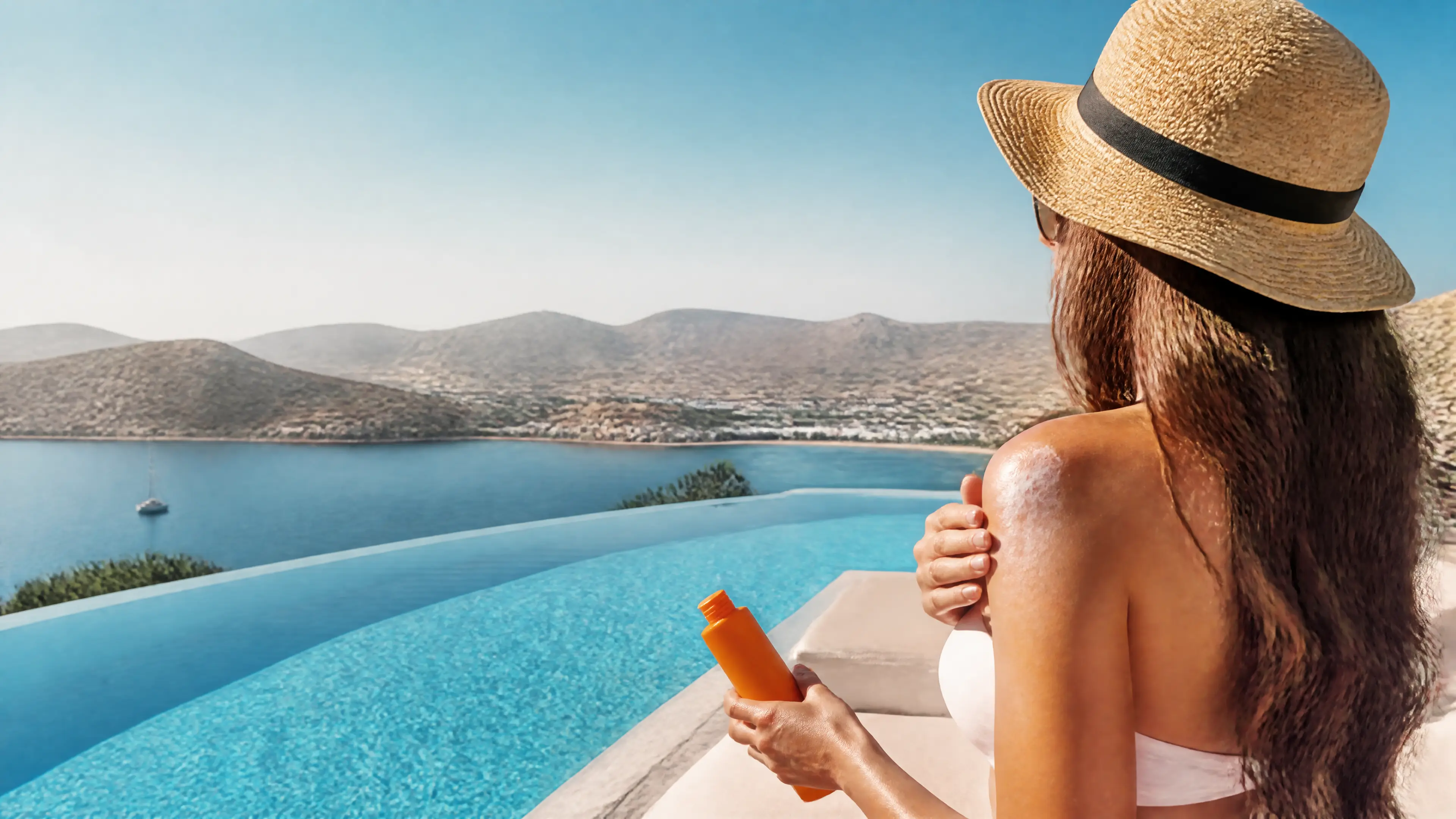
From Almaty a tourist flies to countries where the sun burns all year round. The intensity of ultraviolet depends on latitude, altitude and season. On a beach in the tropics, cream is needed even on a cloudy day. Before a trip, it is worth deciding in advance how to choose sunscreen for a specific destination.
SPF, PA and UVA
SPF indicates how long the cream protects against burns. PA and the UVA label indicate protection against skin aging. For the beach, take sunscreen with SPF from fifty. For the city, SPF thirty is enough. Waterproof cream stays on the skin longer. Cream should be applied twenty minutes before going out. Cream is reapplied every two hours. After swimming, sunscreen is applied again.
A child needs a separate cream marked for children. People with allergies should choose a cream with mineral filters. You can check the composition of the cream on the packaging.
Skin type and format
Oily skin suits a cream with a gel base. Dry skin needs sunscreen with moisturizing oils. Sensitive skin tolerates alcohol in the composition poorly. Spray is convenient for the body, but on the face cream is more reliable. A stick helps on the beach and in the mountains. Body milk spreads easily over a large area. Each format solves its own task. A test on a small area of skin helps to choose the right cream.
List for the travel bag
- sunscreen for the face
- body cream with a waterproof formula
- lip balm with SPF
- sunglasses
- panama hat or cap
- light long-sleeve shirt
- after-sun product
- moisturizing cream for the evening
Seasons by destination
In summer in Turkey and Egypt the sun is especially active. In winter a tourist from Almaty flies to Thailand and UAE, where cream is needed daily. In the mountains ultraviolet is stronger due to altitude. In the Maldives the sun burns even in the shade. In Europe in summer beach cream is needed from May to September. In spring in Dubai it is hot already by noon. In autumn in Asia the high sun still holds.
The season determines which cream to take with you.
Rules on the beach
Cream is applied to all exposed areas of the skin. Missed spots burn first. Shade does not fully replace sunscreen. From eleven to sixteen o'clock the sun is the most dangerous. Water and sand reflect rays and intensify burns. After swimming the cream is washed off, and it is applied again. Children need cream from the first days of vacation. Sunglasses protect the eyes no worse than cream.
Tourist mistakes
Many apply cream once for the whole day. That is not enough, and the skin burns by evening. Another mistake is skimping on cream for the body. A thin layer does not give the declared protection. Some believe that clouds save from rays. Ultraviolet passes through clouds and water. Cream with an expired shelf life loses its properties. It is better to store sunscreen in the shade, not in the sun.
What to take in hand luggage
Liquids in hand luggage are limited in volume. The bottle of cream must fit in a transparent bag. A tube of one hundred milliliters passes the check. A large sunscreen is better to check in as baggage. In hot countries cream is sold in any pharmacy. But a familiar cream is more reliable than an unfamiliar one. A travel set with cream takes up little space.
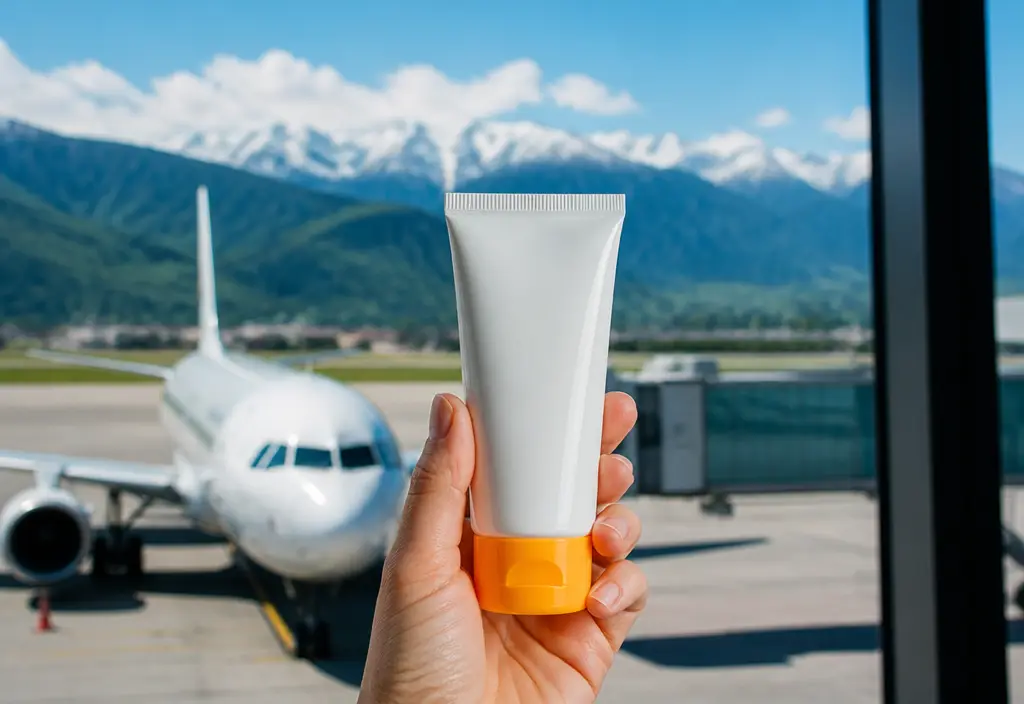
How to choose sunscreen for a trip from Almaty — look at the season, destination and skin type. In winter in Thailand and UAE you need a high protection factor, in summer in Turkey and Egypt — a water-resistant product. In the mountains take a rich cream against snow and wind, in a humid climate — a light gel or spray. Put a tube of up to one hundred milliliters in your carry-on.
Where people fly from Almaty and when the sun is most dangerous
In winter, tours to Thailand, Vietnam and UAE are more often taken from Almaty, while in summer Turkey and Egypt are added. The sun in these destinations behaves differently, and the cream should be selected for the specific season.
Winter flights to warm countries: why January deceives
In January in Pattaya and Dubai the air seems mild, but ultraviolet remains active. In Thailand it stays around thirty degrees during the day, and the skin burns faster than a tourist expects after the Almaty winter. In UAE in winter it is comfortable to walk, however the sun hits exposed shoulders and neck already from ten in the morning.
A cream with a high protection factor is needed even on days when there are clouds in the sky. Many take with them only the product from the beach, and then complain about redness. Take sunscreen in advance and apply it before leaving the hotel. This approach saves the vacation and nerves.
Spring and summer destinations: where ultraviolet is harsher
In Turkey and Egypt during the vacation season the sun is most aggressive from eleven to sixteen o'clock. At this time the cream should be reapplied after every swim. In spring in Europe the situation is milder, but in the mountains of Switzerland or Austria ultraviolet is stronger than on the plain.
Summer departures from Almaty to Antalya and Sharm El Sheikh coincide with the peak of heat, and without cream it is easy to get a burn within an hour by the sea. For Australia and New Zealand remember that the ozone layer there is thinner, so a product with a high SPF is essential. A proven cream from home is more reliable than a local one, whose composition may differ from the usual.
Apply it twenty minutes before going out.
What to consider on mountain and steppe routes
Mountains and steppes give reflected light, which affects the skin no less than direct light. A cream here is needed all year round, including frosty days.
Reflection from snow at altitude
At Shymbulak and Ak-Bulak in winter snow reflects up to eighty percent of ultraviolet. Even in frost, exposed areas of the face burn within a couple of hours of skiing. The cream should be rich, to protect the skin also from the wind. Apply it to the cheeks, nose and lips before every descent.
In the mountains of Georgia and Armenia in spring the sun is more intense than in the city, so the product will also be useful on an ordinary walk. Take the tube in your jacket pocket, and do not leave it in the room. That way you can refresh the protection right on the slope.
Open spaces without shade
In the Kazakh steppe in summer there is practically no shade, and the sun reaches the skin all day. For trips to Baikal or around the country by car, take a cream with a high protection factor. Through car glass ultraviolet also affects the face and hands. In the desert or on a safari you need a water-resistant cream that will not wash off later. Also wear a head covering, but cream does not replace it.
Refresh the layer every two hours if you are under the open sky.
How to prepare for a trip with a child?
Children's skin is thinner than an adult's, so protection for it is selected separately. On the road, both a convenient format and a clear method of application are important.
Separate products for children's skin
For a child choose a cream marked "children's" and with mineral filters. An adult product may cause irritation on delicate skin. Apply children's cream twenty minutes before going to the beach and refresh after swimming. In hot countries dress the child in a T-shirt with sleeves, even if the cream has already been applied. Take the product with a reserve, because more product is used on a child's body.
If the skin is prone to allergies, check the composition in advance at home. That way you will avoid trouble on the very first day of the vacation.
Formats that are convenient to apply on the road
On a trip a spray or stick is more convenient than a thick cream from a large jar. The spray is applied in a minute and does not require a mirror. The stick is suitable for the face and ears, it is easy to keep in carry-on. The lotion in a tube takes little space and does not leak in the bag. For the humid climate of Vietnam take a light gel that does not roll off under clothing.
Leave one format for the beach, the second — for walks around the city. Before the flight, check that the tube is tightly closed.
What to put in carry-on before departure from Almaty
Departure from Almaty often begins at night, so it is better to pack the cream in advance. In the rush before boarding, looking for it in duty-free is inconvenient and more expensive.
Liquid limits and night flight
Before boarding, check that the tube does not exceed the liquid limit for carry-on. Otherwise the cream will be taken at the security check at Almaty airport. A small bottle of up to one hundred milliliters passes the check calmly. On a night flight the cream will be needed already in the morning, when the plane begins to descend toward the warm shore. Put it in a transparent bag together with other liquids.
That way you will not be rummaging through the bag in the security line.
Transit zone and layovers
When flying to Southeast Asia with a layover in Dubai or Istanbul, the cream may be needed already in the transit zone. Going out into the city is not planned there, but the sun through panoramic windows reaches the skin. Keep a small tube at hand, and not in checked baggage. In UAE and Thailand products are sold freely, but the assortment and prices differ from those in Almaty.
It is better to take the usual cream with you. During a long layover, refresh the protection before the next flight.
How does protection change by the water and in the desert?
At the sea and in the desert the cream works differently, and it is not only about temperature. Water, sweat and dry air change how the product holds.
Swimming, sweat and reapplication
After every swim, the cream is washed off, even if it is labeled as water-resistant. Reapply the layer immediately after getting out of the water and drying off with a towel. In Turkey and Egypt, during the hot hours, sweat also removes protection faster. Apply the product every two hours, and during active swimming — more often.
For a safari and the desert, take a water-resistant cream that will not wash off afterward. Do not skimp on the product for the shoulders, back, and nose. That way you will make it to the evening without a burn.
Humid climate versus dry air
In Vietnam and Thailand, the humidity is high, so a thick cream pills up and clogs the pores. Light gels and sprays work better here. In the dry air of the UAE and Egypt, the skin loses moisture, and the cream should be nourishing. On a Mediterranean Sea cruise, the sun reflects off the water, so protection is needed even on cloudy days.
In Bali and India, local products may not meet European standards, so take a trusted cream. For Latin America via Europe, choose a product for different latitudes. One universal cream rarely suits an entire trip.
Briefly
- Take the cream from home: the local assortment and prices differ from Almaty ones.
- In winter in Thailand and the UAE, a high protection factor is needed even on cloudy days.
- In Shymbulak and Ak-Bulak in winter, a rich cream saves you from snow and wind.
- In the steppe and desert, refresh the layer every two hours under the open sky.
- For a child, choose a separate children's product with mineral filters.


