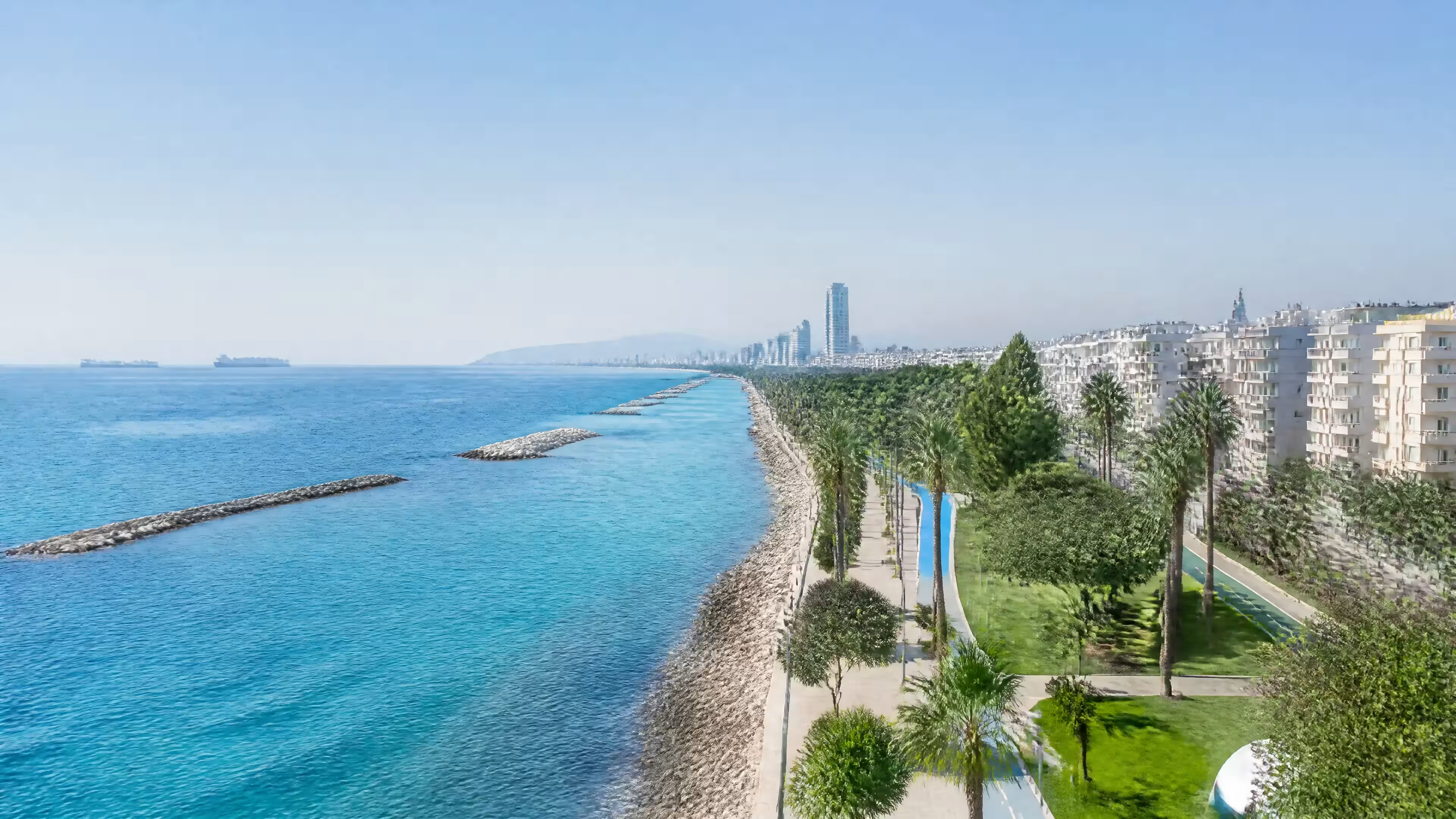
Vacation in Limassol is most often planned from April to October: from May to September the sea is warm, and in July and August there is intense heat. The flight from Almaty takes about five hours, there are few direct flights, more often they fly with a connection. Tours to Cyprus from Almaty are taken for 7–10 nights.
Districts and rhythm of the city
Limassol is divided into three dissimilar parts, and the choice of district sets the rhythm of the entire trip. Below is how each of them differs.
Historic center by the old port
The center of Limassol begins at the old port and castle, where the main walking routes are concentrated. Here hotels stand close to each other, and in the evening the embankment turns into a continuous stream of strollers. Beach holidays in Limassol in this district are chosen by those who want to step out of the room straight to the sea and restaurants. Housing prices in the center are above average, but a car is almost unnecessary. Cypriot development here is dense, the streets are narrow, parking is paid and always occupied. Noise from bars lasts until late at night, so this option is not always suitable for families with small children. But the entire historic core can be walked around on foot in one evening.
Tourist strip along the embankment
The tourist strip stretches along the coast for several kilometers to the east of the center. Here the large hotels of Limassol with pools, spas and their own grounds are concentrated. Beach holidays in Limassol with children are most often booked right here: it is a couple of minutes to the beach, with a water park and cafes nearby. Prices are higher than in the city, but the infrastructure is already included in the price. Buses run between the hotels, so it is convenient to go to the center without a car. The district is calmer than the historic center, although during the day it is noisy by the pools. For a long stay, tours to Limassol with accommodation on this strip are taken most often.
Quiet neighborhoods away from the sea
Away from the sea lie residential neighborhoods where apartments are rented and locals live. Getting to the beach from here is by bus or car, but prices are noticeably lower. Hotels in Limassol are found here less often, but there are many apartments and guest houses. This accommodation option is chosen by those who have come for a month or more. Nearby there are markets, bakeries and ordinary taverns without a tourist markup. In the evening it is quiet in the courtyards, there are almost no cars. There is one drawback: without transport the district is inconvenient, especially in the heat.
Where to live and what to eat at the resort
Housing and food are the two main expense items on the island, and both can be planned in advance. Let's break down what to choose for your travel format.
Hotels and apartments: what to choose for a long stay
For a trip of a week, a hotel with meals is more convenient; for a month, an apartment with a kitchen. Hotels in Limassol offer bed and breakfast or half board, and this saves time on cooking. Apartments provide a washing machine, stove and refrigerator, which means food expenses drop several times over. Prices for tours to Limassol with a hotel are higher than renting a studio by the sea for the same period. During a long stay, the difference pays for the household chores. The key to the apartments is usually handed over on site, without a reception desk. Those traveling with children more often take apartments for the sake of routine and their own kitchen.
Meal plans and cuisine of Cypriot taverns
Cypriot cuisine is built on meze, halloumi, olives and fresh fish. Meze is dozens of small dishes brought one after another, and a portion for two easily replaces dinner. Halloumi is grilled and served almost everywhere, from a snack bar to a restaurant. Fish is best taken in taverns by the port or in fishing villages, and not on the first line of the embankment. Taverns away from tourist streets feed cheaper and more generously. Breakfast at the hotel is usually continental, and locals have lunch late. A trip here without dinner in a tavern with meze is considered incomplete. The portions are large, so it is worth ordering gradually.
What to consider before the trip?
Preparing for a trip to the island takes less time than it seems, but a few little things are better to sort out in advance. Below is what is most often asked before departure.
Currency, cards and money exchange
In Cyprus, the euro is in use, and cards are accepted almost everywhere, from supermarkets to taxis. Small taverns and markets sometimes work only with cash, so it is worth keeping a little money with you. Exchange offices in Limassol are found in the center and near the embankment; the rate in banks is usually more favorable. Prices in the tourist zone are higher than in residential neighborhoods, the difference is noticeable on groceries and coffee. Withdrawing money at an ATM is convenient, but it is better to check your bank's commission at home. Cards are also accepted in the hotels of Limassol, but a deposit is sometimes blocked for the duration of the stay.
Languages of communication and connection on the island
The official languages of the island are Greek and Turkish, but in the service sector English is spoken fluently. There are many Russian speakers in Limassol, so in restaurants and shops it is not difficult to understand each other. A local SIM card gives cheap internet, but it is issued at the operator's salon. Roaming from Kazakhstan works, but it turns out more expensive on a long trip. Wi-Fi is available in the hotels of Limassol, cafes and the airport, but the speed in the rooms is sometimes weak. A trip here is more convenient to plan with a local number if you are going for a long time. Maps and a translator are worth downloading in advance so as not to depend on the network.
Travel season and weather at the resort
Vacation is smoothest in April–May and September–October: the sea is still warm, and there is no heat. July and August give temperatures under forty, and during the day it is hard to walk even by the water. In winter, the air stays around fifteen degrees, only the hardened swim. Rain falls from December to February; in summer there is almost none. Windy days occur more often in November and March. For a trip with children, it is better to choose late spring or early autumn.
How to get around and what to do?
Transport and leisure determine how many cities and bays you will manage to see during the trip. Let's break down both questions in order.
City buses, passes and car rental
It is convenient to get around the city by bus, but around the island only by car. A day or week pass pays for itself after just three rides; tickets are bought from the driver or in the app. Buses connect the center, the embankment and neighboring villages, but in the evenings the routes thin out. Renting a car opens up mountain villages, wineries and distant beaches that are otherwise impossible to reach. Right-hand traffic and narrow winding roads require attention, especially on the first day. Parking in the center is paid; hotels in Limassol usually have their own. A vacation here with a car gives more freedom, but without one it is also quite possible.
The road from Larnaca or Paphos airport
Limassol can be reached from two airports, and the travel time depends on the choice. From Larnaca it takes about forty minutes along the highway, from Paphos about an hour. A transfer is booked in advance; a taxi on the spot will cost more. Buses run on schedule, but with luggage and children this is not the most convenient option. A rental car is taken right at the airport, and then you will drive to your hotel in Limassol yourself. The road goes along a high-speed highway, the landscape is dry hills and olive groves. A night arrival is better covered by a transfer rather than public transport.
Active holidays: diving, yachting, cycling routes
The water near Limassol is clear, so diving and yachting are popular here all year round. A sunken ship near the shore is one of the main dive sites for beginners and experienced alike. Yachts leave from the old port and marina; the trip takes half a day including swimming. Cycling routes go along the embankment and further to the salt lake, where flamingos stop in winter. Equipment is provided on site; bringing your own suit is not necessary. Windy days happen, and then sea trips are postponed. The most active holiday here comes together in spring and autumn, when there is no exhausting heat.
Tourist daily life and safety
Everyday little things at a resort are easier to handle if you know local habits in advance. Below is what concerns money, health and behavior.
Medical insurance and a visit to the doctor
Travel insurance covers emergencies, and it must be arranged before departure. Medicine on the island is high-quality, but a visit to a private doctor is expensive without a policy. Pharmacies are in every neighborhood, and some medicines are sold without a prescription. When visiting a clinic, keep receipts and the report; they are needed for reimbursement. Bring chronic medications with a supply and in factory packaging. A trip with children should begin with knowing where the nearest clinic is. The summer sun is aggressive, so a first-aid kit with burn remedies is not superfluous.
Tipping, dress code and behavior in public places
Tipping on the island is not mandatory, but it is appreciated: in a restaurant they leave a rounded amount or about ten percent. In a taxi, change is usually left for the driver, and they do not ask for it separately. Churches and monasteries are entered with shoulders and knees covered; shorts and T-shirts are inappropriate. On the beach a swimsuit is normal, but in the city it is better to throw a T-shirt on top. Locals dress modestly, especially in villages and on holidays. Loud conversations in quiet neighborhoods are met with disapproval. A holiday here is more respectful and calm if you follow these simple habits.
Holidays and events in the trip calendar
The island's calendar is densely filled with religious and city holidays, and this is worth considering when planning. Easter is the main holiday of the year here, and relatives come from all over the world for it. On such days, hotels in Limassol get more expensive, and taverns are booked in advance. The carnival before Lent is noisy, with costumes and parades in the center. In summer there are wine and sea festivals, in autumn gastronomic fairs. On public holidays some shops are closed, but cafes are open. A trip during festival days is brighter, but requires early booking.
Shopping: souvenirs, groceries and brand-name stores
People bring back halloumi, olive oil, wine and sweets from the trip, and all of this is sold in ordinary supermarkets. Halloumi is bought vacuum-packed, then it travels calmly in luggage. Local wine from mountain wineries costs less than imported and travels well. Souvenirs are sought in the shops of the old town, not on the first line of the embankment. Brand-name stores are concentrated in the center and in large shopping malls. Prices for tours to Limassol do not include purchases, so the budget for gifts is calculated separately. Handmade ceramics and lace are something you will not find in Almaty.
Trips to neighboring cities for one day
One-day trips to other cities of the island are convenient to combine with Limassol. To Paphos it takes about an hour, and there it is worth seeing the mosaics and the old port. Larnaca is closer; its palm-lined embankment is suitable for a quiet evening. People go to Nicosia for the capital atmosphere, museums and the market inside the walls. Mountain villages like Omodos are known for wineries and narrow streets. Such trips are easiest by rented car. A holiday here becomes more varied if you set aside at least two days for outings.
Visa and entry rules change: check with the primary source — the Ministry of Foreign Affairs of the Republic of Cyprus, https://mfa.gov.cy/requiring-visa-to-enter.html. The information on this page was checked on 10.09.2026.
Frequently asked questions
Is a car needed during the holiday?
A car is not mandatory if you live by the sea. Buses connect the center, beaches and neighboring villages, and a pass pays for itself after three rides. Renting is worth the money for mountain routes and distant bays. Parking in the center is paid and occupied; hotels in Limassol usually have their own. For a week by the beach, a car is more of a burden than a help.
What to put in the suitcase before departure?
From Almaty people bring what cannot be found on the island or what costs more. Chronic medications are taken with a supply and in factory packaging. Sunscreen and burn remedies will come in handy from May to September. A swimsuit, light clothing and one warm item for the evening. The sockets here are British type, so an adapter is needed. A trip with children also requires familiar cereals or formulas if the child is attached to them.
In short
- Limassol is divided into three parts: the center at the port, the strip of hotels by the sea, and quiet residential neighborhoods.
- For a week, a hotel with meals is more advantageous; for a month, an apartment with a kitchen and laundry.
- Meze, halloumi, and fish are sought in taverns away from the beachfront.
- The mild months for a trip are April, May, September, and October, without exhausting heat.
- From Larnaca to the city it takes about forty minutes, from Paphos — about an hour.