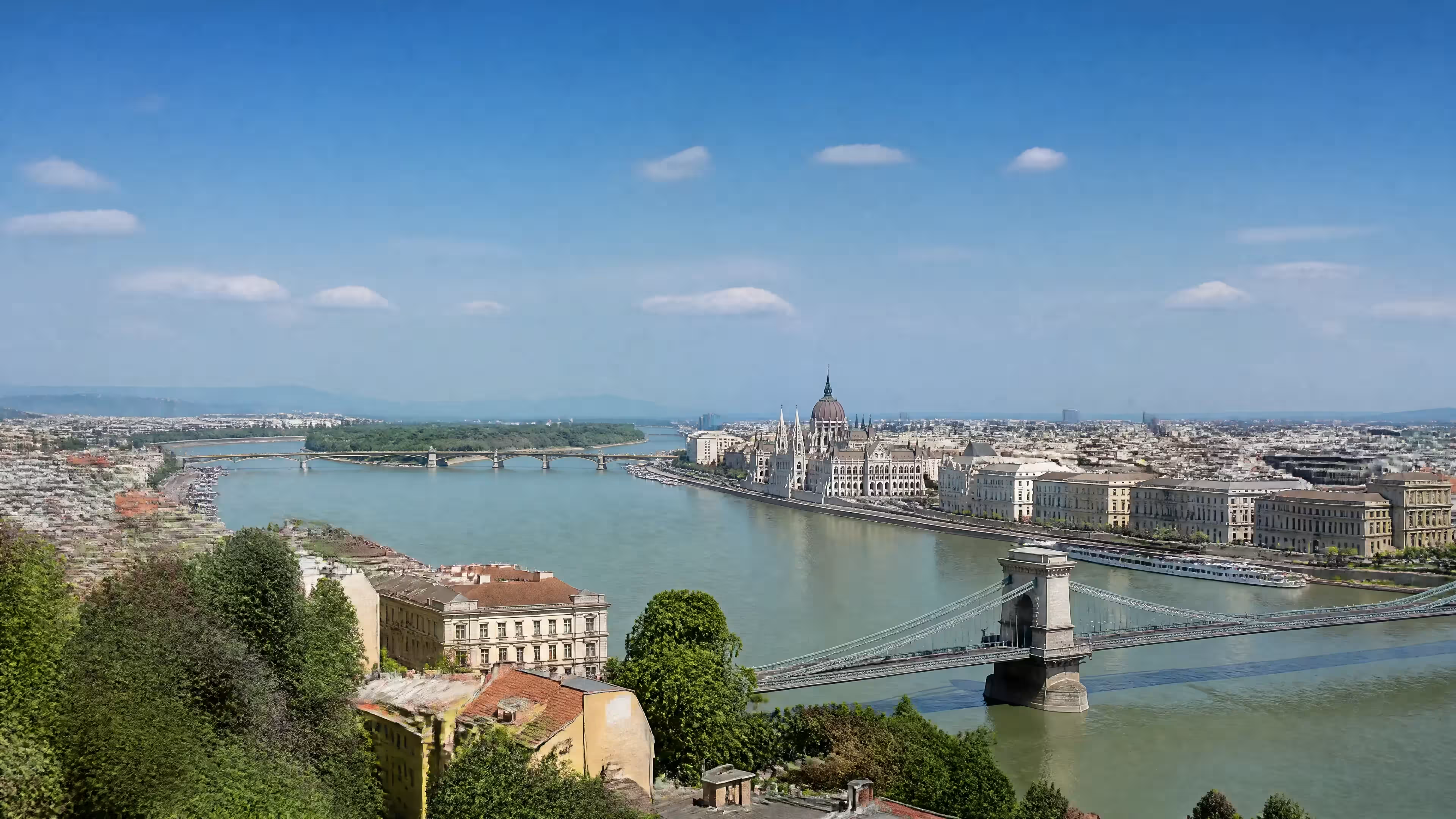
Vacation in Budapest attracts tourists from Kazakhstan with its mild climate, thermal baths and affordable prices in the shoulder season. The best time for a trip is late September, October and April: warm, but without summer stuffiness, and accommodation is a third cheaper than August prices. In winter, the city is beautifully decorated for the holidays, but it is more expensive and more crowded. There are no direct flights from Almaty — the flight with a transfer takes from ten hours.
When is the best time to go to Budapest and how do prices change?
The weather and prices in the capital of Hungary change by month, and half of the trip budget depends on the chosen date. Let's break down when it is expensive and crowded here, and when it is calm and profitable.
High season and New Year holidays
The peak falls on July and August, when the air warms up to thirty degrees. At this time, hotels in Budapest become noticeably more expensive, and queues for the baths stretch for an hour or more. The New Year holidays give a second surge: from the end of December the city fills with tourists, fairs operate until the first days of January, and accommodation prices jump twofold. Tours to Budapest for these dates are booked three to four months in advance, otherwise the only choice left is from remote districts. The weather in winter is mild, around zero, but the wind from the river makes walks chilly. The Hungarian capital is beautiful during the holidays, however the crowds near the parliament and on Heroes' Square prevent you from calmly seeing everything. If the goal is fairs and lights, take December, but be prepared to pay the maximum.
Shoulder season: when tickets and hotels are cheaper
The most profitable months are late September, October and April. At this time it is warm, but without summer stuffiness, and prices for accommodation in Budapest fall by a third compared to August. November and March are even cheaper, although the weather is changeable and it often drizzles. A vacation in the shoulder season is good because the queues for the baths are short, and there are always free tables in cafes. Plane tickets from Almaty in these months also cost less, especially when purchased two months in advance. The Hungarian autumn pleases with markets and wine festivals, and in spring the city is buried in blossoms. There is one downside: some open-air thermal baths operate on a reduced schedule.
What visa, flight and first days in the city await a tourist?
Preparation for the trip begins long before departure, and the first days in an unfamiliar city go easier if everything is thought out in advance. Below is what an Almaty resident needs to know before departure.
Schengen visa for citizens of Kazakhstan
Processing a travel permit takes time, so the application is submitted in advance. Documents are accepted at the consulate of Hungary or at the visa center, and appointments open several weeks ahead. The standard review period reaches fifteen working days, and in season it stretches longer. The application is accompanied by a booking of accommodation in Budapest, an itinerary and proof of funds. Fingerprints are taken in person, so a visit to the center is mandatory. It is better to submit documents two to three months before departure, then there remains a margin for corrections. Check the exact list and rules on the department's website before submitting.
Routes with transfers from Almaty and the time difference
There are no direct flights from Almaty to Budapest, so you will have to fly with a transfer. The most convenient routes are through Istanbul, Dubai or European hubs. The total travel time including the connection is from ten to eighteen hours. A short transfer saves time, but increases the risk of missing the second segment. The time difference with Almaty is 4 hours in winter and 3 hours in summer: Hungary changes its clocks (UTC+1 in winter, UTC+2 in summer), while Kazakhstan stays on UTC+5 all year round. It is better not to plan the first day as packed: acclimatization takes a day. Check in, walk around the center, have dinner and go to bed according to local time.
How much does a vacation cost: trip budget
Expenses consist of accommodation, food, transport and tickets to attractions. Let's break down where you can save, and where expenses are justified.
Accommodation: Buda and Pest, hotels and apartments
Buda is quieter and closer to the fortress, Pest is cheaper and livelier. Apartments are profitable for families: there is a kitchen and more space. A hotel in the center costs more, but everything is nearby.
Money: forint, cards and tips
The main currency is the Hungarian forint, and it is better to pay with it. Euros are not accepted everywhere, and the exchange rate when paying is sometimes unfavorable. It is worth changing money at banks or exchange offices in the center, not at the airport. Cards of Kazakhstani banks work to a limited extent, so cash for everyday expenses is essential. Tips in restaurants and cafes are usually already included in the bill, but it is customary to leave a small amount on top. In tourist places prices are higher, away from the center the same lunch will cost less. Keep small change at hand — it will come in handy for transport and small purchases.
How to get around and what to keep in mind on site
The city is compact, and public transport handles most routes. Here is what is worth knowing so as not to spend extra and to feel confident.
Transport: metro, trams and passes
The metro, trams and buses cover all of Budapest, including the outskirts. The most convenient are multi-day passes: they pay off after just four to five rides. Tickets are sold at machines and through the app, and card payment is not accepted everywhere. The tram along the Danube is a sightseeing tour in itself, and it is worth riding it in the evening. Inspectors check tickets often, and fines are issued without discussion. It is better to order taxis through the app so as not to argue about the price. Renting a car is not necessary: parking is expensive, and the center is more convenient to explore on foot.
Safety, language and medical insurance
The Hungarian capital is considered safe, but pickpocketing is possible in tourist areas. Keep an eye on your bag on the tram and near the market, especially during rush hour. Hungarian is difficult, but hotels, cafes, and museums speak English. Learn a couple of basic phrases — locals appreciate it. Medical insurance for a Schengen visa is mandatory, arrange it along with the rest of your documents. Pharmacies in the center are open late, but prescription medicines are not dispensed without a prescription. The weather is unpredictable, so an umbrella and layers of clothing will come in handy in any season.
Visa and entry rules change: check with the primary source — the Consulate General of Hungary in Almaty, https://almati.mfa.gov.hu/ru/viza-v-vengriyu. The information on this page was verified on 10.09.2026.
What to do besides sightseeing tours
Walking around attractions is not the only activity in the city. There are markets, shops, and events that people come back for.
Shopping and souvenirs from the central market
The central market is the main place for shopping and the first address for souvenirs. Here people buy paprika, porcelain, and local wines, and the prices are lower than in tourist shops. Vaci Street is suitable for clothes and shoes, shopping malls — for familiar brands. Bargain at the market carefully: discounts are given, but reluctantly. Tokaji wine and Hungarian salami survive the journey home well. Check expiration dates on packaging, especially for meat products. It is better to go shopping in the morning, while the counters are full and there is no crowd.
Booking tickets and working on holidays
Book tickets to the parliament and thermal baths in advance online, otherwise only inconvenient hours will remain. On national holidays many shops and museums are closed, so the schedule should be checked the day before. On weekends markets and large shopping malls are open, while small shops rest. Tours for this period are booked up quickly, especially in high season. Plan visits to attractions in the morning, when there are fewer groups. If you arrive during holidays, stock up on food in advance.
In brief
- Holidays are most expensive in July, August, and on New Year dates.
- There are no direct flights from Almaty, flying with a transfer takes from ten hours.
- The time difference with Almaty is 4 hours in winter and 3 hours in summer: Hungary changes its clocks (UTC+1 in winter, UTC+2 in summer), while Kazakhstan stays on UTC+5 all year round.
- Accommodation in Buda is quieter, in Pest it is cheaper and livelier.
- The currency is the forint, cash is needed due to card restrictions.