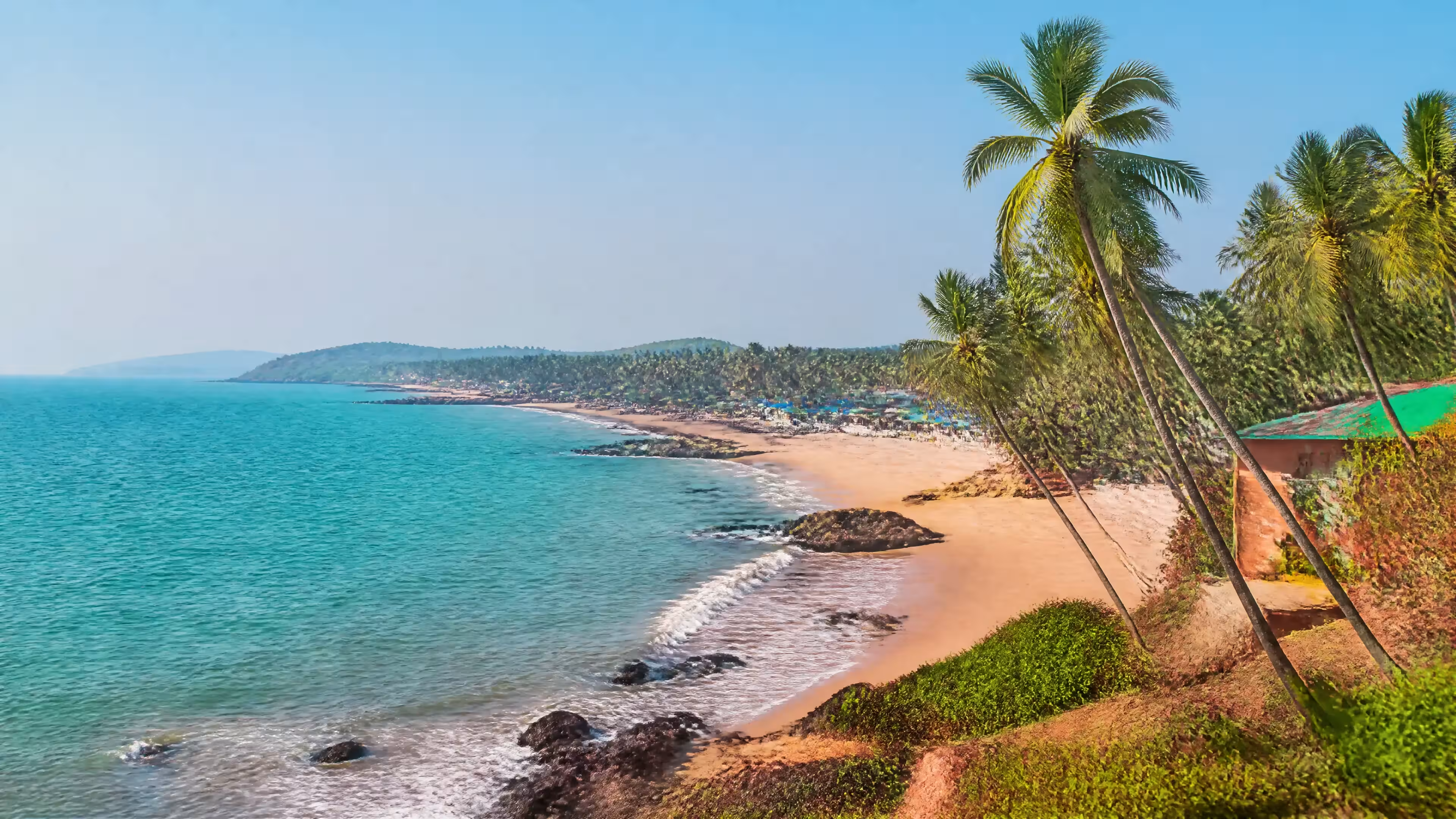
Holidays in Goa are the beaches of the Arabian Sea, the season from November to February and a flight from Almaty with one connection. Tours to Goa are most often taken for 7–14 nights, flying out in winter, when it is minus at home and plus thirty at the resort. In summer, Goa gets rain, and some hotels close.
Indian visa and documents for a trip from Almaty: how to arrange everything correctly?
A trip to Goa begins long before departure, and the first thing a resident of Almaty should think through is the paperwork. India issues an entry permit in advance, not at the airport. Let's break down how everything works.
E-visa: how to apply online
The Indian e-visa is arranged in advance via the internet, not at the airport upon arrival. The application is filled out on the official website, a scan of the first page of the passport and a photo of the required format are attached. The validity period and number of entries depend on the chosen type. Processing times also vary, so it is better to submit the papers a couple of weeks before departure, not on the last evening. Tours to India from Almaty are convenient to book after the entry permit has been received. The fee is paid by card, the receipt is kept on the phone and in a printout. A paper printout will come in handy at the check-in desk. If the data is insufficient or the photo does not fit, the application is returned for revision. Fresh requirements and exact fee amounts should be checked on the official resource of the department before submitting.
What documents to take with you
A holiday in India requires a compact but complete folder of papers. Printouts of the hotel booking and return tickets are not always asked for by border guards, but it is calmer to have them at hand. Copies of passport pages and spare photos help out if the original is lost. The medical insurance policy should be kept in hand luggage, not in the suitcase. Cash for the first days and the card should be kept separately from each other. The address of the hotel in Goa is written down in Latin letters on a piece of paper. A first-aid kit with personal medicines is carried in the original packaging. Electronic versions of all papers are duplicated in the cloud so as not to depend on one phone.
When is the best time to go to Goa?
The season at this resort is divided into three unequal parts, and the choice of month changes the trip more than the hotel. Below is what each period gives.
High season: dry and comfortable
A trip to Goa in high season falls on November — February. There is almost no rain, the sea is calm, the air warms up evenly, without exhausting stuffiness. Hotels here are booked in advance during these months, because there are almost no free rooms by the sea left. Prices for tours in December and January are the highest of the year, especially for the New Year dates. The beaches at this time are full, and the shacks work until late at night. In the evening it can be cool, so a light sweater will come in handy. For families with small children, this is the most predictable time. If you want silence, it is worth shifting the trip to the end of November or the beginning of February.
Monsoons and shoulder season: what to expect
From June to September, Goa gets monsoon rains, and some shacks and hotels simply close. The sea at this time is rough, swimming is risky, but the greenery is bright, and prices are noticeably lower. October and March are transitional months: hot, humid, fewer tourists. A holiday with children in such weather is harder to plan because of the stuffiness and short downpours. But hotels in Goa give discounts, and the beaches remain half-empty. For trips around the state, the shoulder season is also suitable, if you are not afraid of rain. The choice of month here is an honest compromise between weather and budget.
What to consider on the spot: money, communication and transport
Everyday life at the resort is arranged differently than at home, and the little things decide more than it seems. Let's break down money, movement and communication.
Indian rupee: exchange, cards and ATMs
The Indian rupee is the only currency that is actually used here. Dollars or euros can be exchanged at banks and exchange offices; the rate in tourist areas is usually more favorable than the airport one. There are ATMs in Goa in tourist areas, but not in every village. Cards are not accepted everywhere, so cash is needed for markets, taxis and small cafes. Small notes will come in handy constantly, large ones are inconvenient to break. Part of the money should be kept in the hotel safe, not carried all with you. Before exchanging, it is useful to compare the rate at two or three nearby points. Prices for tours to Goa do not include these expenses; they are planned separately.
Scooters, taxis and buses between parts of the state
A rented scooter is the most popular transport in Goa, but an international driver's license is needed to drive it. A helmet is mandatory, and this is not a formality, but a matter of safety on narrow roads. Taxis and motorcycle taxis are convenient for short trips; it is better to discuss the price before getting in. Buses run between North and South Goa, the journey takes about an hour. Renting a car with a driver for a day is suitable for long trips. Gasoline at gas stations is cheap, but there are few of them on secondary roads. Driving at night on unfamiliar highways is not worth it.
Communication: local SIM, roaming and eSIM
A local SIM card in Goa is bought with a passport, but the registration takes time. Sometimes it is easier to stay on roaming or connect an eSIM before departure. Internet in hotels can be slow, so a backup option will not hurt. Mobile communication is needed for maps, taxis and bookings. In remote villages the signal weakens, especially in the rainy season. Tours to India from Almaty are convenient to pay for online, but on the spot the internet can let you down. It is worth downloading offline maps and a translator in advance. That way you depend less on the quality of the network.
Holidays with children: hotels and safety
A family trip requires a different set of decisions than a solo one. The main thing is shade, water and a calm entry into the sea.
How to choose a hotel with a pool and shade
A trip with children begins with choosing a hotel, and the pool here matters more than the sea view. Shade on the grounds and in the room saves you during the midday hours, when the sun is especially harsh. The calm beaches of the south are better suited for swimming with little ones than the choppy northern ones. Hotels with a children's playground and a shallow pool are found more often in the southern part. All inclusive meals simplify the day but take away the choice of local cafes. The distance to the beach is better checked on a map, not by the description. Air conditioning and mosquito nets on the windows are essential. A quiet courtyard is worth more than proximity to a noisy street.
Food, water and children's first aid kit
In Goa you can only drink bottled water, and this rule is not up for discussion. It is better not to take ice in drinks outside hotels and restaurants. Indian cuisine is spicy, so children are ordered simple dishes without spices. In tourist areas there are European, Russian and Israeli cafes. Fruit is washed with boiled water and peeled. A children's first aid kit includes a fever reducer, diarrhea remedies, an antihistamine and bandages. Sunscreen with a high factor is needed even on a cloudy day. At the first signs of illness, do not delay a visit to the doctor.
Health and insurance before departure
Preparing for a trip includes not only a suitcase, but also taking care of your health. Some issues are resolved before departure.
Vaccinations and malaria prevention
Before the trip, it is worth checking with a doctor about the need for vaccinations and prevention against malaria and hepatitis. The doctor selects the regimen individually, taking into account the region and season. In the tourist areas of Goa the risk is lower than in remote regions of India. Repellents and long-sleeved clothing reduce the number of bites in the evening. The first aid kit is packed in advance, not at the airport. Chronic medications are taken with a supply for the entire trip. A consultation before departure is calmer than looking for help on the spot.
Medical policy with evacuation coverage
A medical policy with coverage for treatment and evacuation is arranged before departure. In India, private clinics accept insurance, but require a letter of guarantee. Without a policy, the bill for care can turn out to be unexpectedly large. Evacuation coverage is important if a flight to a major city is needed. The document is kept on the phone and in a printout. The number of the insurer's round-the-clock line is written down separately. Tours to India from Almaty sometimes include insurance, but its terms are worth checking.
Visa and entry rules change: check with the primary source — the portal of electronic visas of the Republic of India, https://indianvisaonline.gov.in/. The information on this page was verified on 10.09.2026.
Briefly
- Goa is a winter beach resort; in summer it is the rainy season here.
- The flight from Almaty takes from eight hours with a transfer.
- Hotels in the south are quieter and more convenient for families with small children.
- The budget is planned separately for food, transport and souvenirs.