
Sightseeing tours to India from Almaty: prices
Search across tour operator offers: price, dates, hotel and board on one screen.
Price, dates, hotel and board — on one screen.
Tours to India
Resorts of the country
for 2 adultswith a flight from Almaty


Last-minute tours to India
Departures in the coming weeks from the selected city. Seats are limited.
Low-price calendar for tours to India
The lowest price by month for the chosen destination.
for 2 adultswith a flight from Almaty
Tour collections for India


How to buy a tour to India
- 01
Find a tour
Departure city, destination, dates, nights and who is travelling — five fields in one row.
- 02
Choose and book
Compare the price for two, the board and the beach line, then hold your choice with a request.
- 03
Pay
By card, in instalments through a bank, by bank transfer or in cash at the office.
- 04
Get the documents
The contract, the voucher, the insurance policy and the itinerary receipts arrive by e-mail.
Tours to India: facts for the traveller
Ready to travel?
Leave a request and a manager will suggest options for your budget, dates and party.
Tours to India: what to know
Sightseeing tours to India from Almaty usually last from 8 to 10 days and are built around the "golden triangle" — Delhi, Agra and Jaipur. The best time for the north is from November to February, when daytime temperatures are around +25 °C. The flight from Almaty takes about 4–5 hours with a transfer. The south of the country — Kerala and Goa — is comfortable in the same months, but routes there are arranged separately.
How sightseeing routes around the country are organized
Such trips to India are assembled around the "golden triangle" and the south, and between cities the group moves by planes and trains. The program is built so that there is time for each site, and not just a photo from the bus window.
What is included in the program of a classic tour
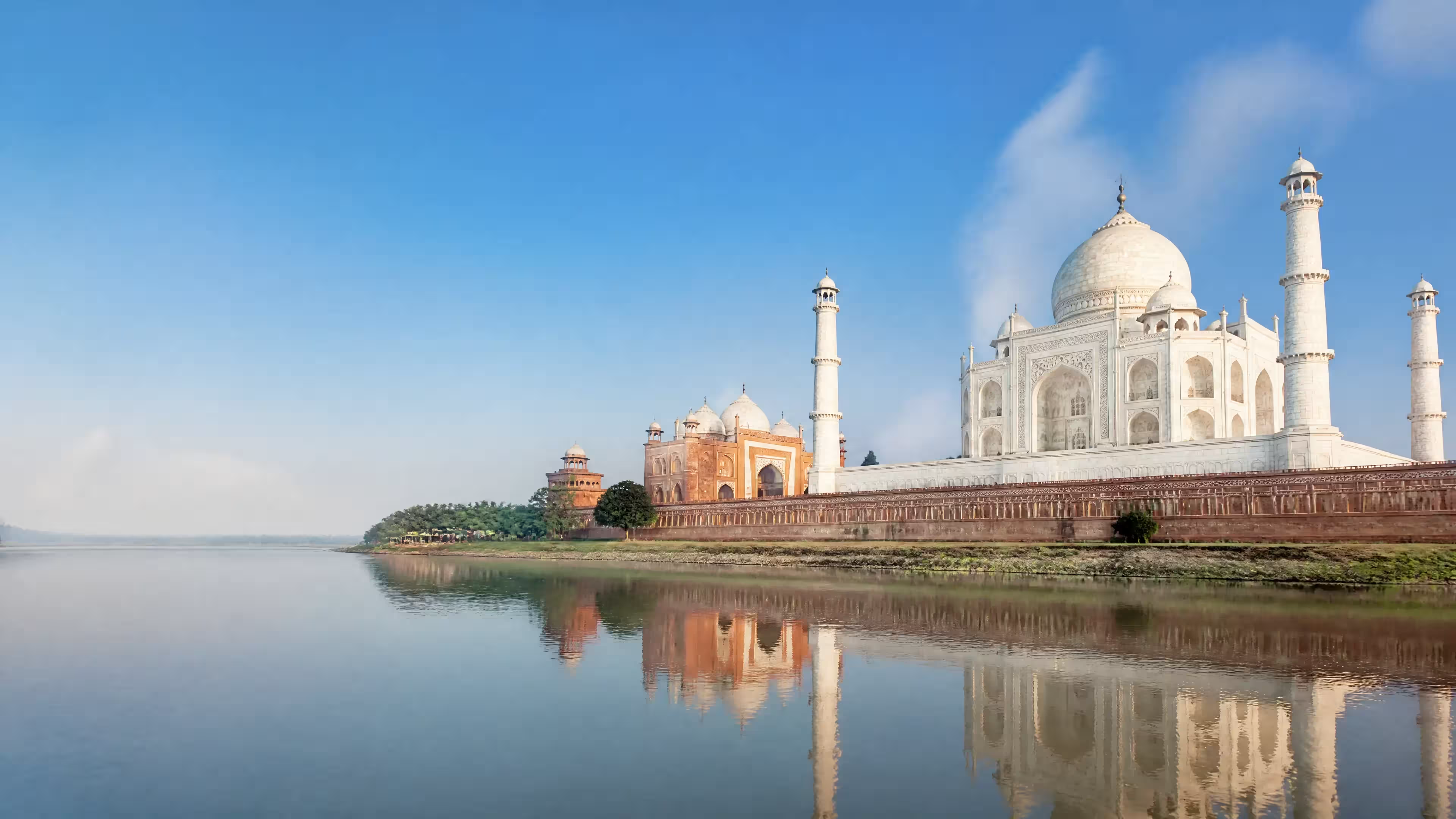
The standard program includes Delhi, Agra with the Taj Mahal and Jaipur, while the southern direction adds Kerala with its canals. Eight to ten days is the usual period in which the northern route is completed without haste. Sightseeing in Delhi takes a full day: the Red Fort, Jama Masjid mosque and Qutb Minar are far from each other. The journey from Delhi to Agra takes about four hours along the expressway, and on the way they usually stop at the abandoned city of Fatehpur Sikri. Jaipur greets with palaces and the Jantar Mantar observatory, and in the evening tourists are shown the spice and fabric market. North Goa and South Goa rarely make it into the program — they are left for the beach part. Kerala is interesting for the Alleppey canals and the Munnar tea plantations, but the road there takes a separate day. The guide does not speak Russian everywhere, and this should be clarified in advance.
Logistics between cities: flights, trains and transfers
An internal flight between Delhi and Kochi saves a whole day that would otherwise go to the train. Distances here are measured in days, so the schedule is built around aviation. Long-distance trains are cheaper and more colorful, but they go for a night and more. Tickets for popular destinations are snapped up weeks in advance, especially in high season. Comfortable classes with air conditioning are booked first, and this is normal practice. Buses and taxis help out on short segments such as Jaipur — Agra. Indian trains and flights are often delayed, so a transfer and a departure are not placed on the same day. Between the cities of the south the roads are narrow, and three hundred kilometers turn into six hours of travel. Experienced organizers build in buffer days so that the group does not disrupt the program.
| Segment | Transport | Time guide |
|---|---|---|
| Delhi — Agra | train or car | 2–4 hours |
| Agra — Jaipur | car | 5 hours |
| Delhi — Kochi | flight | 3 hours |
| Kochi — Alleppey | car | 2 hours |
When is it better to go on sightseeing tours?
The season in India differs by region, and there is no single window for the whole country. The north and south live in different climates, so the route is selected for the months.
Weather windows by region and month
From October to March, northern India experiences a dry and cool season, ideal for exploring Delhi, Agra and Jaipur. During the day the air stays around twenty-five degrees, while in the evening a jacket is needed. From April the heat begins, and by May sightseeing at open monuments turns into a test. Kerala is comfortable from November to February, whereas in summer it is humid and stuffy there. The south of India is warmer than the north all year round, but the monsoon brings downpours from June to September. Goa empties in the rainy season, and some excursions are canceled due to storms. The best time for such trips along the northern route is from November to February. During this period visibility is higher, and the lines to the Taj Mahal move faster.
| Region | Comfortable months | Difficult months |
|---|---|---|
| Delhi and Agra | November — February | May — June |
| Jaipur | October — March | April — June |
| Kerala | November — February | June — August |
| Goa | November — February | June — September |
High season and hotel occupancy
In high season, hotels in Delhi, Agra and Jaipur are booked months in advance, otherwise only the expensive segment remains. The peak falls on the New Year holidays and February. Accommodation prices rise noticeably at this time, and the choice narrows. Such trips to India on these dates are assembled faster than individual ones. Free rooms in central Delhi almost disappear by December. It is worth planning the trip three to four months in advance, then there is a chance to take a hotel near the attractions. In low season, on the contrary, discounts appear, but some sites operate on a reduced schedule.
What you need to know before the trip
Preparation for the trip begins long before departure from Almaty. Health and documents are two things that are better to think about in advance.
Vaccinations, insurance and first aid kit
Vaccinations against hepatitis A and typhoid fever are recommended several weeks before departure. Medical insurance with hospitalization coverage is essential, because private clinics accept on prepayment or by policy. The first aid kit is assembled in advance: remedies for stomach upset, antipyretic, antiseptic and bandages. Mosquito repellent will come in handy in Kerala and in the south, where the evenings are humid. Medicines are carried in factory packaging so that there are no questions at the border. Sunscreen with a high factor and a head covering are mandatory for sightseeing tours. Water is drunk only bottled and the seal is checked before purchase. For stomach upset, a regular supply of electrolytes helps.
Packing for the road: what to put in the suitcase
Light clothing with long sleeves will come in handy in Delhi and Jaipur, where entry to temples is strict. Comfortable shoes without laces save time on countless removals at the entrance. Socks are kept separately in the bag: the floor on temple grounds is scorched by the sun. A power bank helps out on long transfers, where sockets are rare. A small bag with a lock protects the wallet and phone in the crowd at bazaars. Copies of bookings and tickets are kept electronically and on paper. A scarf or wrap covers the shoulders where local rules require it. A sturdy water bottle will come in handy on the road between cities.
How much does the trip cost and how to pay on the spot?
The trip budget consists of the cost of the tour and daily expenses on the spot. Cash rupees are needed constantly, and this is the main thing worth remembering.
Entrance tickets, tips and cash
Entrance fees to monuments for foreigners are noticeably higher than for locals, and this is official practice, not an agency markup. Tickets to the Taj Mahal, Red Fort and Qutub Minar are bought separately, and the total adds up over a week. Small shops, temples and some taxi drivers do not accept cards. Tipping in restaurants and hotels is the norm, usually five to ten percent of the bill. The porter at the hotel is given separately, and this is not included in the total bill. Such trips often include entrance tickets in the price, but this must be clarified before payment. It is convenient to keep small notes: change from a large banknote is not always given. The guide and driver receive tips at the end of the program.
Currency exchange and bank cards
Tenge can hardly be exchanged for rupees directly anywhere, so they are exchanged via dollar or euro. The rate at the airport is worse than in the city, and it is better not to exchange a large sum there. Bank cards are accepted in hotels and large stores, but not in small establishments. Street exchangers should be chosen in the city center, not near train stations. The exchange receipt is kept until the end of the trip. For sightseeing tours, it is convenient to take part of the money in cash and keep part on a card. ATMs dispense rupees at the current rate, but charge a commission.
How to prepare for Indian temples and markets?
Temples and markets are the heart of any sightseeing program, but they have their own rules. Clothing, footwear and behavior affect how the visit goes.
Dress code, footwear and photography rules
In Indian temples and mosques it is customary to take off shoes, and shoulders and knees must be covered, and this applies to men too. Light clothing with long sleeves helps in Delhi and Jaipur, where entry is strict. Women are sometimes given a cover-up at the entrance, but it is better to have their own. Photography inside many temples and in certain museum halls is prohibited, and a fine is charged for it. Signs prohibiting photography are common, and they should be read carefully. Socks will come in handy where the floor is hot from the sun. Shoes are taken off before the entrance and left in a common pit or with the attendant. Sightseeing tours usually warn about the dress code in advance.
Safety, water and street food
Street food and water are the main source of stomach upset for visitors, so water is taken only bottled and with the seal checked. Food is tried where it is cooked in front of you and where there is a queue of locals. Raw vegetables and fruit without peel are best avoided. In temples and at markets, guide services and "help" are offered insistently, and one should agree only through a trusted organizer. The wallet and phone are kept in a closed bag, especially in crowds at bazaars. Documents and large sums are left in the hotel safe. Such trips include accompaniment, and in disputed situations a company representative helps. In the evening at markets, one should be more careful with personal belongings.
Visa and entry rules change: check with the primary source — the electronic visa portal of the Republic of India, https://indianvisaonline.gov.in/. The information on this page was verified on 14.09.2026.
Briefly
- A sightseeing route around the country is more convenient to build around Delhi, Agra and Jaipur.
- Domestic flights save days, trains are cheaper but take longer.
- The best months for the north are from November to February, for Kerala — from November to February.
- Hotels in high season are booked three to four months in advance.
- Water is drunk bottled, food is chosen fresh and hot.
Tours by destination and departure city
Turkey
Tours to Turkey from Almaty Tours to Turkey from Astana Tours to Turkey from Shymkent Tours to Turkey from Kostanay Tours to Turkey from Aktobe Tours to Turkey from AktauEgypt
Tours to Egypt from Almaty Tours to Egypt from Astana Tours to Egypt from Shymkent Tours to Egypt from Kostanay Tours to Egypt from Aktobe Tours to Egypt from AktauUAE
Tours to UAE from Almaty Tours to UAE from Astana Tours to UAE from Shymkent Tours to UAE from Kostanay Tours to UAE from Aktobe Tours to UAE from AktauFrequent questions about tours to India
The most comfortable is from October to March, when it is dry and not hot.
From several hours by direct flight to a day with a connection.
The Red Fort, the old quarters and the main mosques of the capital.
The north is noisier and livelier, the south is calmer and quieter.
Canals, houseboats, spice and tea plantations.
Routes through the northern cities and through the southern states.
With a guide it is easier to understand the culture and history of the places.
Light clothing, a first aid kit, cash and comfortable footwear.
Yes, Goa and Kerala allow you to relax and see the country.
Hot and humid, it is better to choose mountain regions.
The price depends on the route, season and hotel class.
Yes, if you choose calm routes and comfortable hotels.
Reviews of tours to India
What travellers write afterwards: the hotel, the dates and what is worth knowing in advance.
No data yet
No one has left a review yet. Yours would be the first.
Write a review
The review appears on the site after a moderator checks it.
Destination guide
Short guides: season, hotels, money and documents.

Are international driving permits required
When planning a trip from Almaty, many tourists decide in advance whether an international driving permit is needed. The answer depends on the country and on whether you plan to get behind the wheel.
Read
How to dress when visiting temples
A trip from Almaty to southern countries often includes visiting temples. Many tourists wonder in advance how to dress when visiting temples. Modesty rules apply in mosques, Hindu and Buddhist temples.
Read
Online check-in for the flight
Online check-in opens 24 hours before departure. For flights from Almaty, it is usually available on the airline's website and in its app. The procedure takes a few minutes and saves you from queues at the airport.
Read
Consent for a child's departure
Consent for a child to travel abroad is arranged in advance. A notary in Almaty certifies a power of attorney for the accompanying person. Parents decide who will take the minor on the trip.
Read
Hand luggage rules
Hand luggage is the items a passenger takes into the aircraft cabin. The carriage rules apply to everyone flying from Almaty. Airlines set their own weight and size standards. Carriage of large bags in the cabin is usually not allowed.
Read
Transfer between flights
A transfer between flights is a stop at an intermediate airport, after which the traveler continues the journey on another plane. From Almaty, almost any long route is built through such a hub.
Read