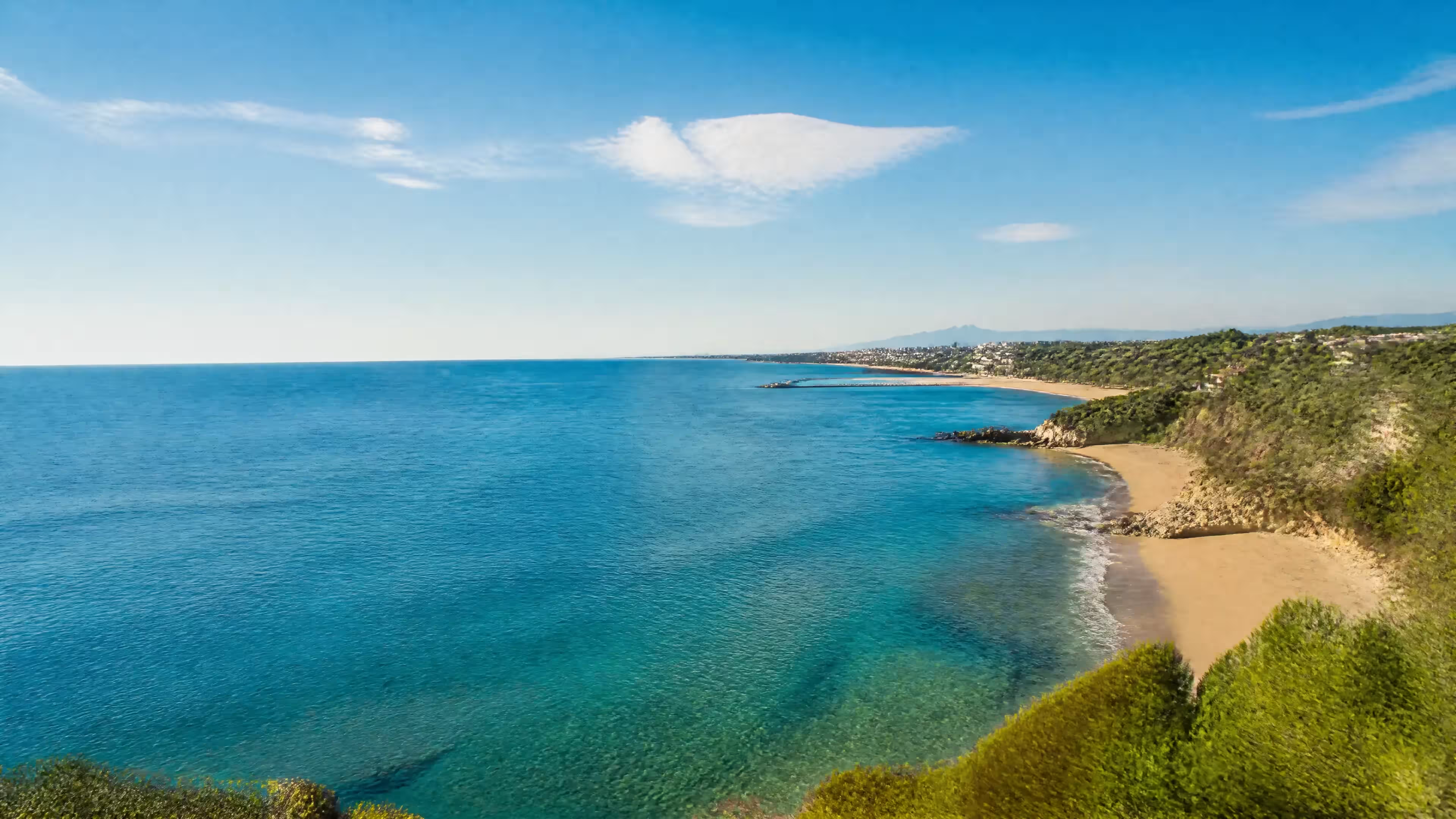
A holiday on the Costa Dorada means the warm Mediterranean Sea from June to September, sandy beaches and towns like Salou and La Pineda. There are no direct flights from Almaty; you fly with one or two connections via Istanbul, Dubai or Frankfurt. Peak season is July and August, while June and September are the mildest. It is worth planning the trip several months in advance.
How to get there and what to consider on arrival
The journey here begins not on the beach but at Almaty airport. This section is about the road, the transfer and the first hours after landing.
Route from Almaty to the coast
There are no direct flights from Almaty to the Spanish coast, so tours to Spain from Almaty are built with one or two connections. Convenient transfer hubs are Istanbul, Dubai and Frankfurt, from where you fly to Barcelona or Reus. The journey from Barcelona airport to the resorts takes about an hour to an hour and a half, from Reus noticeably less. It is better to book the transfer in advance: on site at the desk in season prices are higher, and there may be no available cars. Hotels on the Costa Dorada often offer their own transfer, but it too is confirmed before departure. At the airport keep the address of your accommodation in Spanish at hand — it is easier for the taxi driver that way. The first steps are simple: collect your luggage, buy a local SIM card and get to the hotel.
What to prepare before departure
A trip to Spain is planned in advance, not in the last week before departure. The package of documents for the Schengen area is standard: an application form, a photo, confirmation of a hotel booking on the Costa Dorada, medical insurance and proof of income. Insurance is taken out for all days of the tour, otherwise it simply will not be accepted. A holiday with children requires separate documents for the child, including a birth certificate and consent from the second parent if they are not travelling. Tours to Spain from Almaty are conveniently taken together with visa support: the agency will tell you the list and deadlines. Check the exact requirements and submission addresses on the website of the country's official department before the trip. Appointments at the visa centre fill up quickly in high season, so it is not worth delaying this.
Seasonality and weather: when is the best time to go?
The resort lives by the Mediterranean calendar, and the month of departure changes both the weather and the prices of tours. Below is what high season offers and what makes the quiet months good.
What happens at the resorts in high season
The peak falls in July and August, when the sea is warmest and the beaches are packed from the morning. In these months prices for tours to the Costa Dorada are at their maximum, and hotels are booked several months in advance. During the day the air heats up strongly, so it is more comfortable to walk before noon and after six in the evening. The Spanish Costa Dorada in August is noisy: water parks are open, festivals are on, and the promenades are crowded until night. For families with small children such surroundings sometimes get in the way: there is little space by the pool and on the beach. But the infrastructure works at full capacity — from sunbed rental to evening shows. If the goal is the sea and a celebration, there is no better time.
Velvet season and shoulder season: pros and cons
September and June offer a warm sea with a noticeably smaller crowd and moderate prices. The water in September still holds the summer warmth, while the air is no longer so scorching, and it is pleasant to walk around the towns all day. October and May are the shoulder season: not everyone dares to swim, but excursions and trips around the region go without fuss. The downside of the quiet months is that some beach cafes and entertainment close until the next summer. Transport schedules also become less frequent, especially in the evenings. When is the best time to go to the Costa Dorada depends on the goal: for swimming — in September, for walks — in May. Tours in these months cost less, and hotels are more willing to give discounts.
Where to stay and how to choose accommodation
Accommodation on the coast is divided into two big types, and the choice between them changes the budget of the whole trip. Let us look at what suits a family and what suits a couple or a group.
Resort-type hotels and apartments: which is more profitable
For a family with children, apartments with a kitchen often come out cheaper than a hotel for the same days. Cooking for yourself means not depending on restaurant hours and feeding the child familiar food. Resort-type hotels provide meals, a pool and entertainment, but charge a city tax and a deposit, which is worth asking about in advance. For a couple for a week a hotel is more convenient: cleaning, breakfast and a 24-hour reception. For a group of four people, a seaside flat with two bedrooms is more profitable. The Costa Dorada offers both options in almost every town. A simple table helps compare the approaches.
What to clarify when booking and paying
Before paying for the tour, check what exactly is included in the price of the stay. In Spanish hotels, a city tax and a refundable deposit are often charged separately, and meals are counted per number of guests. Clarify whether there is air conditioning, a washing machine and kitchen appliances if you take apartments. Measure the distance to the beach on the map, not by the description: "five minutes" sometimes means an uphill climb. Separately ask about early check-in and late check-out — flights from Almaty often arrive in the evening. Hotels on the Costa Dorada are booked in advance precisely because of these details.
How to get around the coast by transport?
The coast stretches along the sea, and you have to travel between towns every day. The choice between a car and public transport determines how many places you will manage to see.
Car rental versus commuter trains and buses
A car gives the freedom to look into coves where the bus does not go. Renting at the airport costs less than at resort agencies, but requires an international driving permit and a card for the deposit. Commuter trains connect the large cities of the coast and run on schedule, buses reach small beaches. Tickets are bought from a machine or from the driver, and they are inexpensive. The downside of public transport is being tied to the schedule and overcrowding during rush hour. A car, in turn, requires a sober driver and a place to park. For a week's holiday with children, the commuter train is calmer; for travelling around the region, a car.
Parking, schedules and evening routes
In season, parking near the beaches is paid and fills up already in the morning. Blue lines mean a paid zone, white ones mean free, but there are few such places. A fine for unpaid parking is issued quickly, so keep your ticket under the windshield. Train and bus schedules should be checked on site: in summer routes are added, in winter they are reduced. In the evening transport runs less often, and the last bus may leave around ten. If you dine late, decide in advance how you will get back to the hotel. On holidays the schedule changes, and some streets are closed for festivities.
Visa and entry rules change: check with the primary source — the Embassy of the Kingdom of Spain in the Republic of Kazakhstan, https://www.exteriores.gob.es/Embajadas/astana/es/ServiciosConsulares/Paginas/index.aspx. The information on this page was verified on 10.09.2026.
What to consider for tourists with and without children
The Spanish day is structured differently from what you are used to, and it is worth preparing for this in advance. Below are everyday little things that strongly affect the impression.
Food, daily routine and Spanish habits
Dinner in Spain starts late, after eight or nine in the evening, and this is not always suitable for children. The menu of the day at lunch costs less than the evening one and includes several dishes — a good value option for a family. It is better to buy groceries in Mercadona or Lidl supermarkets, and not in small shops by the promenade. Siesta closes some shops from two to five, and this is worth taking into account in your plans. A holiday here with children is conveniently built around a morning beach and an afternoon nap. In the evening, stroll along the promenade when the heat subsides. Spanish cuisine is mild: paella, tortilla and grilled fish are liked even by picky eaters.
Money, insurance, pharmacies and communication
Cards are accepted almost everywhere, but cash euros will come in handy for markets, small cafes and parking lots. Medical insurance is mandatory, and pharmacies work on a schedule with a break, so it is better to take medicines with you. Sockets and voltage in Spain are the same as in Kazakhstan, no adapter is needed, but take a charger with reserve. A local SIM card is inexpensive and solves the issue of maps and communication. The language barrier is minimal: in tourist areas they speak English, and basic Spanish phrases will pleasantly surprise the locals. Tipping is not mandatory, but it is customary to round up the bill. Children in cafes are usually given smaller portions at the same price.
In short
- The coast welcomes guests from June to September, the peak of heat and crowds is in July and August.
- There are no direct flights from Almaty, fly with one or two connections.
- Transfer and accommodation are booked in advance: in season they are snapped up months ahead.
- September and June offer a warm sea without the crowds and at gentle prices.
- For a family with children, an apartment with a kitchen is more advantageous; for a couple, a hotel with breakfast.