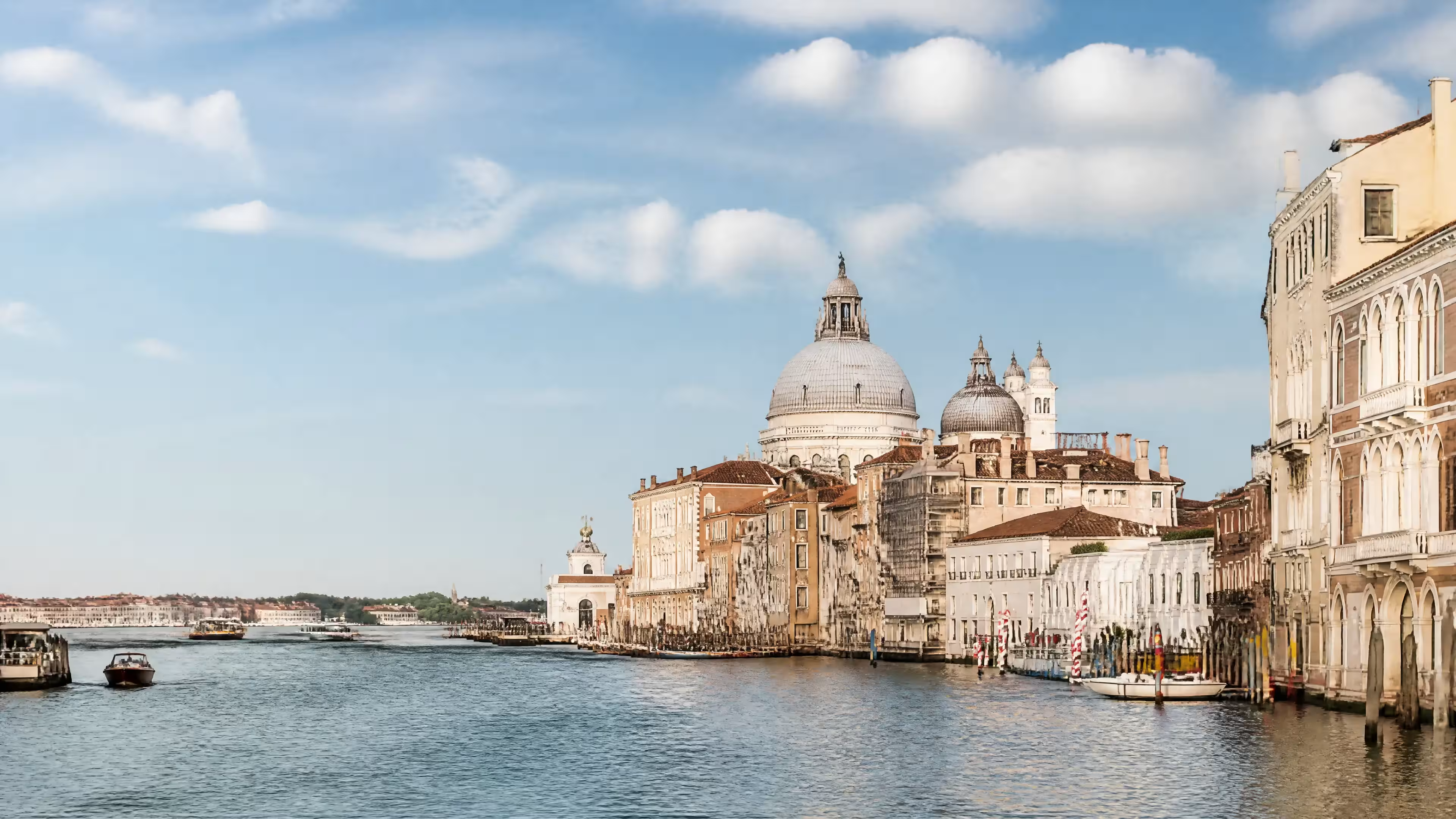
Holidays in Venice are a city on water without cars, 118 islands and bridges, where people travel on foot and by vaporetto. The best months for a trip from Almaty are April, May, September and October: warm, but without exhausting humidity and peak crowds. Flights are arranged via Istanbul, Dubai or European hubs; there are no direct flights.
Preparing for a trip from Almaty
A trip to this city begins long before boarding the plane. Tours to Italy from Almaty require thorough preparation, and the preparations take far more time than the flight itself.
What is included in the Schengen document package
A trip to Venice is impossible without a Schengen visa, and it must be arranged in advance. The document package for citizens of Kazakhstan is standard, and medical insurance with coverage from 30 thousand euros is included in the mandatory list. The form is filled out in English or Italian; photographs must be recent, no older than six months. Hotel reservations in Venice are suitable without prepayment, but with confirmation. Tours to Italy from Almaty often include visa support, however the tourist still collects the papers themselves. It is better to submit them a month to a month and a half before departure: in high season visa centers are busy, and the wait stretches out. Check the full list of requirements and submission deadlines on the website of the Italian consulate in Nur-Sultan or the visa center (checked on 01.01.2026, https://ambastana.esteri.it).
Flight routes and transfer to the islands
There are no direct flights from Almaty to Venice, so flights are arranged via Istanbul, Dubai or European hubs. It is most convenient to fly via Istanbul: the connection is short, and baggage is usually checked through to the final destination. From Dubai the flight is longer, but the choice of flights is wider. Upon arrival at Marco Polo airport, the tourist gets to the city by bus or water taxi. The bus goes to Piazzale Roma in about half an hour; the water taxi takes you directly to the hotels, but costs noticeably more. From Treviso airport there are shuttles to Santa Lucia station. The train from the mainland arrives in the very center, and the car is left on the mainland — at the station or on the island of Tronchetto.
How the city on water is arranged
Venice stands on 118 islands connected by bridges. There are no cars in the historic center, and this changes everything: moving on foot and by water becomes the main way.
The logic of choosing a district
The historic center is divided into six districts, and the choice of accommodation in each changes the impression of the trip. San Marco is the heart of the city, but the hotels here are the most expensive and noisy. San Polo is closer to the market and evening trattorias, but the streets are narrow and crowded. Dorsoduro is quieter, students and locals live here, and the main attractions are within walking distance. Cannaregio and Castello are residential districts with affordable prices and authentic cafes. Santa Croce is convenient for its proximity to the station, which is important on a short trip. Giudecca stands on the other bank of the canal and offers a calm holiday with a view of the historic center. The choice of district determines how much time the tourist spends on the road and how much they pay per night.
Island hotels versus mainland ones
Hotels in Venice on the islands cost more, but give full immersion in the atmosphere. Mainland options in Mestre are cheaper and more convenient for those who arrived by car. The train from Mestre to Santa Lucia takes about ten minutes. For a family with children, the mainland is often more practical: the rooms are more spacious, and the sidewalks are even. The island option wins if the trip is short and you want to live in the very heart. A compromise is Giudecca or Tronchetto: prices are lower, and the center is a stone's throw away.
Seasonality, preparations and budget
The weather in the lagoon changes noticeably, and the trip budget depends on the month. It is better to plan this trip with an eye on humidity, mosquitoes and holidays.
When to go: weather, humidity and mosquitoes
The best months for a trip are April, May, September and October. In spring the air warms up to comfortable values, and the crowds of tourists are not yet at their peak. In summer the lagoon has high humidity, and the heat is hard to bear. Mosquitoes are active from June to August, so repellents and light breathable clothing are essential. In winter the city empties, but dampness and fog envelop the canals. The Venice Carnival takes place in February and requires booking accommodation and tables long before the date. November and December are a time of rains and high water. When it is better to go to Venice depends on what is more important: warmth or the absence of crowds.
What prices and the tourist tax are made up of
Prices for tours to Venice are made up of flights, accommodation, meals and excursions. The flight from Almaty accounts for the main share of the budget. Accommodation in high season becomes several times more expensive, especially in the center. Meals in tourist places cost more than in residential districts. A separate line is the tourist tax for accommodation. It is paid at the hotel separately from the booking, and the amount depends on the season and the category of accommodation. Museums and cathedrals require preliminary online booking with a choice of entry time. Multi-day vaporetto passes are more profitable than single tickets. Souvenirs from workshops cost more than market ones, but the quality is also higher.
How to get around the canals and bridges?
Around the city people walk and travel by water. Understanding local transport saves time and money, and floods make their own adjustments.
Vaporetto, passes and water taxis
The vaporetto is a river tram, the main public transport of Venice. A single ticket costs a lot, so a multi-day pass is more profitable. The routes connect the islands of the lagoon, including Murano and Burano. The water taxi is fast, but expensive, and it is better to order it in advance. The gondola is not transport, but a ride, and the price is fixed for tourists. The traghetto carries people across the Grand Canal for a symbolic fee. You need to stop at the pier in advance, otherwise the vaporetto will leave. At rush hour the cars get packed, and it is inconvenient to travel with baggage. Night routes run less often, and the schedule should be checked at the pier.
How to walk around the city on flood days
Acqua alta is a seasonal rise in water familiar to every local resident. On such days, raised walkways are laid out along the streets for pedestrians. Footwear should be waterproof, and it is better to take rubber boots. A siren warns of the approaching high water in advance. St. Mark's Square floods first, and it is better not to go there at peak times. A mobile app shows the water level and an hourly forecast. During strong acqua alta, vaporettos change routes, and some piers are closed. Sightseeing tours on such days should be planned with extra time. Traveling with children during flood days requires particular caution.
What to do besides the beach: food, crafts, trips?
Italian cuisine in the lagoon has its own characteristics. And crafts and neighboring cities make the trip richer.
Where to eat without overpaying
Cafes and restaurants near the main attractions are noticeably more expensive than in residential neighborhoods. In Castello and Cannaregio, prices are lower, and portions are more generous. A Venetian-style bar with snacks is the most budget-friendly option for a bite. Coffee at the counter costs less than at a table. The Rialto fish market offers fresh seafood in the mornings. A tourist menu with photos often means overpaying for mediocre food. Locals go to trattorias away from the Grand Canal. Dinner is better booked in advance, especially on weekends. Italian cuisine in Venice relies on seafood, rice, and polenta.
Verona, Padua, and Treviso as day trips
Verona, Padua, and Treviso are reachable by train in an hour to an hour and a half and are suitable for day trips. Verona is known for its Roman amphitheater and Juliet's balcony. Padua is famous for Giotto's frescoes and the oldest botanical garden. Treviso is quieter and cozier, with canals and medieval walls. Train tickets are bought at Santa Lucia station or online. Trains run frequently, and returning in the evening is no trouble. One day without an overnight stay is enough for the trip. Such an outing diversifies a holiday in this city and shows the region as a whole.
Visa and entry rules change: check the primary source — the visa portal of the Ministry of Foreign Affairs of the Italian Republic, https://vistoperitalia.esteri.it/. The information on this page was verified on 10.09.2026.
In brief
- Flights from Almaty are built through Istanbul, Dubai, or European hubs; there are no direct flights.
- The historic center is divided into six districts, and the neighborhood determines the price and quietness of the overnight stay.
- Island hotels are more expensive than mainland ones in Mestre, but they give full immersion in the atmosphere.
- The best months for a trip are April, May, September, and October, without the humid summer heat.
- A multi-day vaporetto pass is more profitable than single tickets, and it is better to eat in residential neighborhoods.