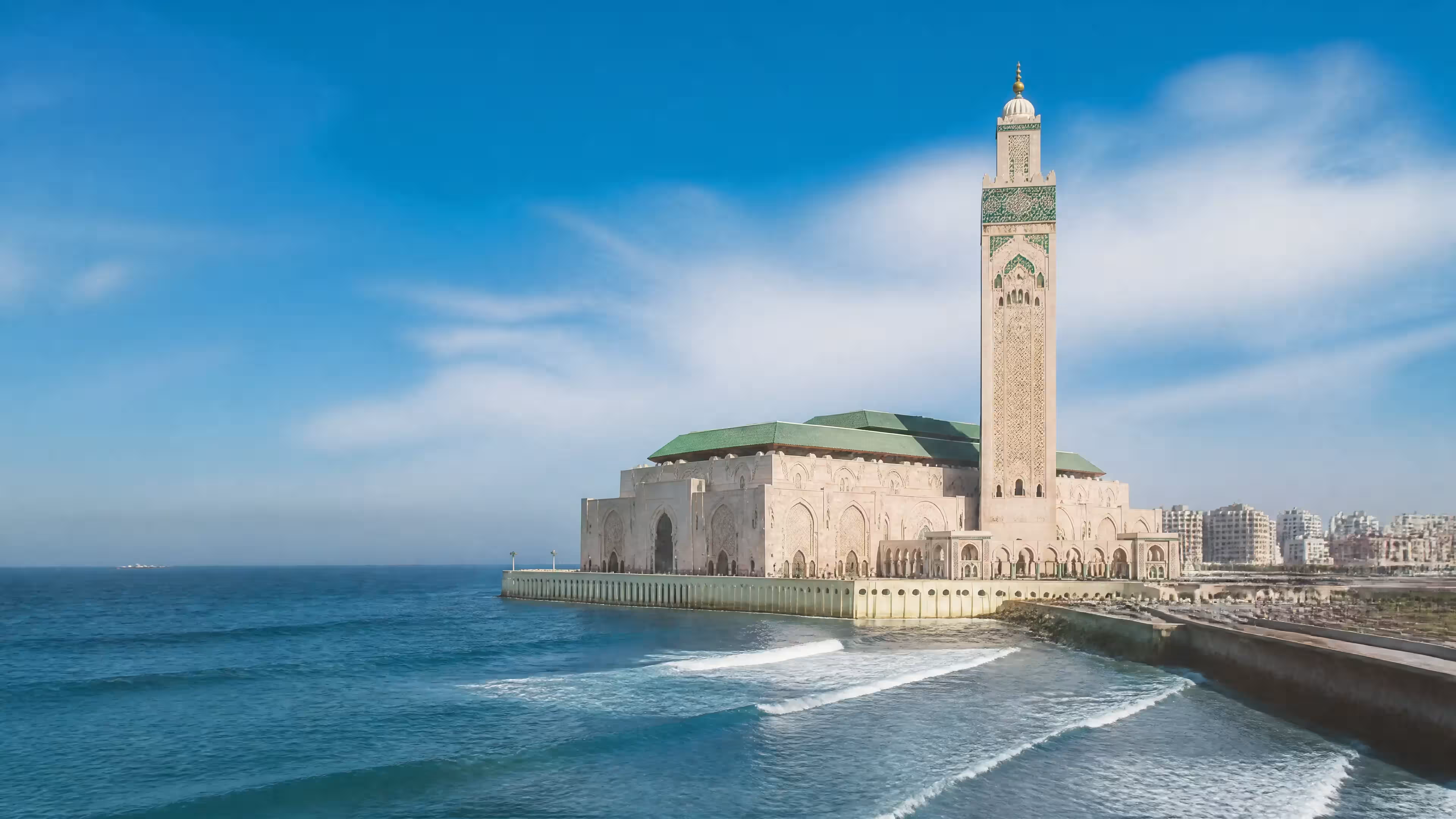
Holidays in Casablanca are a year-round destination with mild winters and warm summers without exhausting heat. The swimming season on the Atlantic coast lasts from June to September, while in spring and autumn the city is convenient for walks. Flights from Almaty always include a transfer, and the journey takes from 12 hours. The optimal tour duration is from 5 to 8 nights.
Visa, flight and first days in Morocco: what do citizens of Kazakhstan need to know?
The first section is built around practical questions that a tourist from Almaty has before the trip. Here we will also look at how to get to Casablanca and what awaits a traveler in the first days.
Visa-free entry for citizens of Kazakhstan: documents and insurance
Citizens of Kazakhstan do not need to arrange a visa in advance for a trip to Morocco. A tourist arranges an insurance policy with coverage from 30,000 euros before departure, and it is better not to start the trip without it. You can arrange insurance online in one evening, and it does not cost much. A medical policy will be useful not only at the border, but also when visiting a clinic in Casablanca. It is worth saving copies of the documents on your phone and keeping the originals in your hand luggage. This is calmer both at the airport and at the hotel in the Moroccan city.
The journey from Almaty with transfers: routes and travel time
There are no direct flights from Almaty to Casablanca, so tours to Morocco from Almaty always include a transfer. It is most convenient to fly through Istanbul, Dubai or Doha. The journey takes from 12 hours, and with a long connecting wait, noticeably longer. The time difference with Kazakhstan is small, so acclimatization is gentle. It is better not to fill the first day in Casablanca with excursions: a walk along the embankment and an early sleep help you get into the rhythm. Morning flights are more convenient because by evening the tourist is already at the hotel.
Money, communications and local rules: how not to be left without funds and connection?
Money matters and everyday etiquette determine how comfortable the holiday will be. Let's look at what to take with you, how to pay and how to behave in the Moroccan city.
Dirham, cards and cash: how not to be left without funds
The national currency of Morocco is the Moroccan dirham, and it cannot be taken out of the country. Dollars and euros are exchanged in banks and exchange offices, and the rate at the airport is less favorable than in the city. Visa and Mastercard cards are accepted at hotels in Casablanca and large restaurants. At markets and in the medina, cash is needed, so part of the amount should be kept with you in small notes. Prices for tours to Casablanca are usually calculated in dollars, while on site expenses are already in dirhams. It is not difficult to find an exchange office in the city center, but you may be asked to show your passport when exchanging.
Tipping, language and Moroccan business etiquette
Tipping in Morocco is part of the culture, not a sign of special generosity. In a restaurant, about 10% of the bill is left, while a porter and a maid are given 5–10 dirhams. The official languages are Arabic and Berber, while French is widely used in the tourism sector. English is understood less well, so a couple of French phrases noticeably simplifies communication. Ramadan changes the rhythm of the city: some cafes are closed during the day, but in the evening the streets come alive. When planning a holiday in Casablanca during this month, it is worth thinking in advance about meals during the day. Local cuisine — tagine, couscous, pastilla and mint tea — is itself part of the experience.
How to get around the country and the city
Transport in Casablanca and beyond is simple, but each method has its own nuances. Below is what to choose for the city and how to get to other cities in Morocco.
Tram, taxi and car rental: what to choose
The most convenient way to travel around the city is by tram — there are two lines here, and they connect the main districts. Red petit taxis and large taxis operate throughout the city, but it is better to agree on the price before getting in. The meter in a Casablanca taxi is not always turned on, so the amount is discussed in advance. Renting a car gives freedom, but parking in the center is paid and finding a place is not easy. For short trips, a taxi is more profitable; for long routes, the train. It is customary to give the driver small tips; this is part of the local way of life.
Trains to Rabat, Marrakech and Fez: routes for day trips
The railway is the most convenient way to see Morocco from Casablanca. Trains to Rabat take about an hour, to Marrakech about three hours, to Fez longer, and it is better to go there with an overnight stay. Tickets are sold at the station and online, and seats in second class are usually available. Rabat is suitable for a day trip: leave in the morning, return to the hotel in the evening. Marrakech should be planned for a full day or two. Here is a comparison of destinations for trips from Casablanca.
What to consider when choosing a tour and hotel
The choice of tour and hotel determines both the budget of the trip and its rhythm. Let's look at seasonality and organizational points that are asked about most often.
Seasonality and hotel occupancy: how to catch a favorable price
When it is better to go to Casablanca depends on what the tourist expects from the trip. In summer, the coast is cooler than inland because of the Atlantic winds. Swimming is comfortable, but the water is invigorating, and families with small children should take this into account. In spring and autumn, the city is mild, and hotel occupancy is lower than in high season. In winter, prices for tours to Casablanca drop, but the evenings are cool and often windy. Hotels in Casablanca are booked well in advance on the days of major business exhibitions, and then the cost rises. Flexible travel dates almost always give a more favorable price.
For a tourist from Almaty, it is important to understand in advance what expenses will fall on them once there. Holidays in Casablanca with children require a separate calculation: children's meals, additional excursions and transfers are often extra to the package. It is better to clarify the details before signing the papers, and not at the airport. Then the budget of the trip to Morocco will also be predictable.
Safety, health and fees
A calm trip begins with insurance and a properly packed suitcase. Below — about medicine on site and about what to put in your luggage.
Insurance, pharmacies and medical care on site
Medical insurance with coverage from 30,000 euros is mandatory for a trip to Morocco, and it is arranged before departure. There are many pharmacies in Casablanca, they are noticeable by the green cross. Some medicines are dispensed only by prescription, so it is better to take your usual medications with you. Large clinics in the city accept foreigners, but the bill is issued immediately. When seeking treatment, keep receipts and certificates: they are needed for payment under the policy. Tours to Casablanca with children should be supplemented with children's medications and sun protection.
Sockets, dress code and what to put in the suitcase
Sockets in Morocco are types C and E, voltage 220 V, so an adapter is needed for Kazakhstan plugs. The dress code in tourist areas is casual, European clothing is appropriate. When visiting the Hassan II Mosque and old quarters, choose covered shoulders and knees. Here is a short list of what will be useful on the trip.
- An adapter for the socket and a power bank.
- Light clothing with covered shoulders for walks around the medina.
- Comfortable shoes for the cobblestones of the old quarters.
- Sunscreen and a head covering.
- A first aid kit with usual medications and prescriptions.
- Cash in small denominations for markets and tips.
Visa and entry rules change: check with the primary source — the consular service of the Kingdom of Morocco, https://www.consulat.ma/en. The information on this page was verified on 10.09.2026.
In short
- A flight from Almaty to Casablanca always includes a connection, the journey takes from 12 hours.
- Money on site — the Moroccan dirham, keep part of the amount in cash.
- The tram and taxi cover the city, the train — trips to Rabat, Marrakech and Fez.
- Tour prices depend on the season and the city's business calendar.
- Insurance with coverage from 30,000 euros is needed before departure.