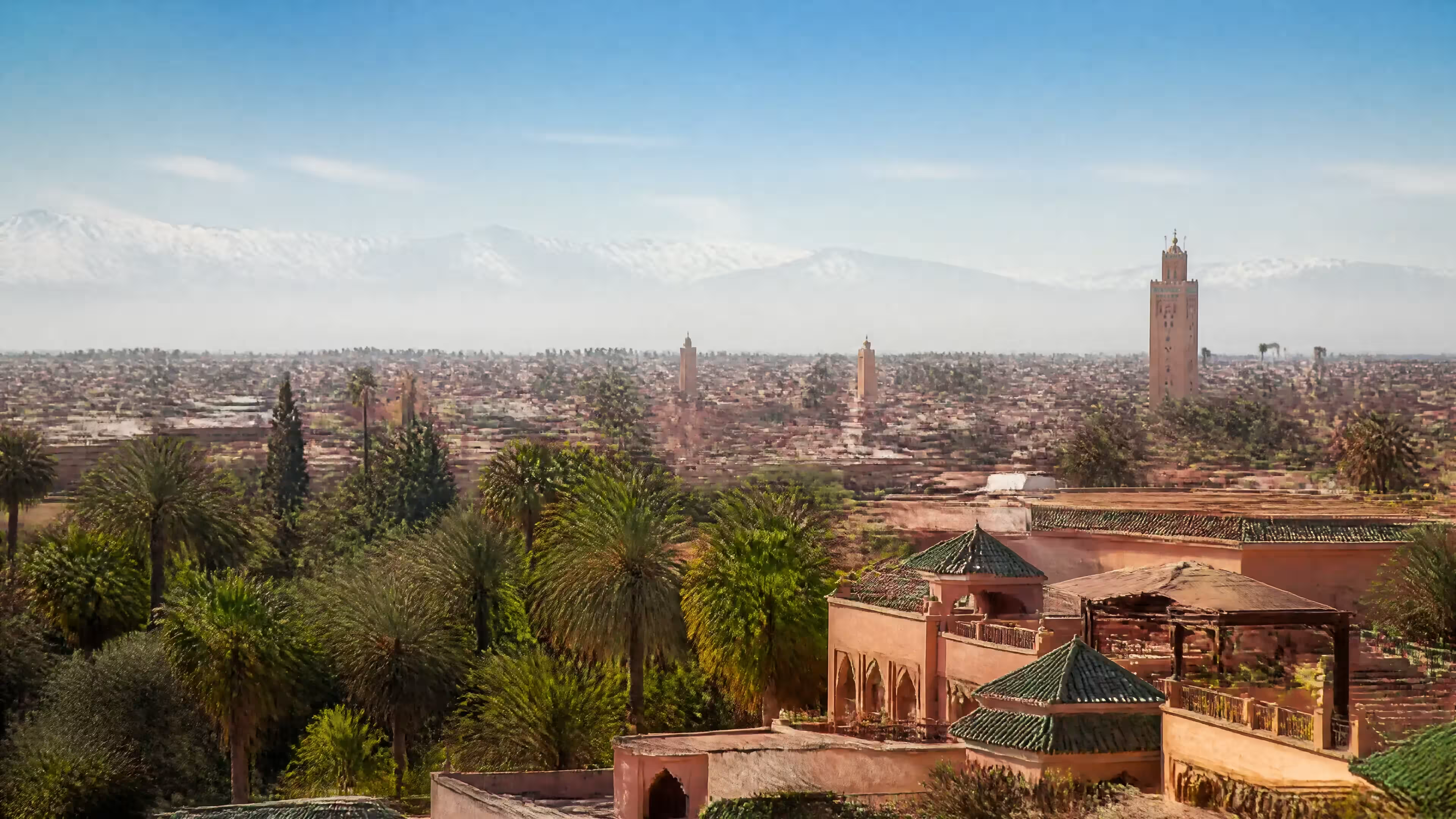
Holidays in Marrakech are a year-round destination with the best months from March to May and from October to November, when daytime temperatures are +25–30 °C and walking around the medina is comfortable. There are no direct flights from Almaty: the journey takes from 12 hours with a transfer in Istanbul, Dubai or Doha.
Flights, money and practical little things
The journey from Almaty to Marrakech takes almost a day, so it is worth starting to calculate time and budget in advance. Below are flights, currency and everyday details that will save you unnecessary hassle.
The journey from Almaty and transfers in Istanbul, Dubai and Doha
There are no direct flights from Almaty to Marrakech, the journey takes from 12 hours with one transfer. The most convenient way is to fly via Istanbul, Dubai or Doha: connections are short, and baggage is checked through to the final point. The Istanbul route is chosen more often because of the frequency of flights and flexible schedule. Via Dubai the flight is more expensive, but night connections are shorter. Doha is good for those flying in winter: less risk of delays due to weather. Add to the journey time the transfer from Marrakech airport to hotels in the medina: that is another 15–30 minutes. For a transfer of more than six hours, a supply of water and light food will come in handy.
Dirham, exchange and cash at the markets
The main currency of Morocco is the Moroccan dirham, and it cannot be taken out of the country. Exchange money in banks, official exchange offices or at the hotel: the rate there is fairer than with street money changers. Cards are accepted in large hotels and restaurants in the new part of the city, but in the medina and at the markets you need cash. Keep small notes for tips and purchases. Haggling at the markets is a must: the starting price can be two to three times higher than the real one. Bargain calmly and with a smile, it is part of the local culture. Do not carry large sums with you for the day, leave them in the hotel safe.
What weather awaits in Marrakech?
The climate here is sharply continental: hot summers and cool nights in winter. The choice of travel date determines how much time you will spend outdoors.
Spring and autumn: comfortable weather for sightseeing
The best months for a trip are March, April, October and November. During the day the air warms up to +25–30 °C, walking around the medina and gardens is comfortable from morning to evening. In spring the city is buried in flowers, and in autumn there are fewer tourists and softer prices for hotels in Marrakech. In March and April sand winds are possible: take a light scarf for your face and protective glasses. It is better to devote the morning to distant excursions, and after lunch return to the riad to rest. In the evening the temperature drops to +15 °C, so a jacket or sweater will come in handy even in the warm season. It is during these months that you should book tours to Marrakech in advance: the high season fills riads quickly.
Summer heat and winter evenings: how to plan the day
In summer in Marrakech it can be above +40 °C, and this is the main limiter for walks. Move excursions to early morning and after sunset, and during the day stay by the pool or in an air-conditioned room. In winter, daytime is around +18–20 °C, but at night it is cool, and riads often have no heating. Take warm clothes for the evening and warm socks: stone walls cool down a lot. You need to drink water all year round, in summer — up to three liters a day. Plan the day so that by noon you are near the hotel or a cafe. Such a rhythm makes holidays in Marrakech comfortable in any season.
Ramadan and sand winds: what shifts travel dates
Ramadan shifts travel dates: during the day many cafes are closed, alcohol is limited, and in the evening the city comes alive. If you are going for gastronomy and markets, it is better to choose other weeks. Sand winds come more often in March and April, less often in May. On such days the sky becomes hazy, visibility drops, and excursions to waterfalls and mountains are postponed. People with asthma and allergies should keep a mask and medications at hand. In the high season, prices for tours to Morocco from Almaty rise, so it is better to fix dates several months in advance. Check the forecast before leaving for the desert and the Atlas Mountains.
Hotels, riads and service
Accommodation is divided into two worlds: the old medina and the new European part. The choice between them determines the rhythm of the whole trip.
What to choose: a riad in the medina or a hotel in the new part
A riad in the medina is an inner courtyard, silence behind thick walls and the atmosphere of a Moroccan house. Such hotels in Marrakech cost more, but give proximity to markets and palaces. There are also downsides: narrow streets, noise in the mornings and difficult navigation. A hotel in the new part — Gueliz or Hivernage — is a pool, elevator, parking and predictable service. You can get to the medina in 10–15 minutes by taxi. With children and elderly parents, the new part is more convenient. For a romantic trip, a riad wins. Compare both options by price and distance to Jemaa el-Fna square.
Tips, alcohol and rules of behavior in public places
Tips in Morocco are expected: 5–10 dirhams to the porter, about 10% in a restaurant, to the guide — by agreement. Alcohol is sold in licensed shops and hotels; in the medina it is almost nowhere to be found. Import of alcohol is limited, check the norm in advance. Clothing should cover shoulders and knees, especially when visiting mosques and markets. Women should avoid too revealing outfits outside beach areas. It is better to photograph local residents with permission: on Jemaa el-Fna square they often ask for payment for a photo. Respectful behavior and a calm tone solve most everyday situations.
Holidays with children and active routes
Marrakech is suitable for a family holiday if you think through the route and pace in advance. Children find it interesting here, but the heat and the crowd require caution.
Family hotels and entertainment for young travelers
A holiday in Marrakech with children is more conveniently built around a hotel with a pool and shade. In the new part there are more such options than in the medina. During the day, the Majorelle Gardens, the aquarium and parks with attractions are suitable. Horse and carriage rides in the evenings are enjoyed even by little ones. Many family hotels offer a children's menu and a nanny on request. Plan walks before 11 a.m. and after 5 p.m. to avoid the peak heat. Take water, hats and wet wipes with you. That way the trip will go smoothly and without overheating.
The desert, the Atlas Mountains and the Ouzoud Falls: what to book in advance
Excursions to the desert, the Atlas Mountains and the Ouzoud Falls are booked in advance, especially in high season. The journey takes a whole day, so departure starts early in the morning. To the desert people more often go with an overnight stay in a camp: that is two days and one night. For the Atlas Mountains a one-day tour with lunch with the Berbers is enough. To the Ouzoud Falls the route goes through picturesque passes; in winter it is cooler there. Take comfortable shoes, a jacket and a supply of water. Check whether transfer and meals are included in the price. Prices for tours to Marrakech of this format depend on the season and the number of participants.
How are health, communications and safety connected?
Preparation for the trip includes insurance, communications and basic precautions. These little things are rarely remembered in advance, but they are needed on the very first day.
Insurance, pharmacies and vaccinations before departure
Medical insurance is mandatory: medicine for foreigners is paid, and the bill for a visit can be large. The policy must cover hospitalization and emergency evacuation. Vaccinations are not required for entry, but it is worth updating the standard set and taking remedies for diarrhea. There are pharmacies in the city, but some medicines differ in name, so take your usual medications with a supply. In the first-aid kit, painkillers, an antiseptic, bandages and a remedy for sunburn will come in handy. Take chronic medications in the original packaging with a prescription. Save the insurance company's number in your phone and on paper.
SIM cards, internet and photos of locals
A SIM card of a local operator — Maroc Telecom or Orange — is bought at the airport or in the city. A passport is needed for registration, and the tariffs include mobile internet for a week. Internet in riads can be weak, especially deep in the medina, so mobile data helps out. Wi-Fi in cafes and hotels in the new part is more stable. Photos of locals often require permission or payment, especially on Jemaa el-Fna square and near artisans. Ask briefly and politely, and if refused, simply lower the camera. Do not photograph people in mosques and at markets covertly. This saves money and preserves goodwill around you.
Visa and entry rules change: check with the primary source — the consular service of the Kingdom of Morocco, https://www.consulat.ma/en. The information on this page was verified on 10.09.2026.
Briefly
- The journey from Almaty takes from 12 hours with a transfer in Istanbul, Dubai or Doha.
- The best months for the trip are March, April, October and November.
- In summer, plan excursions for the morning and evening, and keep to the shade during the day.
- A riad in the medina gives atmosphere, a hotel in the new part gives comfort and a pool.
- Cash dirhams are needed at markets; cards are accepted in large hotels.