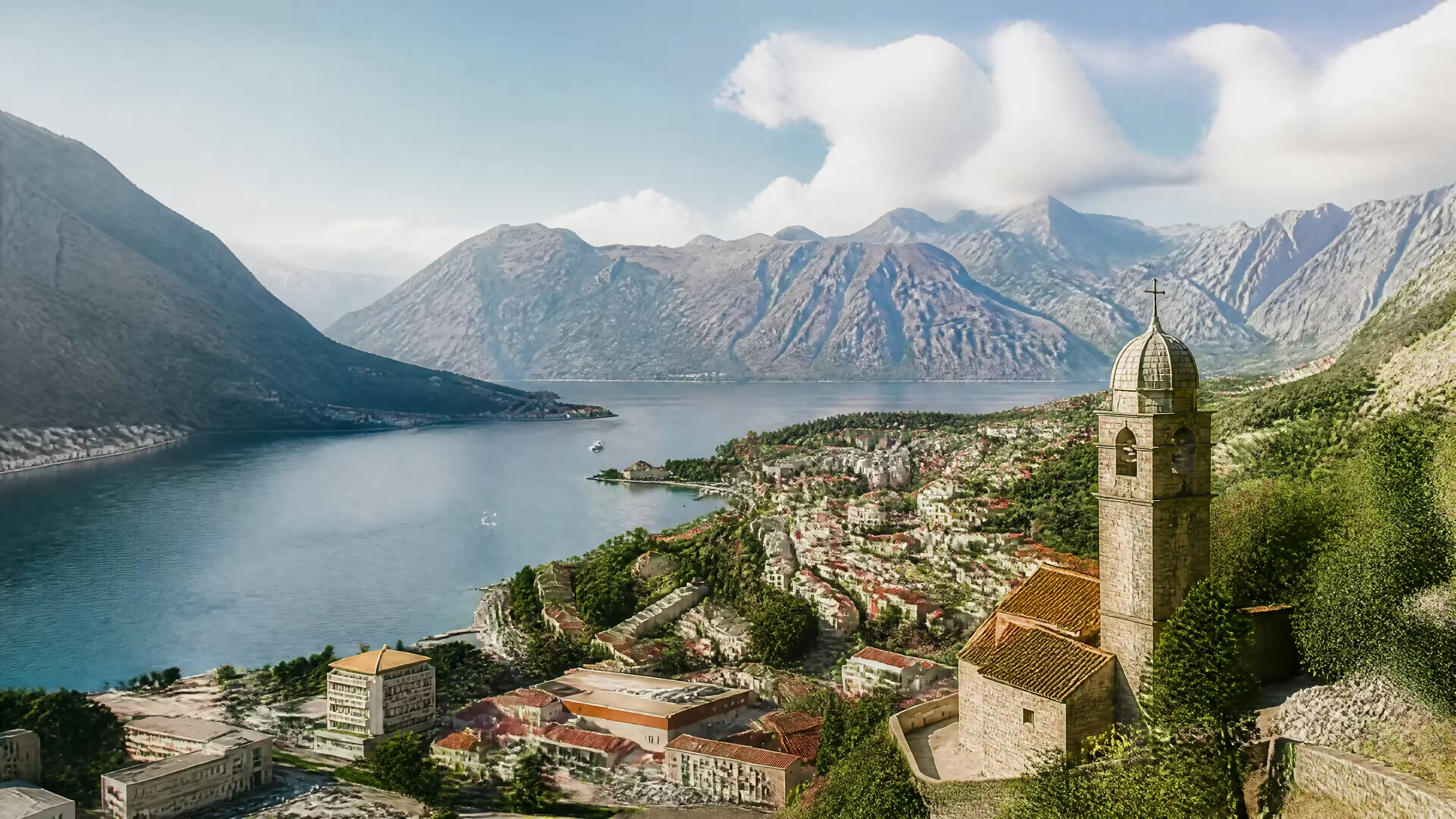
Holidays in Kotor are the quiet bays of the Bay of Kotor, the medieval Old Town and mountains rising right up to the water. The best months for a trip are May, June and September: it is warm, the sea is warmed up, and the streets are noticeably freer than at the peak of July and August. The journey from Almaty takes from eight hours with one transfer. Five to seven days are usually enough for the holiday itself.
Visa, documents and entry rules for Kazakhstanis: what do you need to know?
A trip to Kotor begins long before boarding the plane, and the main thing here is to calmly collect the papers. Below we will look at what is important to check in advance so that the trip to Montenegro goes without surprises at the border.
Passport and its validity period
For a trip to Kotor, citizens of Kazakhstan need a passport, and it is worth checking its validity long before departure from Almaty. The guideline is this: the document must be valid for at least three more months after the end date of the trip. A visa for a short holiday in Montenegro is not required, but it is better to clarify the exact entry conditions at the consulate before buying tours. If the passport expiry date is approaching, replacement takes time, and it is better not to start booking until the new document is received. Also check that the passport has blank pages. Tours to Kotor with departure from Almaty are more convenient to book when the documents are already in hand.
Insurance and medical formalities
Medical insurance for a holiday in Kotor is not formally mandatory, but local medicine is paid, and without a policy any visit to a doctor will be expensive. Take out a policy for the entire duration of the trip, including the flight days. Separately, it is worth checking whether it covers active holidays if you plan hikes or swimming on distant beaches. A health declaration does not need to be filled out, and no additional vaccinations are required for entry to Montenegro. Keep the policy on your phone and in printed form. This simple action saves nerves if a trip to Kotor suddenly requires seeing a doctor.
Visa and entry rules change: check the primary source — the Government of Montenegro, https://www.gov.me/en/diplomatic-missions/embassies-and-consulates-of-montenegro/kazakhstan. The information on this page was checked on 10.09.2026.
How to get to Kotor from Almaty?
There are no direct flights from Almaty to the coast of Montenegro, so the route is always built with one transfer. The only difference is which city to fly through and how long the journey to Kotor itself will take after landing.
Routes with a transfer in Istanbul and Dubai
From Almaty to Montenegro, people fly with a transfer in Istanbul or Dubai, and both options take approximately the same time. Via Istanbul it is usually shorter in terms of the connection, but flights to Tivat and Podgorica do not operate every day. Dubai gives more options by dates, but adds hours to the journey. Tickets for July and August are snapped up quickly, so it is worth buying them several months in advance. For a connection, leave a margin of at least three hours: a delay of the first flight breaks the whole chain. Tours to Kotor from Almaty often already include a flight with a convenient connection, and this saves you from assembling the route yourself.
Transfer from Tivat and Podgorica
From Tivat airport to Kotor it takes about twenty to thirty minutes, from Podgorica — about an hour and a half to two hours. It is better to order a transfer in advance: the driver will meet you with a sign, and you will not have to look for a car after a tiring flight. Taxis also operate on site, but the price should be discussed before getting in. A bus between the airport and Kotor does run, however there are few trips, and with suitcases it is not the most convenient option. If you are travelling as a large group, a private transfer turns out to be more profitable than travelling separately. The road along the bay is narrow, traffic jams are possible in summer, so allow time with a margin.
When to go and how to book accommodation
Planning a holiday in Kotor almost entirely comes down to two questions: the month of the trip and the place where you will stay overnight. Both the budget and how calm the holiday by the bay will be depend on them.
High season and tourist tax
The most crowded months in Kotor are July and August, and that is exactly when prices for accommodation and food reach their peak. Hotels and apartments for this period need to be booked two to three months in advance, otherwise the only choice left is expensive options. The tourist tax is paid separately at check-in, and its amount is stated on site. May, June and September offer warm weather and noticeably freer streets. In April and October it is already cool for swimming, but it is comfortable to walk around the city. If the dates are flexible, shifting by a couple of weeks from the peak saves a noticeable amount.
Apartments, hotels and villas by the bay
Accommodation in Kotor is divided into three types, and the choice depends on how you want to spend your time. Apartments in the Old Town put you in the centre of events, but there is almost no parking nearby. Hotels on the promenade offer a view of the bay and breakfast, but cost more. Villas in the surroundings suit families and companies that need quiet and their own yard. When booking, check whether there is air conditioning and how far it is to the beach. Montenegrin cuisine near the accommodation is a separate plus, but it is better to read about this in reviews.
Money, communications and getting around on site
After check-in, the everyday part of a holiday in Kotor begins: what to pay with, how to stay connected and what to travel on. These little things rarely make it into guidebooks, but they are exactly what determines how calm the trip will be.
Euros, cards and cash
The currency of Montenegro is the euro, although the country is not part of the eurozone, and exchanging tenge or rubles on site is extremely unprofitable. Take euros in cash already in Almaty or withdraw them from ATMs upon arrival. Cards of Kazakh banks are not accepted everywhere: in large hotels and supermarkets yes, in small cafes and markets often not. Keep a supply of cash on you for a day or two ahead. It is convenient to cover part of the expenses with a card, but you should not rely on it entirely.
Car rental, ferry and local transport
Car rental in Montenegro is available with a Kazakhstan driver's license, but international insurance and a card deposit are required. The roads along the Bay of Kotor are narrow and winding, and during high season there are traffic jams here. The Kamenari — Lepetane ferry shortens the route to Herceg Novi and Dubrovnik and saves more than an hour. Buses and minibuses run inside Kotor, but the Old Town is more convenient to explore on foot. For short trips, a taxi is enough; for longer ones, a rented car. If you are going to Croatia or Bosnia, check in advance what is needed to cross the border.
Customs, language and tourist safety
Local habits in Kotor are simple, but knowing them saves you from awkward situations. Let's break down which language to speak, how much to leave for a tip and how to behave in the Old Town.
Montenegrin language and English in service
The Montenegrin language is close to Serbian, and in the tourism sector English is understood almost everywhere. In hotels, restaurants and on excursions there will be no problems with communication. In small shops and at markets, English is known less well, so a couple of simple phrases in the local language noticeably helps. Russian in Kotor is also sometimes understood, but you should not count on it. Learn "hvala" and "dobar dan" — this is enough for polite contact. Locals appreciate it when a tourist at least greets them in their language.
Tipping, dress code and behavior in the Old Town
In restaurants and cafes in Montenegro, it is customary to leave tips of five to ten percent of the bill. In taxis and for small services, rounding the amount up is considered the norm. The dress code in Kotor is casual, but you should not enter churches and monasteries in a swimsuit or shorts. The Old Town is a residential area, so loud conversations at night are inappropriate here. Photographing people without asking is not customary. Respect for local habits makes the stay here calmer and more pleasant for both sides.
In short
- Kotor Montenegro is a city by the bay, where the mountains come right down to the water.
- It is more convenient to fly from Almaty with a transfer in Istanbul or Dubai.
- The calmest months for a trip are May, June and September.
- Accommodation in high season is booked two to three months in advance.
- Cash euros will come in handy in cafes, taxis and at markets.