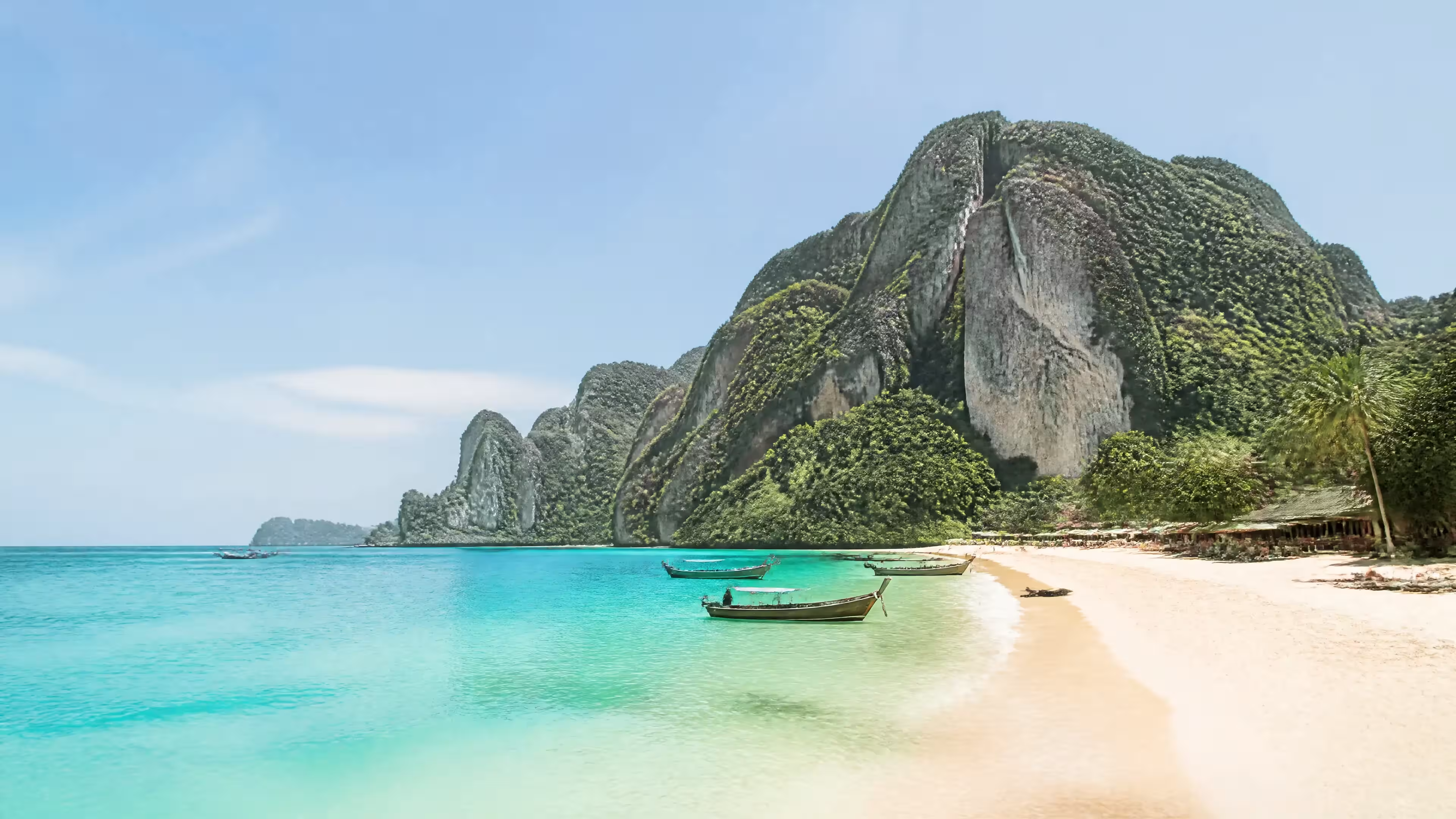
Family holidays in Vietnam mean a warm sea almost all year round, mild Vietnamese cuisine and low prices for accommodation. From Almaty, flights go via Seoul, Bangkok or Dubai with one stop. The best months for the south are February and March, for Nha Trang — from January to August. The resorts of Phu Quoc, Nha Trang, Da Nang, Hoi An and Mui Ne suit families with children of any age.
Is it worth flying here with a child?
This destination attracts families from Kazakhstan with a warm sea almost all year round and mild prices. Here it is easy to find a calm beach and familiar food for a child.
What a trip gives a family with children of different ages
For toddlers under three, the trip offers a warm sea without sharp changes and a steady daily routine by the pool. For preschoolers in Nha Trang and Mui Ne, a kids' club at the hotel is available. Schoolchildren are interested in cable cars, water parks and trips to the islands. Teenagers enjoy surfing, diving and evening markets. Holidays here easily split into a morning sea and an afternoon nap. Parents get a break while the child is busy with an animator. The main thing is not to overload the programme in the first days.
How this destination differs from other Asian resorts
Vietnam differs from Thailand and Malaysia in lower prices for accommodation and food. Vietnamese cuisine is milder than Thai, so a child eats rice and noodles without tears. The beaches of Phu Quoc stretch in a long strip with a gentle entry into the water. Da Nang offers mountains next to the sea and coolness in the heat. Hoi An shows an old town with lanterns, which older children like. In winter it is warmer here than in Sochi, and in summer there is no exhausting humidity in the south. Family holidays in Nha Trang are cheaper than on the promoted islands of the region.
When to go and how to choose the time
The calendar of the trip decides half the success, because the regions live in different weather rhythms. Below are the seasons and periods when prices rise.
Dry and rainy seasons by region
The south is dry from December to April, and rains come from May to November. For family holidays in Phu Quoc, February and March will be the best. Nha Trang is dry from January to August, the rainy season starts in September. Mui Ne hardly knows prolonged rains and suits a trip in any month. Da Nang and Hoi An are dry from February to August, and in autumn there are storms there. The north of the country is cool in winter, and swimming with a child there is uncomfortable. Family holidays in Da Nang are planned for spring, when the sea is calm.
Holidays and high season: when prices are higher
High season coincides with the New Year holidays and Tet. Vietnamese New Year falls in late January or February, and hotels raise prices in advance. Family holidays at this time are more expensive, and excursions are booked weeks ahead. Summer school holidays also cause price growth in the south. The cheapest time to go is May and September, when the weather still allows swimming. Low season does not cancel the trip, but adds short showers. It is worth booking accommodation two to three months before departure.
What documents, money and connection does a family need?
Preparing a family for a trip begins with papers, cash and connection. It is better to sort all this out at home, and not at the arrival airport.
What to prepare before departure from Almaty
Entry rules change, so check them on the department's website before buying a ticket. At the check-in desk in Almaty, a family is most often asked for a return ticket and a hotel booking. Print the confirmations in advance so as not to look for them on your phone with a child in your arms. Keep copies of documents separately from the originals. Family holidays in Nha Trang begin with these simple steps. The child's birth certificate is also taken on the trip.
Cash, cards and exchange in tourist areas
The Vietnamese dong has large denominations, and it is easy to get confused by the zeros at first. Exchange money at exchangers in tourist areas, not at the airport. Cards are accepted in hotels and large restaurants, but the market and taxis require cash. ATMs are common, but the fee is noticeable for small amounts. Withdraw large amounts at once so as not to pay twice. Family holidays in Hoi An are more convenient with a supply of small notes.
Connection, internet and useful apps
A local SIM card with internet is inexpensive and sold at the airport. Install it right away so that maps and messengers work. Among the apps, maps, a translator and a taxi aggregator will be useful. A translator from Vietnamese helps at the market and in the pharmacy. Internet in hotels is usually stable, but weaker in remote areas. Family holidays in Mui Ne are calmer when connection is at hand.
Visa and entry rules change: check with the primary source — the Immigration Department of the Socialist Republic of Vietnam, https://evisa.xuatnhapcanh.gov.vn/. The information on this page was checked on 11.09.2026.
Travel and movement within the country
The journey from Almaty takes a whole day, and distances within the country are also long. Plan transfers with a margin of time.
Flight from Almaty with a stop: what to consider with children
There are no direct flights from Almaty here; flights go via Seoul, Bangkok, Kuala Lumpur or Dubai. A stop adds several hours to the journey, and a child needs food and a change of clothes. Take water, a snack and a favourite toy in your hand luggage. Night stops are harder for toddlers, so choose daytime ones. Family holidays here begin already at the transfer airport. The time difference with Almaty is plus two hours, and it does not change.
How to move between resorts and around the city
Vietnam stretches from north to south, so it is more convenient to fly between resorts. Trains take a long time, and for a family with a child this is tiring. Within the city, take a taxi via an app with a fixed price. Renting a scooter is popular, but with children it is a risk. A hotel transfer is suitable for trips to the beach. Family holidays in Phu Quoc are more convenient with a rented car with a driver.
Health, food and child safety
Acclimatisation, meals and a first-aid kit are three topics that decide how the trip will go. Let us go through each in order.
Acclimatization, sun and insect protection
For the first two or three days, do not plan long excursions and spend more time by the pool. The sun is active all year round, so a panama hat, high-SPF cream and long-sleeved clothing are needed. Bathe your child in the morning and after four o'clock in the afternoon. During the rainy season, the mosquito — the carrier of dengue fever — becomes more active. Repellent and a mosquito net at the hotel are essential. A holiday with children in Nha Trang is calmer if you follow these rules.
Child nutrition: what to order and what to avoid
Vietnamese cuisine is hot and spicy, so children are ordered rice, chicken, noodles and seafood without spices. Fruits, bananas and mango are familiar and safe food. Even locals do not drink tap water, buy bottled. It is better not to take drinks with ice on the street. Try street food where there is high foot traffic and many locals. A holiday with children in Da Nang is convenient due to the abundance of cafes with a European menu.
First aid kit, insurance and medical care
Medical insurance with coverage from fifty thousand dollars is strongly recommended. Medicine for foreigners is paid, and the bill is issued immediately. Take your usual antipyretics, diarrhea remedies and antihistamines. Baby food, diapers and formula are sold, but brands differ, so bring a supply for the first days with you. An umbrella stroller will come in handy because of the narrow sidewalks and high curbs. A holiday with children in Hoi An requires a first aid kit at hand.
Briefly
- The trip is suitable for families with children of any age: from toddlers to teenagers.
- The south and center of the country are dry from December to April, the south is rainy from May.
- High season falls on Tet, New Year holidays and summer vacations.
- Cash is needed in markets and taxis, cards are accepted in hotels.
- It is more convenient to fly between resorts by plane rather than travel by train.