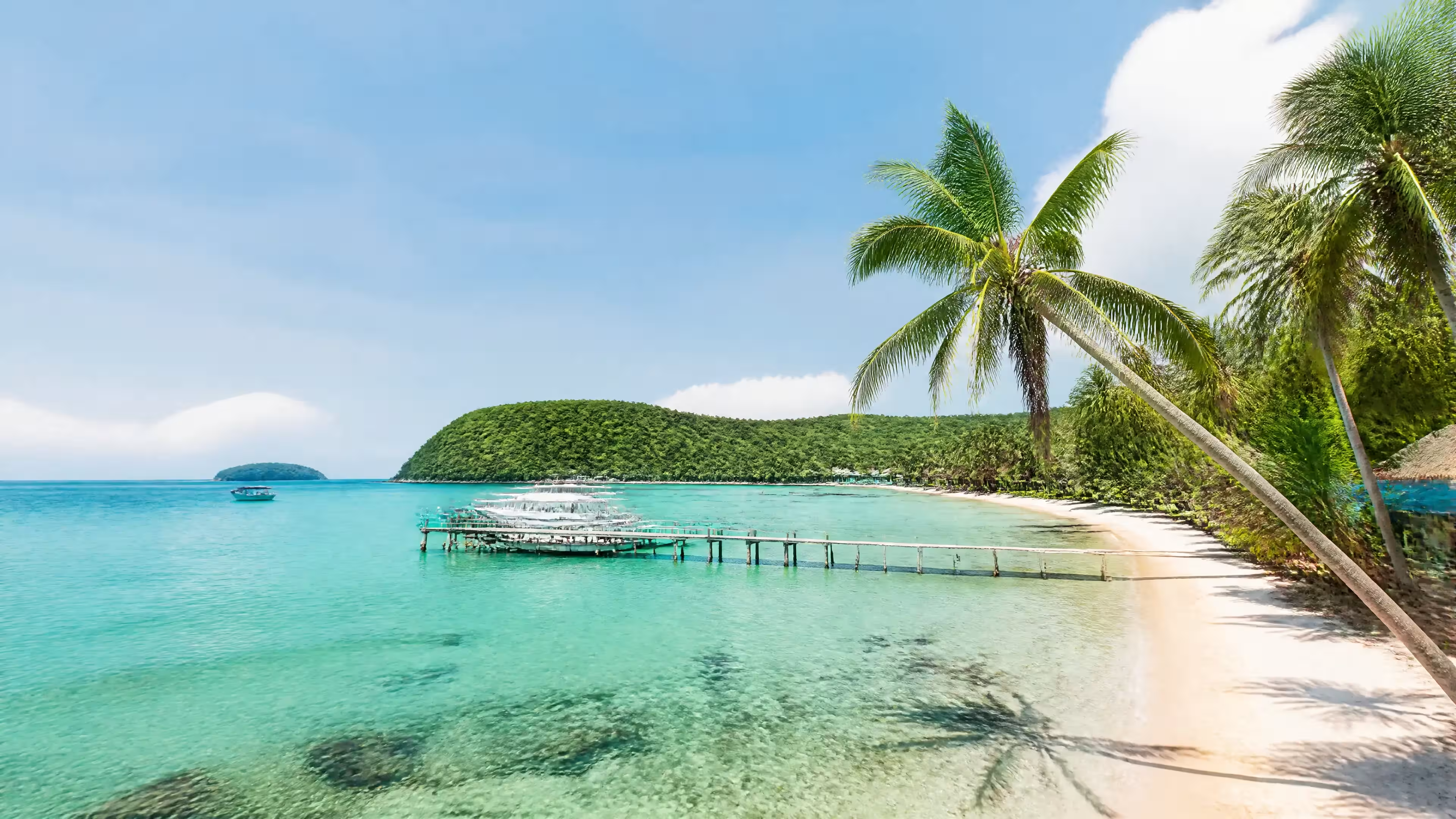
Holidays on Phu Quoc — this is an island in the Gulf of Thailand with steady warmth all year round, a flight from Almaty via Hanoi or Ho Chi Minh City and an internal segment of less than an hour. High demand falls on the dry season and holiday weeks, while the wet season brings short downpours and low prices. Tours to Phu Quoc are booked in advance, several months ahead.
Visa, documents and money: what to consider before the trip
A trip here begins with calculations: fees, cash for the first days and a time buffer for paperwork. Tours to Phu Quoc are more convenient to plan when these matters are settled in advance.
Visa processing for citizens of Kazakhstan
Entry to Vietnam for Kazakhstanis requires a processed permit, and Phu Quoc is no exception here. The island welcomes tourists all year round, but the papers are prepared before departure from Almaty. Some travellers process the permit in advance through the consulate, others receive it on arrival if approval is available. The passport must be valid for at least six months at the time of entry. Tours to Phu Quoc with a ready package of documents remove some of the hassle, but you will still have to check the deadlines yourself. A trip there for those who arrive in transit via Hanoi or Ho Chi Minh City requires attention to connections. Local rules change, so current requirements are clarified with official sources before buying tickets. The Vietnamese side usually asks for confirmation of accommodation booking and a return ticket. These papers should be kept at hand in printed form.
Cash, cards and the exchange rate on the island
The main currency on Phu Quoc is the Vietnamese dong, and payments here are made in it. Dollars are accepted in hotels and some establishments, but the rate there is less favourable. ATMs on the island are available in tourist areas, however the withdrawal limit at one time is small. Large sums are more reasonable to bring with you and exchange in parts. Visa and Mastercard cards from Kazakh banks are not accepted everywhere, so cash is kept at hand. A trip here for thrifty tourists is built on small notes: taxis, markets and cafes often work only with cash. Vietnamese street food costs less than a restaurant at the hotel. Some hotels add a commission when paying by card, and it is asked about at the front desk in advance. Exchange offices in Duong Dong give a better rate than the counter at the airport. Tours to Phu Quoc with included transfer save you from the first major expense on site.
Visa and entry rules change: check with the primary source — the Immigration Department of the Socialist Republic of Vietnam, https://evisa.xuatnhapcanh.gov.vn/. The information on this page was verified on 10.09.2026.
When is the best time to plan the trip?
The season on the island is divided into dry and wet, and both the price and the weather depend on this. Tours to Phu Quoc during high demand are snapped up in advance, so dates are chosen several months ahead.
Dry and wet seasons without reference to months
The dry season on Phu Quoc gives steady sunny days and a calm sea. The wet season brings short downpours, high humidity and waves on the western beaches. A trip in the dry period is suitable for diving, snorkelling and sea walks. The wet season does not close the island: rains come more often towards evening, while the morning remains clear. Vietnamese weather is changeable, and one day can give both sun and downpour. Accommodation prices in the rainy period are noticeably lower, and this attracts those who go for a long time. Tours to Phu Quoc in the transitional weeks between seasons are often cheaper, but predictability is lower. The beaches at this time are less crowded, and cafes work as usual. For trips to the national park, the wet season is also suitable: the greenery is brighter, and the trails are not so dusty. The decision depends on what is more important — the guarantee of sun or savings.
Holidays and high demand among tourists
Vietnam's holiday weeks and school holidays in Kazakhstan raise demand on the island. A trip here on such dates costs more, and hotels are booked months in advance. Vietnamese New Year gives a peak in occupancy: locals also go to the sea. Asian holidays add flow from neighbouring countries. Tours to Phu Quoc in these periods are better taken in advance, otherwise the choice of accommodation will narrow to expensive options. The Vietnamese side works on a special schedule during holidays, and some shops close. Demand falls immediately after the holidays end, and then prices return to normal. For a calm holiday here, weekdays outside school holidays are chosen. Early booking in high season saves both money and nerves.
Medicine, safety and insurance
Health and safety on the island depend on preparation, not on luck. Tours to Phu Quoc should be chosen taking into account what you plan to do on site.
Vaccinations and first aid kit before departure
Vaccinations against hepatitis A and typhoid fever are recommended at least a month before departure. A trip to a tropical island also requires protection from the sun: high-SPF cream is needed even on cloudy days. The first aid kit is assembled in advance: painkillers, remedies for diarrhoea, antihistamines, plasters and antiseptic. A Vietnamese pharmacy in tourist areas exists, but familiar medicines may be called differently. Mosquito repellent will come in handy in the evening and near greenery. Light breathable clothing and quick-drying items make the humid climate easier. Tours to Phu Quoc for families with children should be planned with a buffer for acclimatisation. The time difference with Almaty is small, but in the first days it is better not to overload with excursions. Water is drunk bottled, and ice in street drinks is sometimes better not taken. Medical care on the island is available in tourist zones, but complex cases are taken to the mainland.
Insurance for active holidays and motorbike rental
An active recreation coverage policy closes the most frequent risks on the island. A vacation here for fans of motorbikes and sea trips without such insurance turns into a lottery. Renting a motorbike is a frequent cause of injuries, and standard policies do not cover such cases. Diving and snorkeling also require a separate clause in the contract. Tours to Phu Quoc with included insurance are convenient, but the coverage is worth reading yourself. Vietnamese traffic police are strict with drivers without the required category of license. A helmet when renting a motorbike is always taken, even for a short trip. Sunburn and minor cuts are the second most frequent reason for visits. Before departure, the insurance number and an electronic copy of the policy are saved. When renting a motorbike, the vehicle is inspected and dents are recorded in photos. This protects against a dispute about damage upon return.
How to get there and where to stay?
The logistics on the island consist of two parts: the journey to Vietnam and the choice of accommodation on site. Tours to Phu Quoc usually include both stages, but independent travelers assemble them themselves.
Routes through Hanoi and Ho Chi Minh City
There are no direct flights from Almaty to Phu Quoc, so the route is built through Hanoi or Ho Chi Minh City. The trip to the island begins with a domestic flight: both cities accept flights onward to Phu Quoc. Vietnamese airlines fly there often, and tickets are taken together with the international segment. Through Hanoi the route is usually longer, but connections are sometimes more convenient in timing. Ho Chi Minh City is closer to the island, and the domestic flight takes less than an hour. Tours to Phu Quoc with a connection in one of these cities save you from searching for the connection yourself. The buffer between flights should be left at least three hours. The Vietnamese side at Phu Quoc airport is small, and exiting the terminal takes minutes. Buses and taxis run from the airport to the hotels. Some travelers stay overnight in Hanoi or Ho Chi Minh City and walk around the city before the flight.
Hotels, guesthouses and couchsurfing
Accommodation on the island is divided into three price levels, and the choice depends on budget and duration. A vacation here in hotels by the beach costs more, but gives a pool and breakfast. Guesthouses in Duong Dong are cheaper and closer to markets and cafes. Couchsurfing and budget guest houses are the most affordable alternative, but in high season places are taken in advance. A Vietnamese family often runs a small guest house themselves and helps with motorbike rental. Tours to Phu Quoc with accommodation in chain hotels are convenient for those traveling for the first time. A vacation on the island away from the center is quieter, but without a motorbike you cannot do there. Accommodation by Long Beach is suitable for evening walks and night markets. It is worth booking with free cancellation: plans often change due to weather. Hostels and guest houses are also found in the southern part of the island, closer to the fishing villages.
Cuisine, transport and everyday expenses
Daily expenses on the island consist of food, movement and small purchases. Tours to Phu Quoc cover the flight and hotel, while expenses on site depend on habits.
Street markets and Vietnamese food
Vietnamese cuisine on the island is built on fish, seafood, rice and herbs. A vacation here without street markets loses half the taste: there they cook fresher and cheaper. Night markets operate in Duong Dong and in the Long Beach area. Tours to Phu Quoc often include breakfasts, but it is more interesting to have lunch in the city. Vietnamese pho soup, rice with seafood and fried squid are the basic set. Prices at the market are lower than in a hotel restaurant, and portions are usually larger. It is worth trying the local sauces and herbs that are served separately. Street seafood spots are chosen by the number of visitors: where it is crowded, there it is fresh. Water and drinks with ice at the market are cheaper, but it is better to take ice in trusted places. Evening life is concentrated in the same place as the markets. For gourmets, the trip is often built around these spots.
Motorbike, taxi and transfers around the island
The most convenient way to get around the island is a rented motorbike or a taxi via apps. A vacation here on a motorbike gives freedom: distant beaches and fishing villages become accessible. Rental costs little, but the required category of license and a helmet are mandatory. Metered taxis and apps work in tourist areas, and on the outskirts the car takes longer to wait. Tours to Phu Quoc with transfers remove the question of the road from the airport. For trips to the national park and distant beaches, a transfer is arranged in advance or a car with a driver is taken. The Vietnamese road is narrow in places, and it is better not to drive at night. A bicycle is suitable for short trips around Duong Dong. Renting a motorbike for a day costs less than several taxi rides. There are gas stations on the island, but there are few in remote areas.
Briefly
- A vacation on the island is planned in advance: accommodation and tickets in high season are taken quickly.
- The road from Almaty is built through Hanoi or Ho Chi Minh City with a domestic flight.
- The dry season gives even sun, the wet season gives short showers and low prices.
- Cash in local currency is kept at hand: cards are not accepted everywhere.
- A policy with active recreation coverage is needed for a motorbike and sea trips.