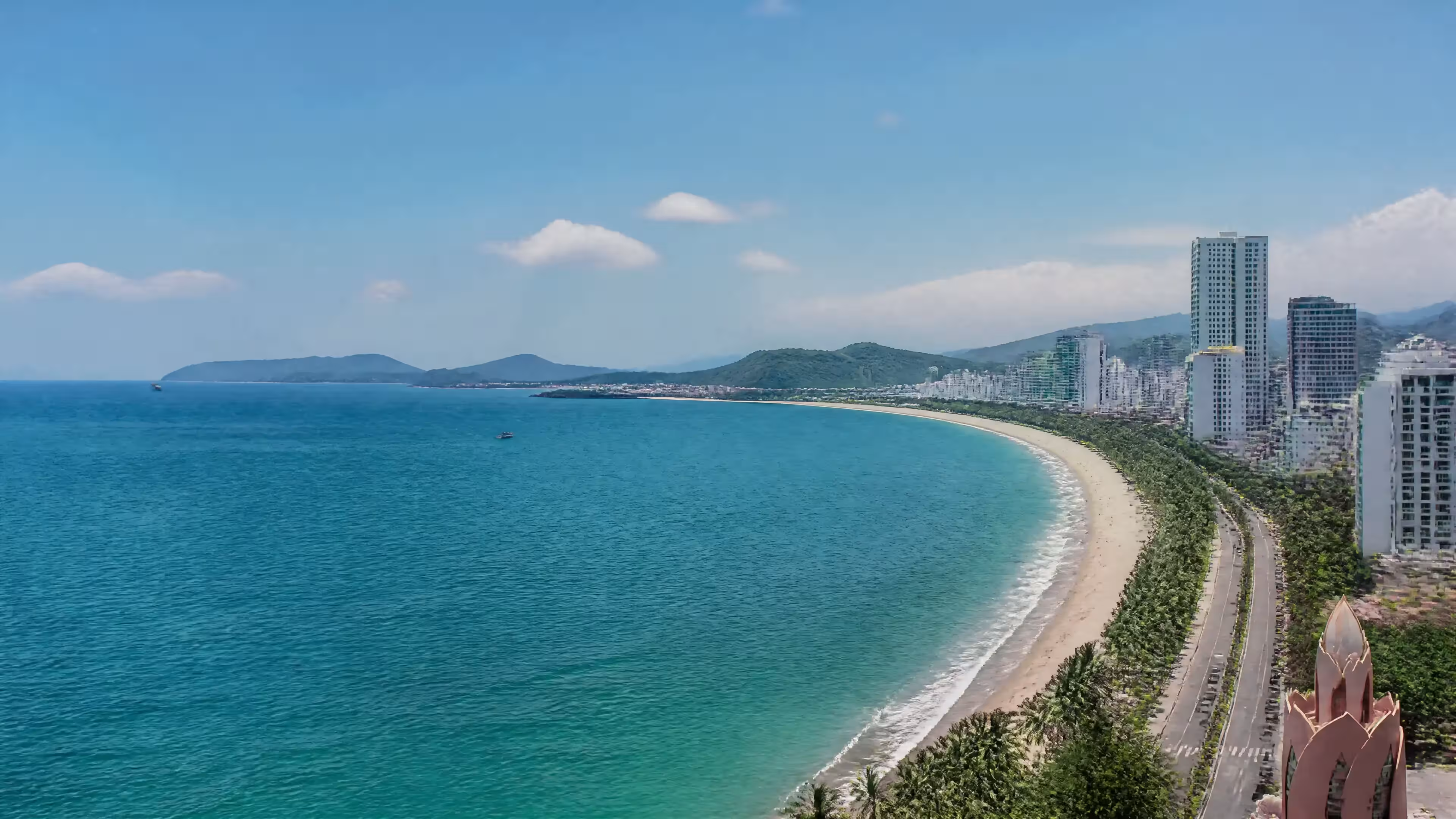
Vacation in Nha Trang means a warm sea all year round, inexpensive hotels near the beach, and a flight from Almaty with one connection. High season lasts from February to August, and rain falls more often from September to November. A trip usually takes 10–14 nights, and the budget depends on the season and how far the hotel is from the sea.
Visa, entry and documents for a trip to Vietnam
The vacation here begins long before boarding the plane: formalities take up the first days of the holiday if you leave them for the last evening. Below are general guidelines, and always check the exact requirements before departure.
Travel documents and fees
Tours to Nha Trang from Almaty are most often booked for 10–14 nights, and such a period fits into the standard stay regime with a margin. Airlines sometimes ask to show a return ticket at boarding, so it is better to keep a printout at hand. Upon arrival at Cam Ranh airport, the passport is presented at the border control desk, and fingerprints are also taken there. The entry stamp is placed for the period of actual stay, and it is not worth exceeding it. Check the exact entry conditions before the trip on the website of the Consulate of Vietnam.
What papers are asked for at the border
At the border, a tourist is most often asked for three things: a valid passport, a return ticket and confirmation of hotel booking. Any booking will do — a printout from the tour operator or a letter from the hotel with the address and dates. If the trip is arranged as a package, all these papers are usually already collected in one envelope. Electronic versions are also accepted, but if the phone is discharged, only paper will help. The hotel address in Vietnamese helps the taxi driver at the airport, so save it separately. Copies of the passport should be kept in the suitcase and in email — in case of loss. Naturally, the documents must be without damage and with a readable photograph. It is better to check the passport a couple of months before departure in order to have time to replace it if necessary.
Money, communications and transport on site
Financial and everyday little things in Nha Trang are solved quickly if you understand where to exchange money and how to get around. Let's look at what will be useful in the very first day.
Cash dong, cards and where it is more profitable to exchange currency
The main currency on vacation in Nha Trang is the Vietnamese dong, and cash will be needed almost every day. Visa and Mastercard cards are accepted in hotels and large restaurants, but markets, cafes and shops work only with cash. ATMs dispense dong, but the commission depends both on the issuing bank and on the device itself, so it is better to withdraw large sums. It is more profitable to exchange money in jewelry stores and exchange offices, and not at the airport or at the reception. The rate in the city is usually better than in the arrival area, so it is not necessary to exchange a large sum at once. Dollars and euros are accepted, but the banknotes must be new and without tears. Small banknotes will be useful for taxi, water and street food. It is reasonable to keep part of the sum in different places, and not in one wallet.
SIM cards, internet and ways to get around the city
Local SIM cards Viettel, Mobifone and Vinaphone are sold both at the airport and in the city, and an internet package for 30 days costs from 100,000 dong. For a short vacation in Nha Trang, one card for a smartphone is enough, and the second phone can be left on roaming. Sockets here are types A, C and F at 220 V voltage, an adapter is needed only for three-prong plugs. The most convenient way to get around the city is Grab — the price is fixed in the app and does not depend on bargaining. Buses operate, but routes and stops are hard to read without knowledge of the language. Renting a bike will cost 100,000–150,000 dong per day, but you can ride it only with a category A driver's license or an international driver's license. A helmet is mandatory, and traffic during rush hours is dense and unusual. For trips as a group, it is more profitable to take a taxi by meter.
How much does a vacation cost and how to save?
The trip budget consists of accommodation, food, excursions and transport, and you can save on each item without losing quality. Let's look at where money goes fastest.
Trip budget: accommodation, food, excursions and transport
Such a trip is most budget-friendly in low season, when accommodation prices drop noticeably. A hotel by the sea in high season costs more, while a guesthouse two blocks from the beach is several times cheaper. Food outside tourist streets costs less: local cafes with pho and banh mi feed you for little money. It is more profitable to buy excursions on site, and not in advance at the hotel, and bargaining is appropriate even here. Transport consumes the least if you use Grab and walk. Souvenirs and massage take as much as the tourist decides to spend. By breaking down expenses by day, it is easier to understand where exactly the budget is leaking. It is better to plan large expenses in advance, and small ones — as they come.
Bargaining, tips and deposit at hotel check-in
At check-in, the hotel often asks for a deposit in cash or by card, and the amount is returned at check-out. A resort fee is not charged in Vietnam, so there should be no additional payments beyond the deposit. Tips on vacation in Nha Trang are not mandatory, but in restaurants and spas it is customary to leave 5–10% of the bill. Bargaining in markets and shops is possible and necessary: the discount often reaches 30–50% of the first named price. It is worth starting the bargain from half the sum and staying calm and smiling. In supermarkets and pharmacies, prices are fixed, and bargaining is inappropriate there. It is more convenient to leave the deposit by card so as not to tie up cash in the first days. Keep the deposit receipts until departure — this makes it easier to prove the amount when returning.
Safety, health and local rules
A calm vacation rests on three things: insurance, care with food and understanding of the local calendar. This is what we will talk about.
Insurance, first aid kits and safe food with water
Medical insurance with coverage from 30,000 dollars is often required for entry, and the policy must include treatment for COVID-19 if the current epidemiological situation requires it. For a holiday in Nha Trang, choose a policy with coverage for activities if you plan to ride a bike or go diving. It is worth putting together a first aid kit at home: painkillers, anti-diarrhea remedies, antihistamines and plasters. You cannot drink tap water, only bottled, and it is better to ask about ice in drinks. Street food is safe in crowded places where the flow of customers is large and the products do not sit around. Vegetables and fruits are washed with bottled water, and the skin is removed before eating. The sun is active all year round, so SPF 50+ cream is needed even on cloudy days. At the first signs of illness, contact a clinic rather than self-medicating.
Tet and other holidays: what is closed and when
Tet, Vietnamese New Year, falls at the end of January — beginning of February, and on these days many shops and cafes are closed. Accommodation prices rise during Tet, and available places are taken long before the holiday. A trip to Nha Trang on these dates should be planned in advance or moved two to three weeks later. Besides Tet, Independence Day and Reunification Day are also celebrated here, when some institutions do not work. During holidays, transport schedules also change, and taxis become more expensive. Museums and temples on such days are best visited in the morning, while there are no crowds. Check schedules and opening hours on site, they change from year to year.
How to choose and book a tour from Almaty?
Buying a tour from Almaty saves time on the flight, transfer and check-in. Let's break down what the route consists of and what to prepare in advance.
Flight with a connection and transfer from Cam Ranh airport
There are no direct flights from Almaty to Nha Trang, so Nha Trang Vietnam is reached via a connection in Seoul, Bangkok or Hanoi. The total travel time including the layover is long, and it is more convenient to choose an option with one connection. Cam Ranh airport is located 35–40 km from the center, and a taxi or transfer takes about 45 minutes. A transfer from the tour operator is usually included in the package, and this noticeably simplifies the first trip. Independent travelers should book a car in advance or take Grab at the exit from the terminal. Night arrivals happen often, so it is better to have transfer confirmation in hand. There is currency exchange at the airport, but the rate there is unfavorable — exchange a minimum. The road to the hotel passes along a picturesque coast, so the first impressions begin already on the way.
Documents and submission deadlines for booking a tour
The deadlines depend on the season: during the high period, places go faster, so it is better to make a decision in advance. Copies of documents should be sent electronically, and the originals taken for departure. All details can be clarified with the manager by phone or at the office. After the booking is confirmed, all that remains is to pack your suitcase and check the validity of your foreign passport.
Visa and entry rules change: check with the primary source — the Immigration Department of the Socialist Republic of Vietnam, https://evisa.xuatnhapcanh.gov.vn/. The information on this page was verified on 10.09.2026.
Briefly
- Holidays are planned in advance, especially in high season and on Tet days.
- Money is exchanged in jewelry stores and exchange offices, not at the airport.
- Cards are accepted in hotels and large restaurants; cash is needed at markets.
- For getting around, Grab is the most convenient; a bike requires a category A license.
- Insurance with coverage from 30,000 dollars will be useful for the entire trip.