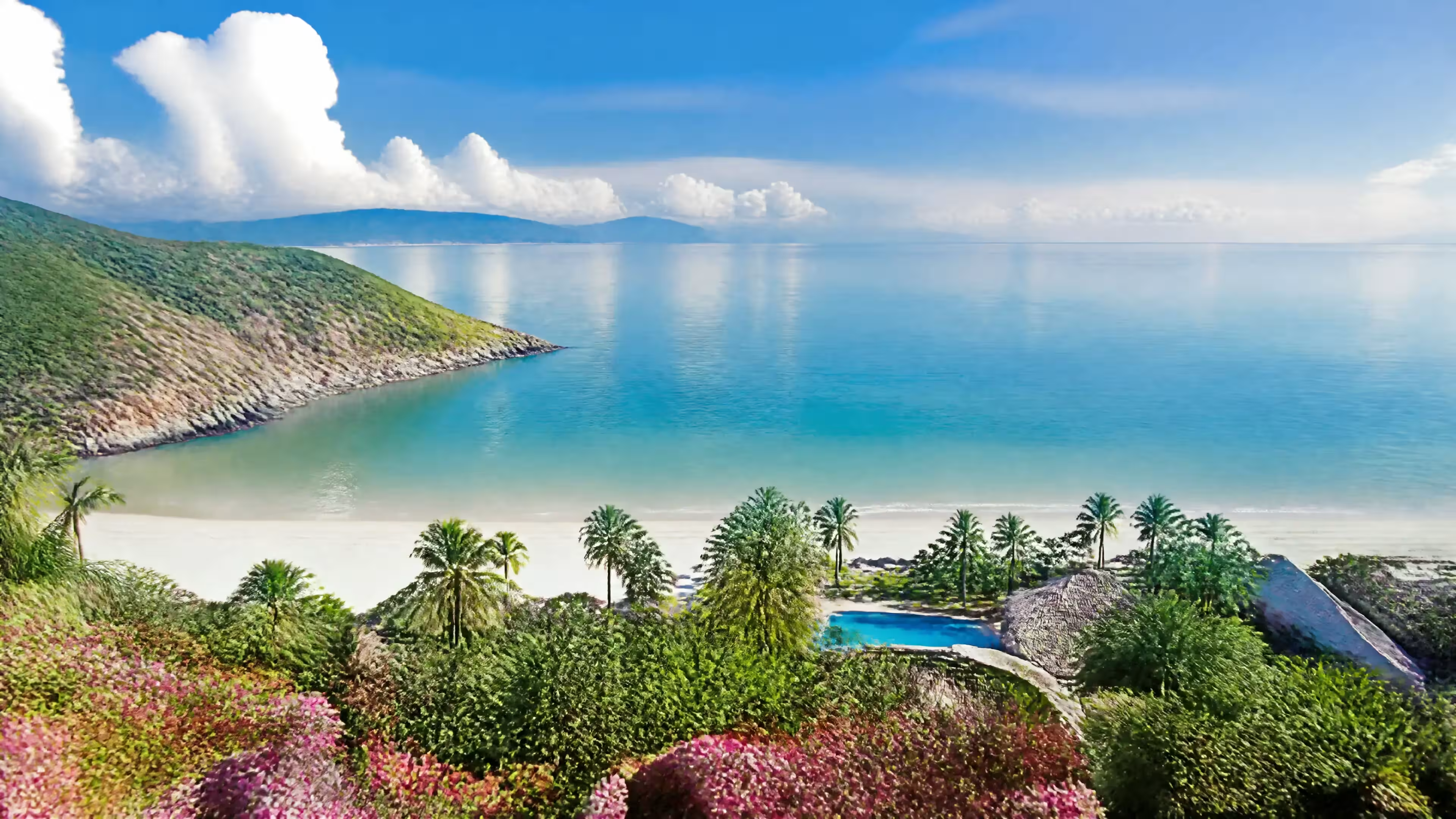
All inclusive in Vietnam is a package tour where the flight from Almaty, hotel, meals and transfer are already paid for at home. Most often, tourists from Kazakhstan choose Nha Trang, Phu Quoc, Da Nang, Hoi An and Mui Ne. The best time to travel is from February to April, when it is dry and the sea is calm. The trip usually lasts from seven to fourteen nights.
Visa, entry and the first hours in the country — what do you need to know?
The first section is built around the formalities that are handled before departure from Almaty, and around what will be useful in Vietnam immediately upon arrival. Here too is the minimum set of files worth keeping at hand without the internet.
Documents for citizens of Kazakhstan
Without this link, no statements about documents are placed on the page. The practical part is simpler: keep your return ticket and hotel booking confirmation on your phone and in print. The Vietnamese side sometimes asks to show them at the counter. Save copies of the document pages as separate files. That way the first all inclusive in the trip remains only a formality.
What to put in offline access
Download the maps of Nha Trang, Phu Quoc, Da Nang and Hoi An in advance, while you have home internet. Screenshots of the booking, tickets and hotel addresses in Vietnamese save time at the counter. A translator with a downloaded Vietnamese dictionary works without a network. The taxi app should also be installed before departure. Everything is included in the phone, and the first hours in the country go more smoothly. Keep a power bank in your carry-on, not in your suitcase.
How to get there and not get lost on the spot — what should you consider?
The journey from Almaty takes almost a day, so the route and connections are better thought out in advance. A separate topic is how to move between resorts once inside the country.
Routes with a connection from Almaty
There are no direct flights from Almaty, and this should be accepted as a given. The connection usually goes through Seoul, Bangkok, Dubai or Istanbul. The total travel time with a connection is from twelve hours. The time difference with Almaty is plus two hours, so acclimatization is almost unnoticeable. Choose a connection of no less than two hours. Everything is included in the route only when the connection does not turn into a run with a suitcase.
Transfers between resorts
From Nha Trang and Mui Ne to Phu Quoc, people get there by plane or sleeper bus. Tickets are better bought in advance in high season. For a trip to Hoi An from Da Nang, it is convenient to take a transfer or taxi via the app; the journey takes about an hour. The Vietnamese road between cities is long, so overnight trips save a day. Everything is included in the logistics if the distances are calculated in advance. Leave a buffer for traffic jams near big cities.
How is the all inclusive package structured?
A package is a set of services that is paid for at home and removes some of the worries on the spot. Let's break down how booking works and what usually requires an additional payment.
Booking and payment terms
All inclusive Vietnam is sold as a ready-made product, so the terms are fixed in the contract. Read which dates are considered final and when the balance is paid. Clarify what happens if the dates are changed. The Vietnamese side accepts the booking from the operator, not from the tourist directly. Keep the payment confirmation until the end of the trip. That way the package remains transparent, and not a surprise at the counter.
Package contents and additional payments on the spot
Usually this is the flight, accommodation, meals and transfer, but only the operator gives the exact list. On the spot, most often people pay extra for excursions, motorbike rental and personal purchases. Vietnamese cuisine outside the hotel is also not included in the package. Clarify in advance whether drinks with dinner are included. All inclusive does not mean "everything is free" — it is better to know the boundaries before departure.
Money, communications and everyday little things
Financial habits and communications in Vietnam are structured differently than at home, and it is worth preparing for this. Let's break down cash, cards and what will be needed for a socket.
Cash, cards and ATMs
The Vietnamese currency is the dong, and the exchange rate is conveniently counted from thousands. Large notes quickly turn into "millions", so keep small change separately. Visa and Mastercard cards are accepted in hotels and large establishments, but cash is needed in markets and taxis. ATMs give a limit per withdrawal and charge a commission, so it is more profitable to withdraw a large amount less often. Everything is included in the budget if you count in dongs, and not in tenge on the go. Small notes will come in handy for tips and the market.
SIM card, internet and sockets
Mobile internet in Vietnam is cheap, and a local SIM with a tourist tariff is issued with a document at a communications salon. Sockets are mostly with flat pins, so an adapter is needed for Kazakhstani plugs. The Vietnamese network catches well even on the islands, but there are gaps in the mountains. Download offline maps before leaving the hotel. Everything is included in everyday life when the adapter is in the suitcase, and not bought on the spot.
Visa and entry rules change: check with the primary source — the Immigration Department of the Socialist Republic of Vietnam, https://evisa.xuatnhapcanh.gov.vn/. The information on this page was verified on 11.09.2026.
Health, safety and local rules
Some of the risks on a trip are related to the sun, water and the road, and they are easier to prevent. Below is what is worth knowing before your first outing into the city.
Insurance, water and sun
Medical insurance with coverage from thirty to fifty thousand dollars is a reasonable minimum. This is especially important for trips to the islands and renting a bike. Tap water is not drinking water, and ice in tourist cafes is usually made from purified water. The sun in the south is active all year round, so high-SPF cream is needed even on cloudy days. Vietnamese heat is easier to handle in the shade and with water. Everything is included in the first aid kit: take your usual medications from home.
Bike, bargaining and tips
Renting a bike requires an international driver's license and a helmet. Without them, insurance does not apply, and issues on the road take a long time to resolve. Bargaining at markets is appropriate, but restrained: a ten to twenty percent discount is perceived as normal, dumping down to half is not. In hotels and restaurants, tips are not mandatory, but five to ten percent for good service is received with gratitude. Vietnamese street food is safer in places with high foot traffic. Everything is included in the habit: calmness and respect work better than pressure.
Briefly
- The package covers the flight, hotel, meals and transfer, but not excursions and a bike.
- The best months for the trip are from February to April, dry and with a calm sea.
- Nha Trang and Mui Ne are cheaper, Phu Quoc is more expensive, Da Nang is convenient for Hoi An.
- Count the budget in dong, withdraw cash less often, but in large amounts.
- Take an adapter, insurance and a supply of medications from home.