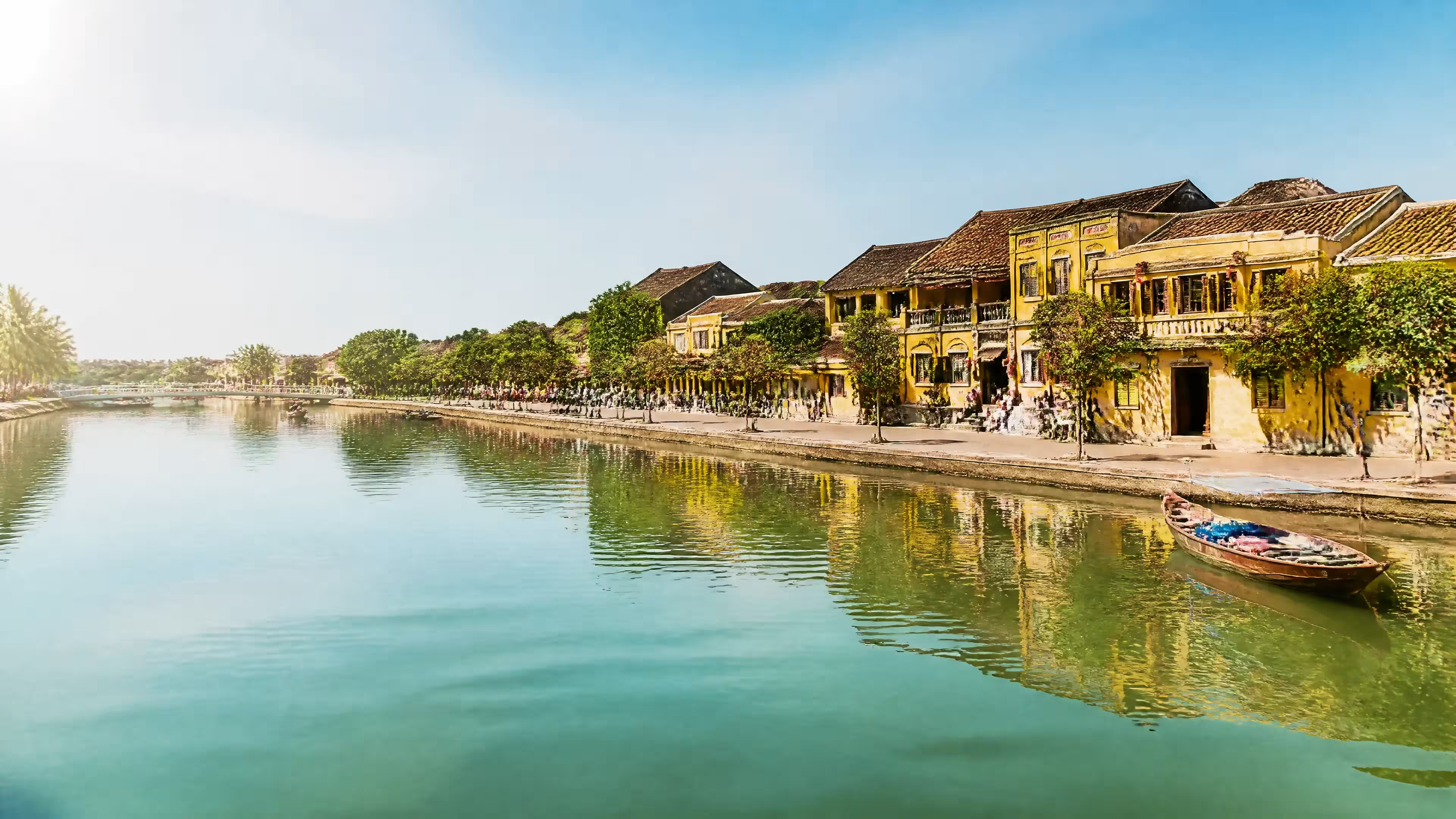
A holiday in Hoi An is an ancient port with lanterns, rice fields and a beach 5 km from the centre. The best time to travel from Almaty is from February to August: dry and hot. Fly with a transfer in Hanoi or Ho Chi Minh City, the journey takes from 12 hours. 3–4 days are enough to explore the city, plus days for My Son and the Marble Mountains. The optimal tour duration is 7–10 nights.
Preparing for the trip: formalities and health
A trip to Hoi An begins long before departure from Almaty. Let's break down what to prepare in advance so that the journey goes smoothly.
Processing documents before buying a tour
Check the entry regime for citizens of Kazakhstan at the consulate before buying a tour. The length of stay changes, so the check takes a couple of minutes, but it saves nerves thoroughly. Tours to Hoi An are sold with different departure dates from Almaty, and the time buffer before the trip only helps here. The agency tells you the list of papers, but responsibility for them lies with the traveller. The validity of the main document must cover the entire holiday, not just the arrival date. Keep copies separately from the original and on your phone. If you plan to travel to neighbouring countries of the region, clarify this point in advance.
Medical insurance and vaccinations
Take out the policy a month before the trip: the doctor will advise on vaccination and measures against mosquitoes. The insurance must cover Vietnam and include treatment of intestinal infections. In Hoi An there are pharmacies with a basic set of medicines, but it is better to bring specific medications from home. In the tropics, the rainy season increases insect activity, so repellent will come in handy. Check whether the policy is valid when renting a scooter — sports and transport are often excluded from coverage. Chronic illnesses require a supply of medications for the entire holiday plus a few days. Keep the policy in electronic form and on paper.
Money, communications and transport on site
Financial and everyday little things determine how comfortable your stay in Hoi An will be. Below — about money, communications and ways to get around.
Dong, currency exchange and bank cards
Exchange money at banks or jewellery shops in Hoi An, not at the airport. The rate in tourist quarters is noticeably worse, and the difference on a large sum is noticeable. Dollars are accepted more readily than tenge, so take part of the cash in American currency. Cards work in hotels and large restaurants, but at markets and in small cafes only cash dong is needed. Keep a supply of small-denomination notes for taxis, entrance tickets and traders. ATMs are common, but the withdrawal fee can be high. Do not carry the whole sum with you: leave part in the hotel safe. Before exchanging, check the rate and recount the money without leaving the counter.
SIM card, internet and taxi-hailing apps
A local SIM card with internet is inexpensive and solves navigation and translation issues. You can buy it at mobile phone shops in the centre of Hoi An; a foreign passport is needed for registration. English is widespread in tourist places, but basic Vietnamese phrases will help at the market. Taxi-hailing apps save you from haggling with drivers and show the price in advance. Wi-Fi is available in almost all cafes and hotels, but the speed drops in the evening. Download offline maps in advance: they help on trips to the rice fields. A translator with Vietnamese will come in handy at a pharmacy or workshop. Charge your phone in the morning; sockets in hotels often require an adapter.
How to get around Hoi An and the surroundings?
The city is small, but the ways of getting around strongly affect your impressions. Let's break down transport rental and trips beyond its limits.
Renting a bicycle and a scooter
A bicycle is the simplest way to get around Hoi An and reach the rice fields. A scooter is faster and more convenient in the heat, but requires a licence and a helmet. Rental shops in Hoi An issue vehicles against a deposit or document; discuss the price before the trip. Inspect the vehicle before renting: it is better to record scratches and dents in photos. Parking in the Old Town is paid and organised; you cannot leave a scooter near temples. Do not leave valuables in the rented vehicle or in the bicycle basket. In the rainy season, roads are washed out, so choose a route with hard surface. Fuel is inexpensive, but watch the fuel level in advance.
Official taxi and trips to the Marble Mountains and My Son
For trips to the Marble Mountains and the My Son temple complex, take an official taxi or an app. Private drivers at hotels inflate the price several times, especially early in the morning. The road to My Son takes about an hour, so leave before dawn. The Marble Mountains are closer to Da Nang; it is convenient to combine them with a trip to the city. Excursions should be booked in advance: groups fill up quickly, and seats in minivans are limited. You can hire a driver for the whole day; this works out cheaper than several short trips. Check whether waiting is included in the price and how long it lasts. Agree on the return journey right away too, so as not to look for transport on site.
What to wear and how to behave in the city and temples
Appearance and manners matter more here than it seems. This section is about clothing, footwear and local customs.
Clothing for pagodas and footwear for walks
Covered shoulders and knees are mandatory when entering the pagodas and temples of Hoi An. A light long-sleeved shirt and trousers made of breathable fabric also save you from the sun. Choose comfortable footwear: the cobbled streets of the Old Town and the dirt roads to the rice fields are equally demanding. Sandals with fastenings will do, flip-flops will not. A head covering and sunscreen are needed in the hot season, and a compact umbrella will save you in the rain. Vietnamese clothing made of silk and linen is sold on site and is inexpensive. Take a spare T-shirt: humidity is high, clothes get wet quickly. For evening walks by the river, a light outfit is enough.
Rules of behaviour, tips and haggling at the market
Do not touch sacred objects without permission and respect local customs. Photographing people is worth doing with their consent, especially in temples and at markets. Tipping in Vietnam is not mandatory, but is welcomed in restaurants and for guides. Bargaining at the market is appropriate, but conduct it calmly and with a smile. Watch your bags in crowded places and do not display large bills. Vietnamese street food is safe if you choose places with a flow of locals. Take off your shoes before entering living quarters and some shops. Calm behavior wins people over more than loud requests.
Visa and entry rules change: check with the primary source — the Immigration Department of the Socialist Republic of Vietnam, https://evisa.xuatnhapcanh.gov.vn/. The information on this page was verified on 10.09.2026.
What to do on free days?
Besides sightseeing tours in Hoi An, there are enough activities for every taste. We will tell you how to fill the days between trips.
Cooking classes and a trip to the market
Cooking classes in Hoi An begin with a trip to the market for groceries. Chefs show how to choose herbs, fish and spices, and then teach you how to cook Vietnamese dishes. Classes last several hours and usually include lunch from your own dishes. Groups are small, so it is better to sign up a couple of days in advance. The cost depends on the program and the number of participants; check it on site. Many schools give recipes to take with you, which is convenient for repeating at home. Such lessons are also suitable for children if there are no strict restrictions on spiciness. Take water with you and do not plan other things for that day.
Night markets, riverside bars and quiet evenings
Hoi An's nightlife is calm: riverside bars and night markets stay open late. Here they sell souvenirs, silk, ceramics and leather goods; bargaining is appropriate. Sunrise and sunset are the best time for photography; in the morning there are noticeably fewer tourists. In the evening the city is illuminated by lanterns, and a walk along the embankment becomes a separate pleasure. The music in the bars is quiet, and there are almost no loud clubs. For a quiet evening, a tea house or a restaurant with a river view will do. Keep small change for the markets and taxis; large bills are inconvenient there. Return to the hotel before midnight if you do not want to look for transport in the dark.
Briefly
- Hoi An Vietnam — an ancient port with lanterns, rice fields and a beach 5 km away.
- The dry season from February to August is suitable for the beach and walks.
- A flight from Almaty with a transfer takes from 12 hours.
- 3–4 days are enough to see the city; book tours in advance.
- Exchange currency at banks, keep a supply of cash in dong.