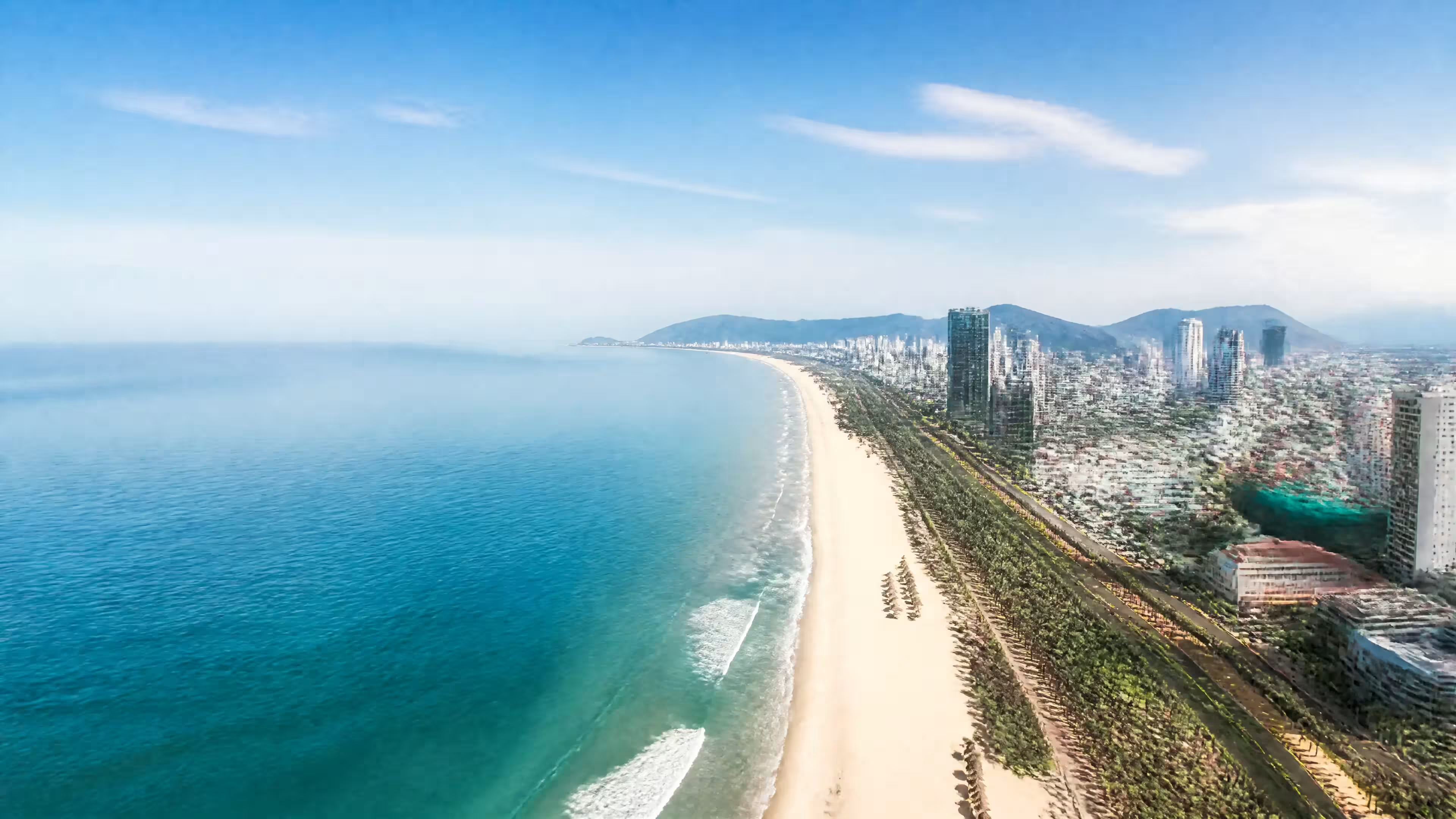
Vacation in Da Nang is a warm sea, long sandy beaches and a mild climate. The best time to travel is from February to August, when the sea is calm and there is almost no rain. There are no direct flights from Almaty: they fly with a transfer in Hanoi or Ho Chi Minh City, the journey takes from twelve hours. The time difference with Almaty is plus two hours.
How is the trip from Almaty arranged and what to take with you?
A trip to Da Nang begins with calculating the route. There are no direct flights from Almaty, so it is built through major hubs, and the preparations take more than one evening.
The road from Almaty through Hanoi and Ho Chi Minh City
Tours to Da Nang from Almaty almost always go with one transfer. Regular flights connect Almaty with Hanoi and Ho Chi Minh City, then to the coast it is an hour to an hour and a half by local airlines. The total travel time including the connection is from twelve hours and more. Allow at least three hours for the connection: Vietnamese airports are large, and moving between terminals takes time. The time difference with Almaty is plus two hours, acclimatization is easy. It is cheaper to buy tickets for domestic flights in advance, a month to a month and a half ahead. Baggage during the connection sometimes has to be collected and checked in again — check when booking. In high season flights fill up densely, so it is better to fix the dates in advance.
What to put in the suitcase for the local climate
When packing for a vacation, take humidity and sun into account. Da Nang is the tropics, so light clothes made of cotton and linen are more needed here than warm ones. Take two swimsuits so that one has time to dry. Sunscreen with a high SPF, a headwear and sunglasses are a must. For rain, a compact umbrella or a raincoat will come in handy. For pagodas and temples, closed clothing is needed — shoulders and knees covered. Take comfortable shoes: you will have to walk a lot along the embankment and markets. Assemble a first aid kit at home: familiar remedies for poisoning and colds take longer to find in local pharmacies. Mosquito repellent will come in handy in the evening hours.
How to sort out money, communications and movement on the spot?
Money, communications and transport decide whether the trip will be calm. Let's sort out each in order.
Vietnamese dong: exchange, ATMs and cash
The local currency is the Vietnamese dong, and this is the first thing worth mastering. The rate at the airport is usually worse than in the city, so exchange a small amount for the first days, and the rest — at banks or jewelry stores. There are ATMs in tourist areas, but the withdrawal fee is noticeable, and the limit at a time is low. Take a reserve of cash: cards are not accepted everywhere, and in small shops and markets almost never. Small bills will come in handy for taxis and street food. Keep large sums in the hotel safe, and not in a backpack on the beach. Count the zeros carefully: there are many zeros in the dong, and an error of one digit changes the price tenfold. It is more convenient to plan tours to Da Nang counting on mixed payments — part in cash, part by card.
SIM cards, internet and transport around the city
Communications in Da Nang are cheap and fast, and you cannot do without it. Local SIM cards are sold at the airport and in the city, coverage is stable along the entire coast. For movement, the Grab app is the most convenient — both moto and car versions: the price is fixed in advance, no need to bargain. Street taxi drivers often name a sum with a margin, so the ride turns out more expensive. Renting a bike is a popular way, but it requires caution on the roads and a helmet. Distances in the city are small: across all of Da Nang — twenty to thirty minutes. In the evening it is more convenient to walk along the beach. Keep your phone charged: the map and the ride-hailing app drain the battery quickly.
Where to stay: districts and their character
What your vacation here will be like depends on which district you choose. The coastal zone, the center and quiet neighborhoods give three different scenarios.
The coastal zone by My Khe beach
My Khe beach is the main reason why tours to Da Nang choose this particular city. The coastal zone is built up with hotels and condominiums within a five-to-ten-minute walk from the water. Morning here begins with swimming and breakfast with a view of the sea, and in the evening cafes and bars operate along the beach. There is one downside — in high season it is noisy and crowded, and housing prices are higher than in the center. For families with children this is the most convenient option: the water is close, the infrastructure is at hand. To the center by Grab — fifteen minutes. If you are going for the sea and sun, take housing on the beachfront.
The center by the Han River and quiet neighborhoods
The center by the Han River is the business and evening life of the city. Here are the bridges, the embankment, restaurants and night markets, and housing is cheaper than the coastal one. You will have to travel to the sea by transport. Quiet neighborhoods away from the beach are chosen by those who have come for a long term: food is cheaper there, there are fewer tourists and the Vietnamese atmosphere is felt more strongly. For a short trip of a week, the center is more convenient — everything is nearby. For a month of living, quiet neighborhoods are more profitable. A simple table will help compare the options.
Seasonality and weather risks
The weather divides the year into two different resorts. A trip here should be planned with an eye on the season.
Autumn rains and typhoons
The riskiest months for a trip are September, October and November. Downpours last long, the sea is rough, some excursions are canceled. Typhoons happen not every year, but they cannot be predicted in advance. Hotels during this period get cheaper, and there are fewer tourists. In winter it is cool and rainy here, but you can swim. If the dates are flexible, shift the trip to spring or summer. Watch the forecast a few days before departure. On a rainy day, covered markets, cafes and spas save the day.
Shoulder season: waves, currents and swimming
In the off-season, swimming is limited by waves and currents. In spring the water is already warm, but the waves are still strong, and lifeguards put up flags: a red one means swimming is prohibited. Do not ignore the warnings — the currents near the shore are treacherous. On such days, choose hotels with a pool. Morning is the calmest time for the sea; by midday the wind picks up. The summer months are ideal, when the sea is calm and warm. A comparison of the seasons looks like this.
Food, nightlife and shopping
Gastronomy, evening entertainment and shopping are what many come back for. Without this, a holiday here is incomplete.
Vietnamese cuisine of the central region
Vietnamese cuisine in Da Nang differs from the northern and southern. There is a lot of seafood here, and the dishes of the central region are spicy. Try mi quang — a local noodle dish with a rich broth. Cao ban is a pork dish with rice noodles. Street food is cheap, but choose places with high foot traffic and fresh preparation. Grilled seafood is cooked right on the street. Ask for the spiciness to be reduced in advance — local peppers are fiery. Drinking water should be bottled only. For a first introduction to the cuisine, rice and noodle dishes are suitable; they are milder in taste.
Night markets, bars and souvenirs
Nightlife is concentrated in the Han River area and along the beach. Bars, cafes and night markets are open until late in the evening. Han Market is the place for souvenirs and local sweets; shopping centers close by ten. From Da Nang people take home silk, ceramics and coffee. Coffee here is brewed Vietnamese-style, with condensed milk, and it matures perfectly in a suitcase. Prices at the market are quoted with a margin; haggling is appropriate. Ceramics are fragile — pack them in hand luggage. What is most often taken home can be seen from a short list.
In short
- A flight from Almaty to Da Nang is built with a transfer in Hanoi, Ho Chi Minh City or a third country.
- The time difference with Almaty is plus two hours.
- Allow at least three hours for a connection; book domestic flights in advance.
- In your suitcase you need light clothing, SPF, a head covering and a closed outfit for temples.
- Change money in banks or jewelry stores, keep a supply of cash.