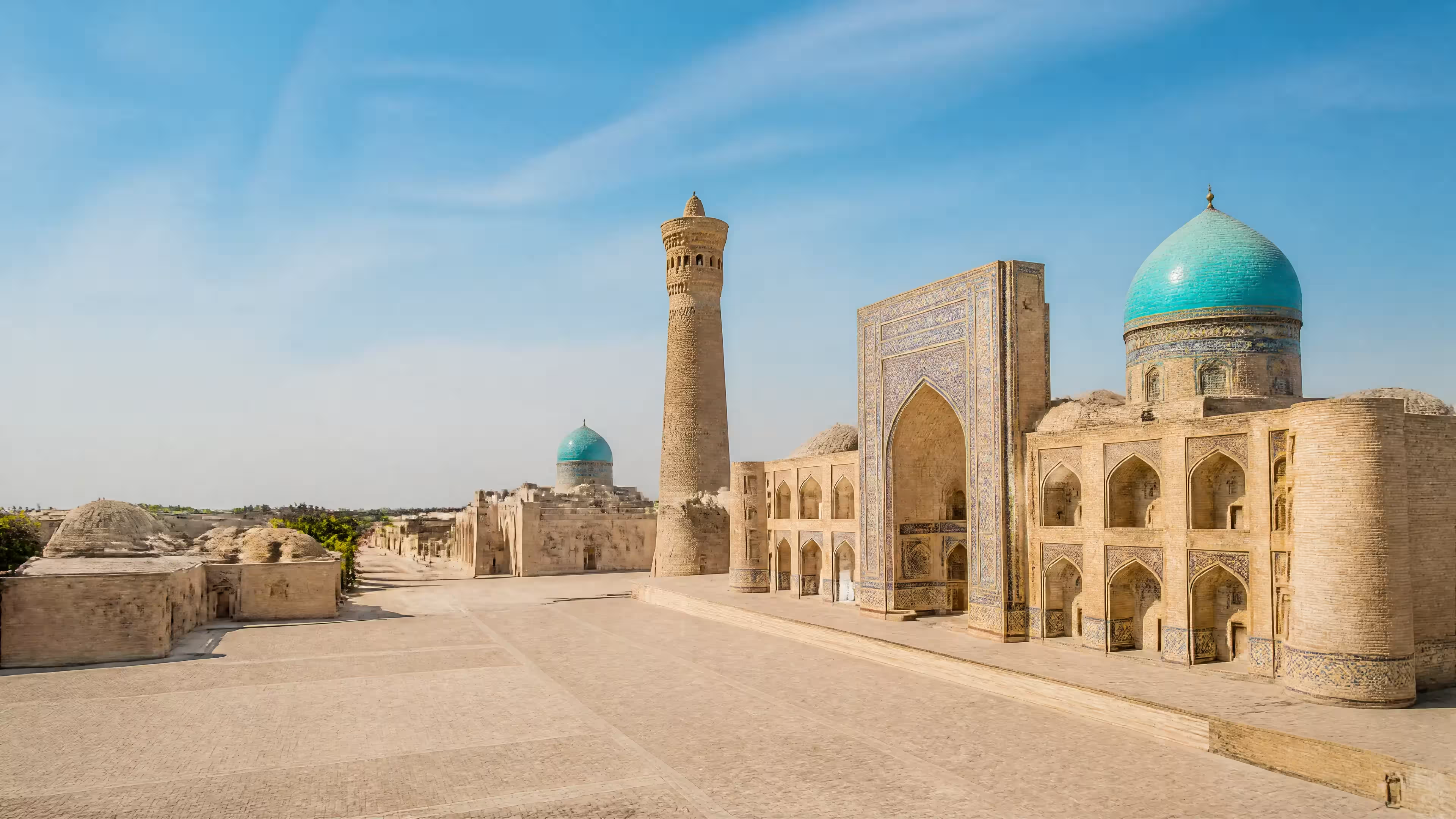
Recreation in Bukhara means a compact historical center that can be explored on foot in one or two days, and a mild climate from April to May and from September to October. From Almaty it is convenient to fly by direct flights or with a short connection in Tashkent. In summer the air warms above 40 degrees, so walks are moved to the morning and evening. In winter the city is emptier and cheaper, but windy.
Arranging a trip to Bukhara
A trip to Bukhara begins long before boarding the plane: it is important to check the dates, pack a first aid kit and choose accommodation. Below are practical guidelines for a tourist from Kazakhstan who departs from Almaty.
Documents and passport validity
Passport validity is checked first of all, and the margin here is more important than it seems. Keep the document valid with a margin of several months after return: this removes questions at the check-in desk in Almaty. Blank pages are also needed — their presence is checked carefully. Keep a copy of the passport separately from the original, and send a scan to your email. Tours to Bukhara usually start from Almaty, and at check-in the passport is checked carefully. If the document expires soon after the trip, it is better to move the holiday to other dates. Uzbekistan welcomes guests all year round, so the move does not break anything.
Accommodation: hotel or private house
A hotel in the historical center is more convenient for a first visit, a private house for a long holiday. In a hotel breakfast is usually included, and the desk will suggest landmarks around the city. Private accommodation gives more freedom with dates and is often cheaper, but some everyday issues fall on the guest. It is worth booking in Bukhara in advance, especially for holidays and in spring. Check with the landlord how to register the stay — owners solve this issue differently. Location is more important than square meters: from the center to Lyabi-Hauz it is convenient to walk on foot. Uzbek architecture impresses more when you live two steps away from it.
How to prepare for a trip to Uzbekistan
Packing for Bukhara differs from the usual southern destinations. The climate, communications and dress code here require separate attention in advance.
Medical insurance and first aid kit for active walks
Insurance is not mandatory, but during active recreation in Bukhara it pays off with peace of mind. The historical center is explored on foot, and trips to the desert add risks. Take a first aid kit with painkillers, diarrhea remedies, antihistamines and plasters. In summer add electrolytes and sunburn remedy. Antiseptic and wet wipes will come in handy at the bazaar. If you plan long walks between madrasahs, put in an elastic bandage. Take chronic medications with a reserve and in factory packaging. There are pharmacies in Bukhara, but the needed medicine may not be available. It is more convenient to arrange the policy at home, in Almaty, and not in a rush before departure.
Local SIM card, communications and language barrier
Kazakh SIM cards in roaming are expensive, so it is more profitable to buy a local SIM card upon arrival. It is issued by passport at the airport or in the city. In tourist places of Bukhara people speak Russian, so it is easy to explain yourself. In remote mahallas the speech is mainly in Uzbek. Keep an offline translator on your phone — it helps in taxis and at the market. It is better to save street and madrasah names as screenshots. Internet is enough for maps and messengers, but in old quarters the signal is weaker. Charge your phone in the morning: there are fewer sockets in cafes than you expect. For recreation in Bukhara this set is usually enough.
Clothing for mosques and madrasahs: dress code
To visit active mosques and mausoleums, women need a headscarf and covered shoulders. Men should not wear shorts, even in the heat. Loose clothing made of natural fabrics saves both from the sun and from formal remarks. A long skirt or trousers are suitable for most sites. Choose comfortable shoes: you have to walk on tiles and stone for hours. A light cape will come in handy both in the shade and at the entrance to shrines. In the evening in Bukhara it is cooler, so a thin sweater is not superfluous. Uzbek architecture impresses more when nothing distracts from the sightseeing.
What to do in the city besides excursions?
Between sightseeing the monuments in Bukhara there is time for markets, crafts and unhurried walks. These activities give the city a second dimension.
Eastern bazaar: bargaining, souvenirs and cash sums
At the bazaar they pay in cash sums, cards are almost not accepted here. Exchange money in banks and official exchange offices: the rate there is better than with street money changers. Bargaining is appropriate at the market, but in shops at madrasahs prices are fixed. Ceramics, suzani embroidery, miniatures and knives are classic souvenirs from Bukhara. Spices and dried fruits are bought by weight, so take your own bag. Sellers willingly talk about the goods if you show interest. Do not show large sums and keep small change at hand. Uzbek cuisine near the bazaar complements the impression of trading.
Photography in madrasahs and mausoleums: where it is paid
In some madrasahs and mausoleums, shooting inside is paid or prohibited. Check this at the entrance, before you take out the camera. The cost of shooting is small, but the rules change from site to site. Outside there are usually no restrictions, and facades come out best in morning light. Photograph people with their consent, especially at the bazaar. It is better not to use a tripod and flash in shrines. A phone is often allowed where a camera requires a separate fee. For recreation in Bukhara this is a trifle, but it saves nerves and time.
Movement and safety on site
The city is compact, and most routes are walked on foot. The remaining distances are convenient to cover by taxi.
Taxi through apps and walking routes in the center
Taxi via apps in Bukhara is cheaper than a car caught on the street. The price is fixed in advance, and you don't have to bargain. The historical center is so compact that you can walk around it in a day. From Lyabi-Hauz to Poi-Kalon it's about a ten-minute walk, and along the way you come across shops and teahouses. Morning and evening are the best time for walks, during the day the heat is exhausting. Keep a screenshot of the map on your phone in case of a weak signal. It's enough to tell the driver a landmark, not the exact address. For trips outside the city, arrange a car in advance.
Quiet neighborhoods and personal safety rules
Bukhara is considered a calm city, and tourists almost never have serious problems. Standard precautions are still needed: don't leave things unattended and don't walk around the outskirts at night. Keep documents and money in different places. In a crowd at the bazaar, watch your bag. A woman alone in the evening in the old quarters should better move along illuminated streets. If something happens, they will help at the hotel or in the nearest cafe. Locals are friendly and readily give directions. A calm vacation here largely rests on this atmosphere.
Visa and entry rules change: check with the primary source — the Ministry of Foreign Affairs of the Republic of Uzbekistan, https://gov.uz/en/mfa/activity_page/o-zbekiston-respublikasi-vizasi. The information on this page was verified on 10.09.2026.
What holidays and special dates are celebrated?
The calendar affects the operation of establishments and the flow of guests. These dates should be taken into account when planning.
Navruz and Kurban Bayram: what is closed and where it is crowded
During Navruz and Kurban Bayram, some establishments may not work, and there are noticeably more tourists. Holiday dates shift according to the lunar calendar, so check them before your trip. On these days it is interesting to watch city festivities and treats. Book accommodation in advance: few vacancies remain in Bukhara. Museums and madrasahs operate on a modified schedule. Cafes in the center are overcrowded, but the atmosphere is brighter than usual. Tours to Bukhara for the holidays are best planned several months in advance. Uzbek music and bazaars are especially colorful on these days.
When to go: seasons and weather in Bukhara
Bukhara Uzbekistan is a destination with a sharply continental climate, and the month of travel changes the impression more than the hotel. From April to May, the air stays around 25–30 degrees, and the city is buried in greenery. September and October offer mild warmth and harvests at the bazaars. June, July and August are 38–42 degrees during the day, and sightseeing is possible only until ten in the morning. November is still warm, and from December to February nights are around zero and the wind blows. In spring, rain is possible, so a light umbrella won't hurt. From Almaty, flights operate several times a week, and tickets are cheaper in the off-season. High season falls in April and October, when accommodation should be booked one to two months in advance.
Drinking regimen and heat: main rules
In summer in Bukhara, the heat rises above 40 degrees, so walks are planned for morning and evening. Tap water must not be drunk — buy bottled water and take a supply for the road. Drink often and in small sips, even if you don't feel like it. A head covering and light clothing are mandatory from May to September. During the day, take shelter in the shade, in a teahouse, or indoors at a museum. Signs of overheating — headache and nausea — are a reason to immediately go into the cool. An Uzbek teahouse with green tea helps wait out the peak of the heat. Such a regimen makes a trip here comfortable even in the hottest month.
In short
- A vacation in Bukhara is most conveniently planned for April, May, September or October.
- The historical center is compact: madrasahs, the bazaar and the fortress are all within walking distance.
- Cash sums are needed at the market, in shops and for paying the taxi driver.
- In summer, walk before ten in the morning and after sunset, wear a head covering.
- Take a headscarf and modest clothing, and ask about the fee for filming inside.